Find your perfect police studies programs abroad
Find police studies programs you love that match your needs and aspirations, where you stand a high chance of acceptance.
Police Studies degrees abroad
Police studies and policing degrees aim to give you an understanding of contemporary policing and criminal justice processes. You will learn about the realities of police work, and explore the challenges, tensions, and complexities of working in the police force.
A degree in police studies can give you a mixture of academic and practical skills that will prepare you for a successful career in policing.
It’s possible to study police studies in a number of countries around the world, at undergraduate and postgraduate levels. Most programs will cover the police and justice system of the country you’re studying in, so it makes sense to study in the same country you hope to work in the future.
Police Studies program structure
You can study police studies at undergraduate level as a certificate, foundation or bachelor’s program. A bachelor’s in police studies is usually offered as a BSc, and some universities offer similar courses under a different name, for example policing, policing studies, or professional policing.
If you study in a US liberal arts college, you may be able to study police studies as a major or minor subject. It’s also possible to study at master’s or even doctorate levels, but these are often offered in specialized areas of the subject.
Teaching on most police studies will be a combination of lectures, workshops and seminars. You will also be expected to do a large amount of individual study, and you’ll be assessed through exams, coursework and presentations.
The precise program structure and content will depend on several factors including the university and country you study in, and the level of program you take. As an example of some of the subjects you could study, here are some common police study degree modules:
- Law and policing
- Legal systems
- Criminology
- Forms of crime
- Cybercrime
- Criminal investigation
- Victims and crime
- Research methods

Best countries to study police studies



Police Studies study abroad programs
What are the top police studies undergraduate programs abroad?

- Degree type
- Bachelor's
- Subject area
- Police Studies , Criminology , Criminal Justice
- Location
- Phoenix, Arizona, USA
- Next available start date
- January 2027 +2 more
- Annual tuition fee
- 37,202USD

Birmingham City UniversityCriminology, Policing and Investigation - - BSc (Hons)
- 3 years
- Full-time
- On campus
- Degree type
- Bachelor's
- Subject area
- Police Studies , Forensic Analysis
- Location
- Birmingham, UK
- Next available start date
- September 2027
- Annual tuition fee
- 19,220GBP

Charles Sturt University, BathurstPolicing - BPol
- 3 years
- Full-time
- Online
- Degree type
- Bachelor's
- Subject area
- Police Studies
- Location
- Bathurst, Australia
- Next available start date
- February 2027 +1 more
- Annual tuition fee
- 25,600AUD

Edinburgh Napier UniversityPolicing & Criminology - BSc (Hons)
- 4 years
- Full-time
- On campus
- Degree type
- Bachelor's
- Subject area
- Police Studies , Criminology
- Location
- Edinburgh, UK
- Next available start date
- October 2027
- Annual tuition fee
- 18,950GBP

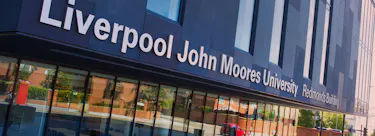
Liverpool John Moores UniversityApplied Management: Policing - BSc
- 3 years
- Full-time
- On campus
- Degree type
- Bachelor's
- Subject area
- Police Studies , Business Management
- Location
- Liverpool, UK
- Next available start date
- September 2027
- Annual tuition fee
- 10,250GBP
See all undergraduate degrees in police studies abroad
What are the top police studies postgraduate programs abroad?

Dublin City UniversityLaw: Policing, Crime and Security - LLM
- 1 year
- Full-time
- On campus
- Degree type
- Master's
- Subject area
- Law , Police Studies , Criminal Justice
- Location
- Dublin, Ireland
- Next available start date
- November 2026 +7 more
- Annual tuition fee
- 16,500EUR

University of SunderlandLeadership in Criminal Justice and Policing - MSc
- 1 year
- Full-time
- On campus
- Degree type
- Master's
- Subject area
- Leadership , Police Studies , Criminal Justice
- Location
- Sunderland, UK
- Next available start date
- November 2026 +2 more
- Annual tuition fee
- 17,000GBP
See all postgraduate degrees in police studies abroad
Future police studies careers
Many graduates with a police studies degree look to start a career in law enforcement. There are a number of positions you could look to take, but some may require additional qualifications. Some roles you could pursue include:
- Police officer
- Prison officer
- Community officer
- Private security
- Forensic examiner
- Criminal lawyer
Check what qualification each degree will give you. For example, most police studies programs will not qualify you to work as a police officer, but will give you a strong academic understanding of the role.
Police studies programs will also give you a number of transferable skills that could help you find a career in a range of sectors including business, finance or education.