
Hong Kong’s higher education system is compact, international-facing, and strongly connected to a fast-moving city economy. Most degrees are taught in a structured, course-based format with a mix of lectures and smaller-group learning, and students are expected to become independent quickly. After graduation, many students aim for work in Hong Kong’s major business and professional sectors, or continue to further study and professional training.
How degrees are structured
Hong Kong uses clear qualification levels across post-secondary education, from sub-degree options through to doctoral study. Undergraduate study at many universities follows a four-year structure, with programs typically organized into modules or courses that build toward a full qualification. Teaching often combines classroom learning with projects and practical elements, depending on the subject.
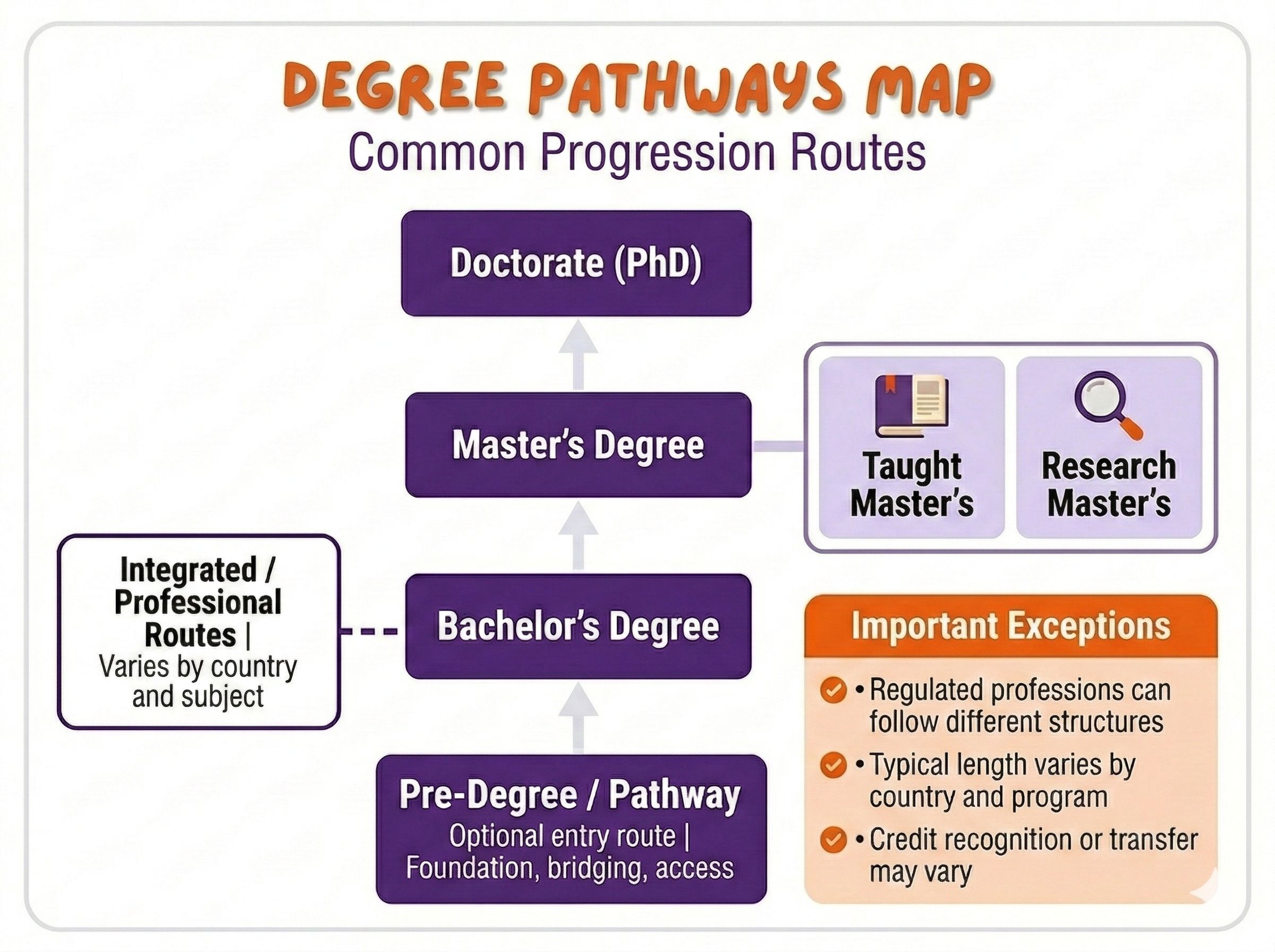
Common degree levels and usual lengths
- Sub-degree qualifications such as associate degrees and higher diplomas
- Bachelor’s degrees, commonly structured as four-year undergraduate programs
- Taught master’s degrees and research master’s degrees
- Doctoral degrees for advanced research
Credit and modular structure
- Many programs use a course-based, credit-style structure where students complete a set of required and elective courses across years of study
- The exact structure can vary by institution and subject area
Teaching and assessment model
- Common formats include lectures, tutorials or seminars, labs or studio work for practical subjects, and project-based learning
- Assessment often mixes coursework, group projects, presentations, and exams, with the balance depending on the program
Pathways and flexibility
- Some students study in sub-degree routes before moving into degree-level study, depending on their pathway and institution options
- Many programs allow some choice through electives, with flexibility differing by program
Major exceptions
- Regulated and professionally linked fields can have more fixed structures and specific practical components, and may follow different patterns across institutions
❗ Hong Kong bachelor’s degrees are commonly 4 years. Students comparing destinations should factor this into total cost and timing, especially if they’re used to 3-year bachelor structures elsewhere.
Academic strengths & popular study fields
Hong Kong is known for study options that connect strongly to a global business hub and an advanced services economy. Because the city is dense and highly international, many subjects are closely linked to industry practice and regional networks. Strengths can also vary by institution type and by how closely a program is tied to professional bodies and employers.
Well-known fields linked to the local economy
- Business and management, finance, accounting, and related professional fields
- Law and legal studies connected to a major commercial environment
- Logistics, supply chain, and transport-related fields linked to a global trade center
Technology and applied fields
- Computing, data-focused subjects, and engineering-related disciplines
- Built environment fields that connect to infrastructure and city development
Creative and communication fields
- Design, media, and creative industries that connect to a large regional market
Variation notes
- Program focus can differ by institution mission and funding model, and by how applied or research-led the learning is
- Opportunities connected to industry can be more visible in sectors that are strongly represented in Hong Kong’s economy
Student life & learning style
Student life in Hong Kong is shaped by a busy, high-density city environment, with strong public transport and a fast pace. Learning expectations often include active self-management, especially around reading, assignments, and project work. The experience can feel very urban and time-efficient, with students balancing study with commuting, part-time work, or activities depending on their situation.
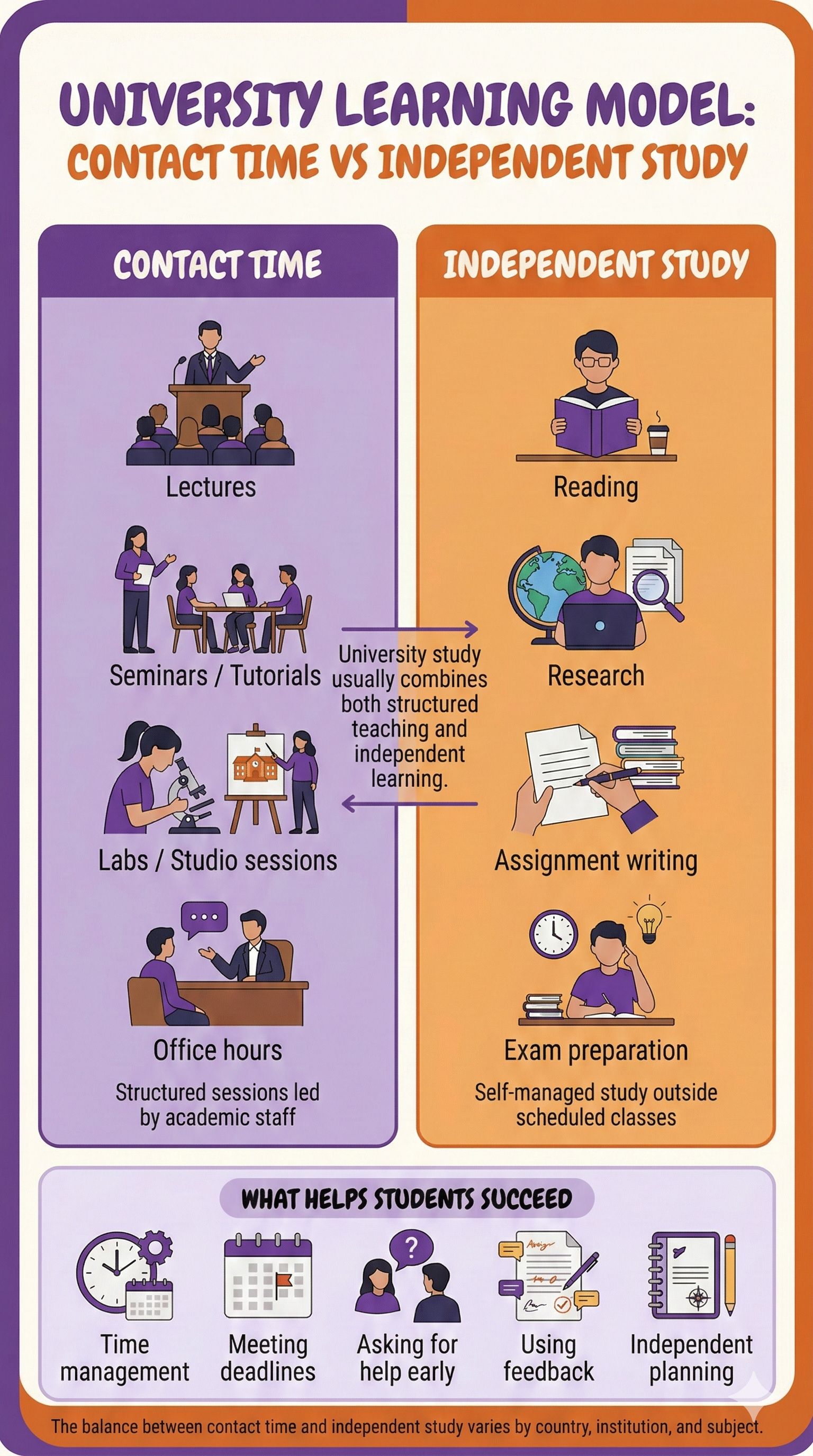
Classroom culture and independence
- Students are generally expected to manage deadlines, plan independent study time, and seek help when needed
- Many courses encourage asking questions and contributing in smaller-group settings, though comfort levels vary by class culture
Contact hours and self-study
- Many subjects require significant self-study outside scheduled classes, especially for reading, problem sets, and project work
Group work and feedback
- Group projects are common in many fields, and feedback can be delivered through written comments, rubrics, and meetings depending on course design
Campus and commuter patterns
- Both campus-based and commuter student lifestyles exist
- Accommodation availability and distance to campus can shape how “campus-based” the experience feels for a student
Daily life
- Students often plan around transport time, meal costs, and housing location
- The city offers many social and cultural options, but budgeting and time management matter
❗ Day-to-day life is shaped by commute and pace. Travel time, housing location, and schedule density can affect study habits and well-being, so students should plan routines early (study blocks, transport, budgeting) rather than assuming it will “fit itself.”
What happens after graduation
Graduates commonly move into work, further study, or structured professional training, depending on the field. Recruitment often reflects Hong Kong’s professional and services-oriented economy, where internships, practical experience, and networking can matter alongside academic results. Outcomes can vary widely by subject area and by the strength of the local job market at the time a student graduates.
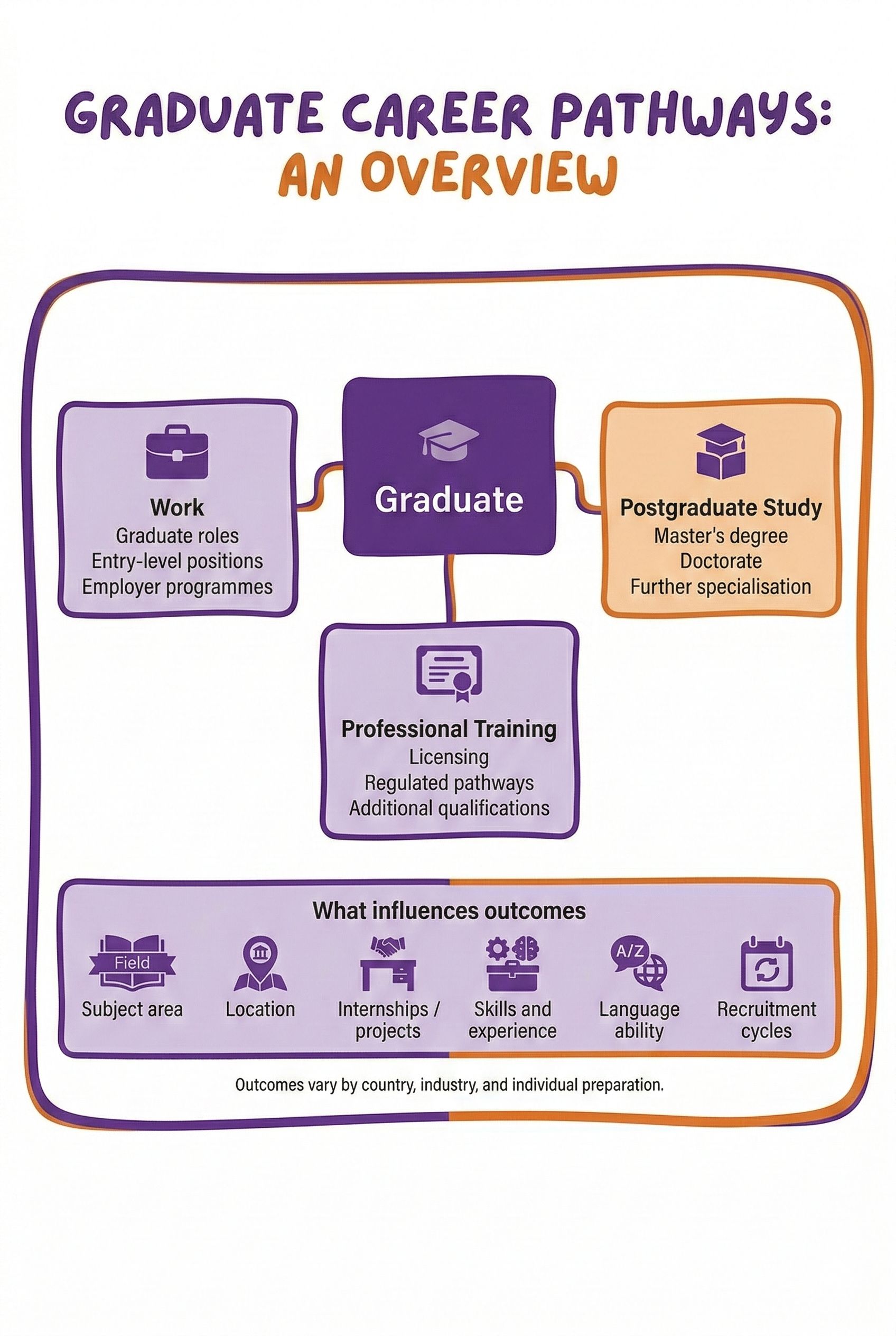
Common next steps
- Full-time work in business, professional services, technology, logistics, and other major sectors
- Further study such as master’s programs or research pathways
- Professional training routes in fields with formal pathways to practice
How employability commonly works
- Employers may look at academic performance, relevant skills, practical experience, and communication ability
- Some sectors recruit through structured graduate hiring cycles, while others hire more flexibly year-round
- Careers support commonly includes employer events, internships support, and coaching, but engagement often depends on the student
National measurement
- Hong Kong publishes official labor force and earnings statistics, and sector bodies also publish graduate outcomes datasets for parts of the system
Variation note
- Employment patterns can differ by industry, language requirements, and region within the wider Hong Kong economic area, and may shift with economic conditions
❗ In Hong Kong, connections and experience can be a major advantage. Internships, project work, and networking often play a big role in hiring in professional services and business sectors, so students should engage early with careers support and employer events.
Costs & funding overview
Costs in Hong Kong can be shaped strongly by housing and day-to-day living choices, alongside tuition and program fees. The system includes different institution types and funding models, so cost structures can vary across programs. Families usually plan for several categories of spending and build a budget around location, housing style, and lifestyle pace.
Main cost categories
- Tuition and compulsory fees set by the institution and program
- Housing and utilities, whether in student residences or private accommodation
- Daily living costs such as food, transport, and mobile connectivity
- Course costs such as materials, equipment, or fieldwork for some subjects
- Health-related costs and insurance where students choose or are required to have coverage by their provider
What makes costs higher or lower
- Living area and commuting distance, with central locations often costing more
- Housing type, with private rental generally more expensive than shared arrangements or residence options where available
- Lifestyle choices such as eating out, transport usage, and leisure spending
- Program needs such as lab kits, specialist software, or studio materials
How families usually fund study
- Family funding is common for international students
- Scholarships and bursaries exist across the sector, with availability varying by provider and student profile
- Loan schemes are typically more relevant for eligible local students, with terms depending on the scheme
❗ Housing choices can change the total budget significantly. Residence halls, shared housing, and private rental can lead to very different costs, so families should budget around the student’s likely housing plan rather than one city-wide assumption.
Typical costs
These figures are best used as high-level planning ranges. Exact costs vary by institution, program, housing choice, and lifestyle.
Typical cost of a degree
For non-local students, a useful planning range for tuition is around HK$90,000 to HK$265,000 per year. On that basis, tuition alone for a typical 4-year bachelor’s degree is often around HK$360,000 to HK$1,060,000 total, before scholarships or other support.
Typical cost of living
A useful planning benchmark is HK$30,000 to HK$50,000 per year for living costs such as food, transport, leisure, and personal items, plus accommodation. University-provided residence halls or hostels are shown at around HK$5,000 to HK$15,000 per semester, while off-campus accommodation can cost about that much per month.
Scholarships
Scholarships for international students are available in Hong Kong, but they are not the main source of funding for most students. For more information, see the Study in Hong Kong scholarships page.
Who is this country a good fit for?
Hong Kong can suit students who want a high-energy city environment and a study experience connected to a major regional economy. It often works well for students who are ready to manage time independently and learn in a structured, course-based system. Fit depends on learning style, preferred lifestyle, and comfort with a dense, fast-paced setting.
Students who often thrive
- Students who are organized, independent, and comfortable asking for support when needed
- Students who enjoy a practical, career-connected environment alongside academic study
- Students who like living in a global city with diverse people and industries nearby
Good fit by broad academic interests
- Students interested in business, professional fields, trade-connected sectors, technology, and urban development-related areas
- Students who want access to a wide mix of academic and applied learning options
Good fit by lifestyle
- Students who like city living, efficient transport, and lots of options for food, culture, and activities
- Students who are comfortable with busy schedules and shared living arrangements
May feel challenging if
- A student strongly prefers a quiet, spacious environment with a slower pace
- A student needs very high day-to-day structure from teachers rather than managing their own workload
What may feel different in Hong Kong’s higher education system
Studying in Hong Kong can feel fast-paced, urban, and independent. Students are usually expected to manage multiple course deadlines, use online systems, communicate with staff and services directly, and balance study with commuting, housing, and city life.
Teaching style
- Teaching often includes lectures, tutorials, seminars, labs, studio work, or project-based learning, depending on the subject
- Smaller-group teaching may expect students to ask questions, discuss ideas, and apply concepts through practical tasks
- Teaching can involve fewer closely supervised hours, with more independent reading, preparation, and project work outside class
Assessment style
- Assessment commonly includes exams, coursework, group projects, presentations, reports, practical tasks, and participation
- Group projects and presentations can be common, especially in business, technology, communication, and applied fields
- Feedback may be given through written comments, rubrics, grades, meetings, or project reviews, depending on the course
Independence level
- Students are expected to plan study time, track course deadlines, and manage administrative tasks through institutional systems
- Academic support is available, but students usually need to take the first step to contact the right service or staff member
- Students may need to manage workload carefully around commuting, housing, budgeting, internships, and city routines
Campus culture
- Student life can vary between campus-based and commuter patterns, depending on housing, location, and institution
- Students may build community through classes, student societies, internships, shared housing, and city activities
- The pace can feel faster in the first semester as students adjust to transport, cost planning, housing, and a dense city environment
❗ Daily routines matter in Hong Kong. Commute time, housing location, group work, and city pace can affect study habits, so students who plan their week early are usually better prepared.
Hong Kong Student visa overview
Most non-local students who study a full degree in Hong Kong need a student visa or entry permit before they can study. This applies to students who do not have the right of abode, right to land, or another valid immigration status that allows them to study in Hong Kong.
For most degree students, the key dependency is admission to an eligible education provider in Hong Kong. Students usually need an admission offer and supporting documents before the student visa or entry permit application can move forward, and institutions often support or sponsor the application process.
Main visa points
| Visa point | What students should know |
|---|---|
| Visa type | Student visa or entry permit |
| Main dependency | The student usually needs admission to an eligible Hong Kong education provider and institutional support or sponsorship for the application |
| Typical application timing | Students should usually begin visa planning after accepting an offer and well before registration or travel |
| Typical decision time | The Immigration Department says processing normally takes 6 weeks after all required documents are received |
| Interview | An interview is not usually a standard requirement, but students may be asked for documents, further information, or checks if needed |
| Extra requirements | Students may need to show they meet identity, admission, financial, accommodation, academic, and immigration requirements |
Why this matters
The Hong Kong visa timeline is closely connected to the admissions and registration timeline. A student may have an offer, but they usually still need institutional visa support, complete documents, Immigration Department processing, and travel or entry-permit arrangements before they are ready to begin study.
❗ A Hong Kong offer does not automatically mean a student is ready to travel or register. Student visa or entry permit processing, institutional sponsorship, financial evidence, document checks, and travel planning all need to fit around the program start date.