
Turkey has a large and diverse higher education system with many public and private universities. Degrees are usually organized in a Bologna-style structure with modular courses, and students are expected to combine taught learning with regular self-study. After graduation, many students aim for work in Turkey or the wider region, or continue into postgraduate study, depending on their subject and local job market.
How degrees are structured
Most programs follow a structured curriculum made up of semester-based courses, and many universities use the European Credit Transfer and Accumulation System to describe workload. Teaching is typically a mix of lectures and applied work, with assessment through exams, coursework, projects, and practical tasks depending on the field.
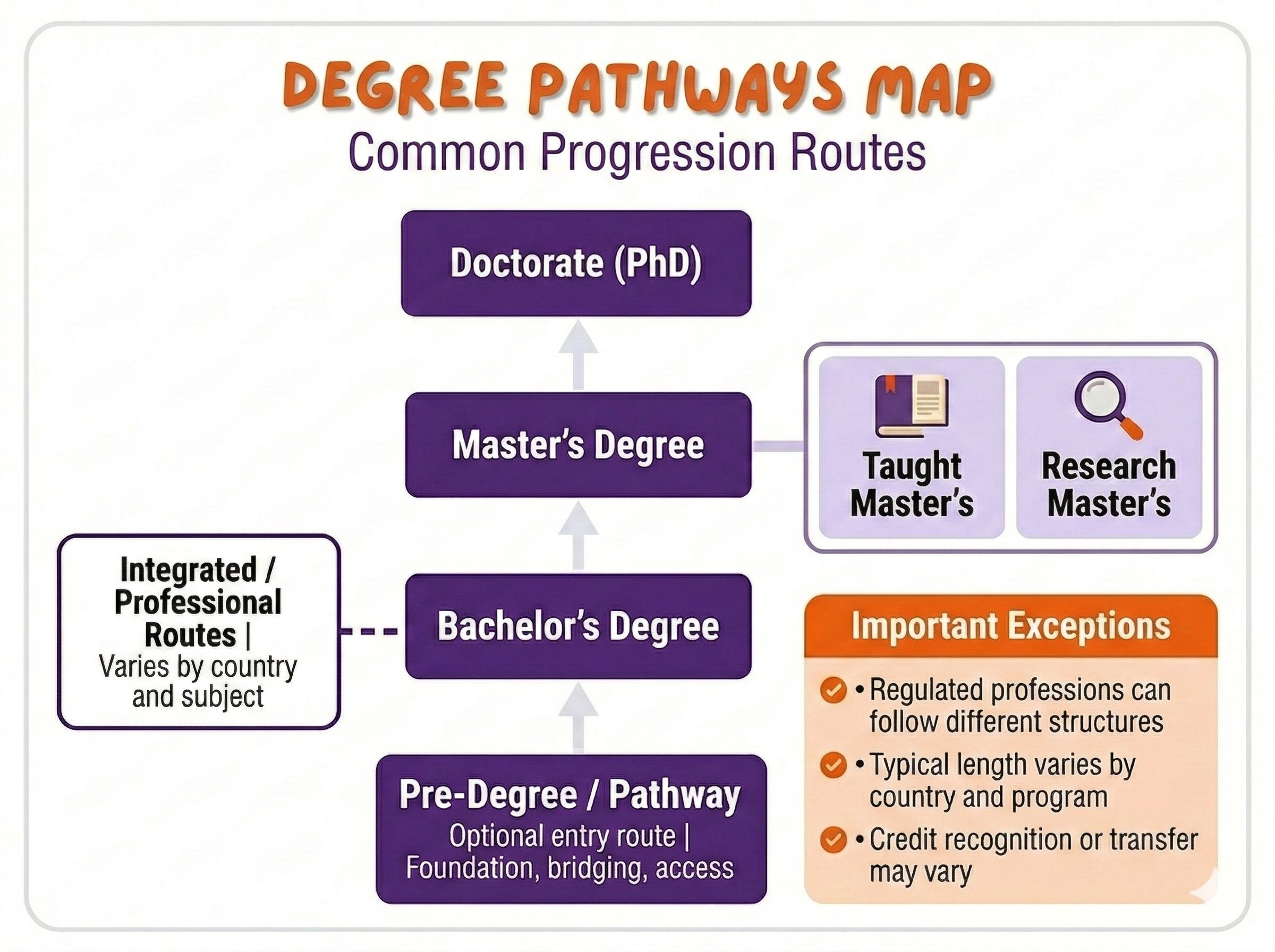
Common degree levels and usual lengths
- Short cycle associate degree is often 2 years
- Bachelor degree is often 4 years
- Master degree commonly takes 1 to 2 years depending on whether it includes a thesis
- Doctorate often takes several years after a master degree
Credit and workload structure
- Many programs are built around a semester system and course credits
- Full-time study load is commonly described through ECTS credits across the academic year
Teaching and assessment model
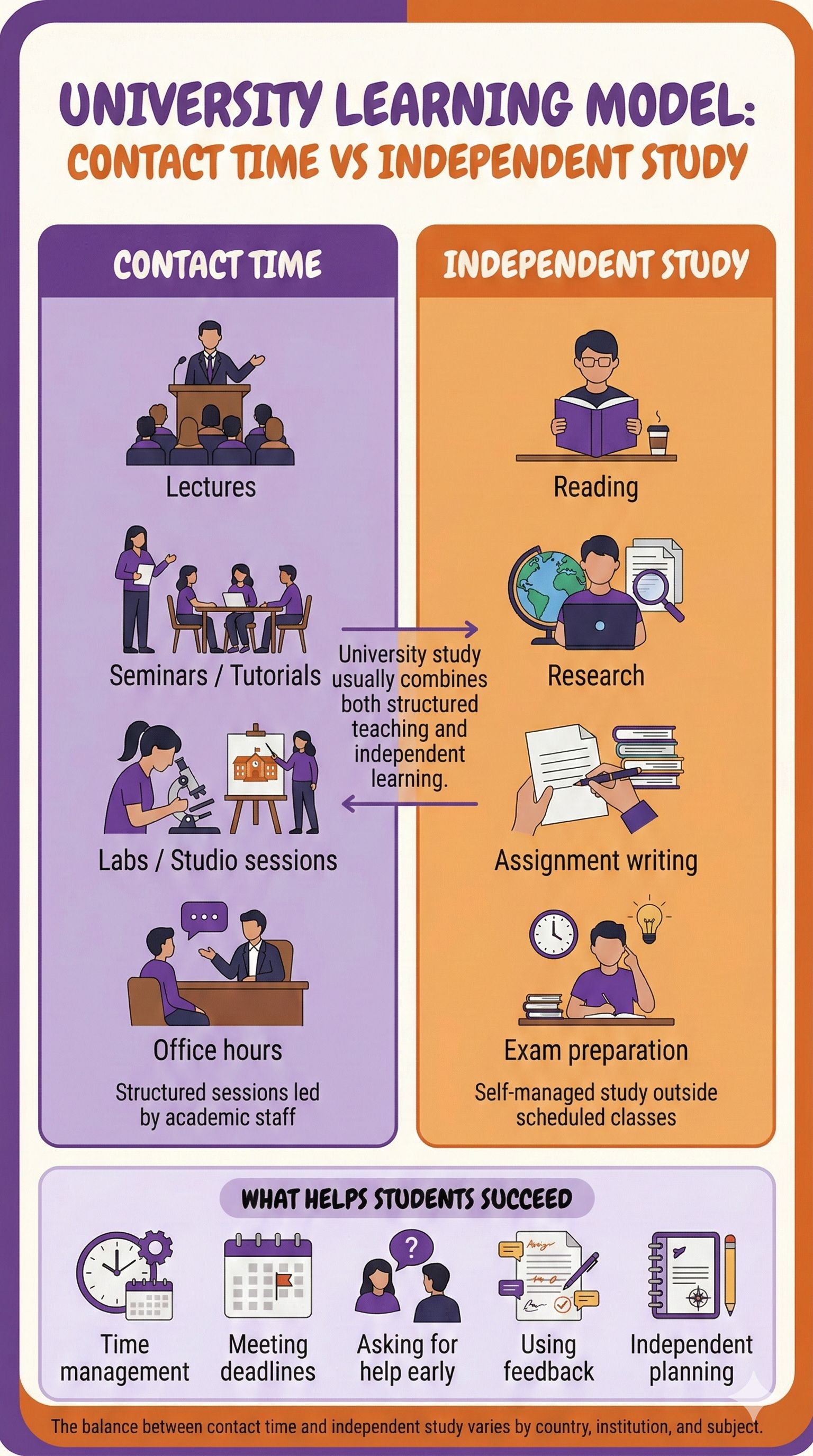
- Lecture-based teaching is common, supported by seminars, labs, studio work, and group projects where relevant
- Assessment often combines midterms, final exams, coursework, presentations, and practical evaluation
Flexibility and pathways
- Some universities offer options like minors, double majors, or elective course choices, but how flexible this is varies widely by institution and program
- Transfers and credit recognition can be possible but are not handled the same way everywhere
Major exceptions
- Regulated professional fields can have different structures and longer study periods, especially in health-related programs and some professional tracks
Academic strengths & popular study fields
Turkey’s strengths are shaped by a mix of long-established universities, growing research capacity, and strong links to regional industry and services. Many programs are designed to connect to real sectors such as manufacturing, construction, health services, tourism, and logistics, though the strongest clusters can differ by city and region.
Well-known and industry-aligned fields
- Engineering and applied sciences in areas linked to manufacturing and infrastructure
- Health-related fields connected to a large national health care system
- Business, management, and economics linked to a broad private sector
- Architecture and built environment linked to construction and urban development
- International relations and regional studies linked to Turkey’s geographic position and regional connections
Links to industry ecosystem
- Strong connections can exist in major economic hubs, especially for engineering, tech, services, and trade-related areas
International student choices
- Many international students choose programs in business, engineering, health-related areas, and social sciences, but popularity can vary year to year and by language of instruction
Variation by region and institution type
- Large cities often offer wider program choice and stronger links to employers, while smaller cities can offer a more focused student experience
Student life & learning style
Student experience in Turkey can look very different depending on the city, the type of university, and whether students live on or near campus. Learning often expects students to manage deadlines, study independently, and build skills through projects and practical work, especially in applied subjects.
Classroom culture and independence
- Teaching can be structured and teacher-led, but students are still expected to keep up with reading, assignments, and exam preparation
- Self-organization and regular revision are important, especially in exam-heavy programs
Contact hours and self-study
- Many programs combine scheduled class time with significant self-study outside class
Group work and participation
- Group projects are common in many subjects, and participation expectations vary by lecturer and program culture
Campus and commuter culture
- Some universities have strong campus life, while others have a more commuter-based student population, especially in large cities
Accommodation and daily life patterns
- Students may live in university residences, private dorms, or rented housing with family support patterns varying by location
- Daily costs and lifestyle depend heavily on city, transport needs, and housing choices
❗ Assessment style can be exam-led. In many programs, midterms and finals carry a lot of weight, so students who build steady revision habits from the start usually find the transition easier.
What happens after graduation
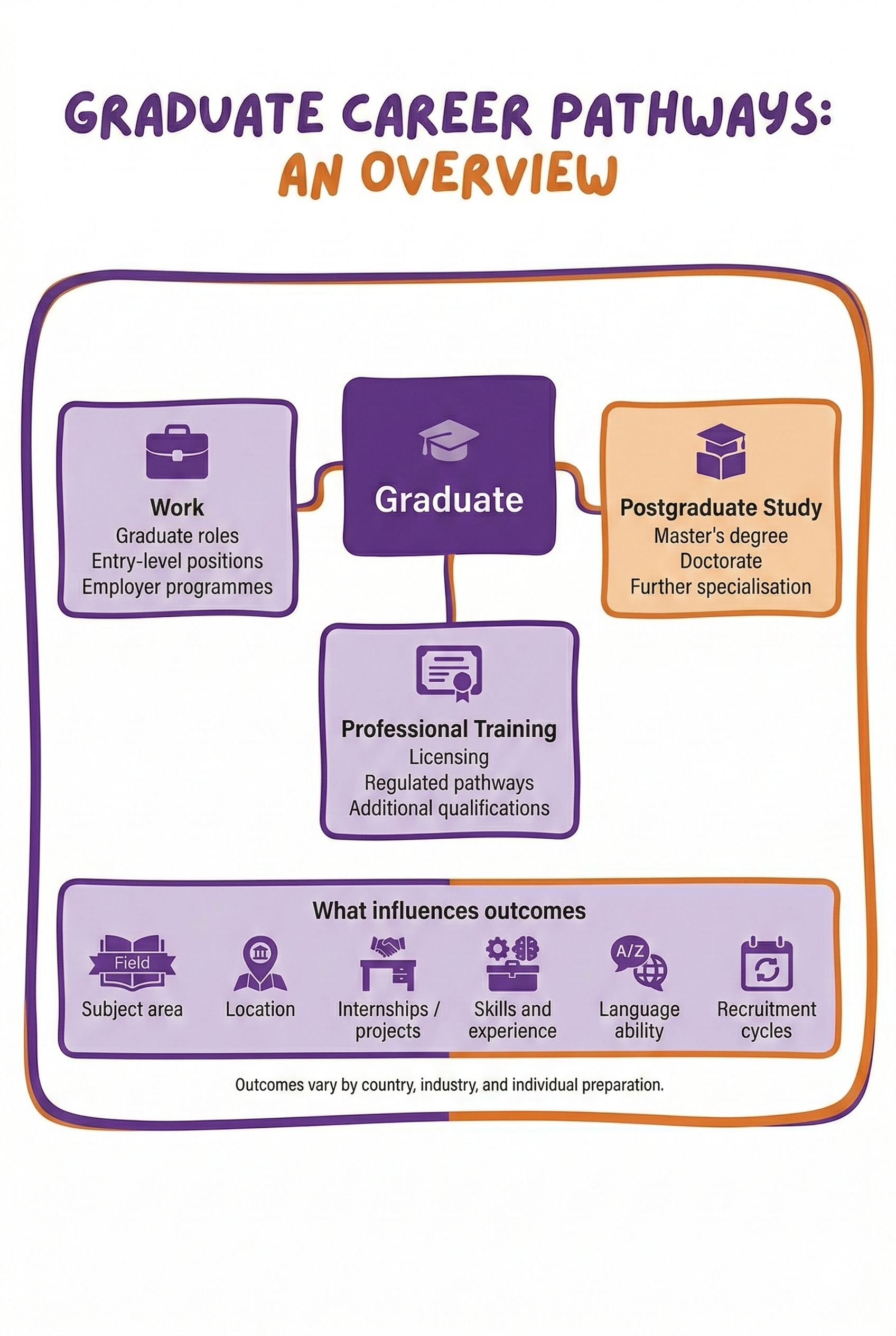
After graduation, students commonly move into work, postgraduate study, or professional training depending on the field. Employability is shaped by subject area, location, practical experience, and the strength of a student’s skills and networks, and it can vary significantly across regions and sectors.
Common next steps
- Entry-level work in private companies, public sector roles, or regulated professions depending on qualifications
- Further study at master or doctorate level for academic, research, or specialist career paths
- Professional training routes in fields that require additional supervised practice or licensing
How employability typically works
- Employers often look for relevant skills, practical experience, and strong communication
- Internships, project experience, and portfolio work can matter more in applied fields
- Career services exist at many universities, but the level of support and employer access varies
National measurement
- Turkey publishes national indicators that track registered employment outcomes for higher education graduates
Important variation note
- Outcomes vary by subject, city, and local labor demand, and the same degree can lead to different pathways depending on experience and sector conditions
❗ Location matters for opportunities. Job pathways can differ significantly between major economic hubs and smaller cities, so students should consider where their industry is concentrated and how they’ll build experience during study.
Costs & funding overview
Costs in Turkey can be very different depending on whether a student studies at a public or private university and where they live. Families usually plan for both study-related costs and living costs, with the biggest changes often coming from housing and city choice.
Main cost categories
- Tuition and university fees where applicable
- Housing and utilities
- Food, local transport, and daily living costs
- Course materials and equipment in some subjects
- Health coverage and personal expenses depending on circumstances
What makes costs higher or lower
- Large-city living can be significantly more expensive than smaller cities
- Housing choice is often the biggest driver of overall cost
- Some subjects have extra costs for labs, studio materials, or fieldwork
- Private universities can have different fee structures than public universities
How families usually fund study
- Family funding is common
- Scholarships and bursaries exist through universities and other organizations
- Loan availability and eligibility depend on a student’s status and the provider
Availability and eligibility
- Financial support options vary widely by institution, program, and student status
❗ Public vs private can be a major difference in Turkey. Fees, facilities, and student support can vary by provider type, so families should compare costs and what’s included (tuition, services, housing options) for the specific university, not just the country.
Typical costs
These figures are best used as high-level planning ranges. Exact costs vary by provider, city, course, and student status.
Typical cost of a degree
There is not one single national tuition figure that fits all international students in Turkey, because fees vary by university, program, and provider type. For the most relevant estimate, students should check the fee information shown on the Study in Türkiye university and program pages for their specific institution.
Typical cost of living
Living costs vary by city and housing choice. As a broad official guide, monthly accommodation costs are shown as ranging from 215 TL to 2,500 TL. This is only one part of the total budget, so actual living costs will be higher once food, transport, and personal spending are added.
Scholarships
Scholarships for international students are available in Turkey, but they are not the main source of funding for most students. For more information, see Türkiye Scholarships page.
Who is this country a good fit for?
Turkey can suit students who want a broad choice of programs and cities, and who are comfortable adapting to a system where student experience varies a lot by institution and location. It can be a good option for students who are ready to take responsibility for steady study habits and who want to build practical skills alongside academic learning.
Student profiles that tend to thrive
- Students who can manage deadlines, exam preparation, and independent study
- Students who are adaptable and comfortable navigating different teaching styles across courses
- Students who want a mix of academic learning and applied work in suitable programs
Good fit by academic interests
- Applied and professional areas such as engineering, business, health-related fields, and built environment subjects
- Students interested in regional studies, trade, and cross-cultural environments
Good fit by lifestyle preferences
- Students who like lively city environments and variety of student communities
- Students who prefer a range of campus types, from large campuses to city-based universities
May feel challenging if
- A student needs a very consistent academic experience across all institutions and cities
- A student struggles with exam-based assessment or self-managed study routines
What may feel different in Turkey’s higher education system
Studying in Turkey can feel more varied by institution, city, and faculty than students may be used to. Teaching is often structured, but students are still expected to manage independent study, exam preparation, academic questions, and administrative processes proactively.
Teaching style
- Teaching often includes lectures, seminars, labs, studio work, practical classes, or group projects, depending on the subject
- Some courses may feel more lecture-led, with fewer informal check-ins than students expect
- Participation expectations can vary by lecturer, program, and institution culture
Assessment style
- Assessment commonly includes midterms, final exams, coursework, presentations, practical tasks, projects, and lab or studio evaluation
- In many programs, exams can carry significant weight, so regular revision is important
- Feedback may be more focused on grades and exam performance in some subjects, depending on the course structure
Independence level
- Students are expected to manage deadlines, exam preparation, readings, and academic questions with increasing independence
- Support may be available through teaching staff, departments, or student services, but students usually need to find the right office or contact point
- Processes can differ by university, faculty, or department, so students may need to check requirements carefully
Campus culture
- Student life can vary widely between large city universities, campus-based institutions, and commuter-style study environments
- Students may build community through classes, student clubs, shared housing, campus activities, or city life
- Daily routines can be shaped strongly by city size, transport, housing, and whether students live in a residence, dorm, private rental, or with family
❗ Student experience can differ a lot across Turkey. Students who check course rules, assessment patterns, support services, and housing options early are usually better prepared.
Turkey Student visa overview
Most international students who come to Turkey for higher education need a student visa before travel, unless a specific exemption applies. Students who stay in Turkey for their studies also need a student residence permit to remain legally during their program.
For most degree students, the key dependency is an acceptance letter or enrollment confirmation from a Turkish higher education institution. Students usually need this document before applying for a student visa, and they need to complete residence permit arrangements after arrival if they will stay in Turkey for their course.
Main visa points
| Visa point | What students should know |
|---|---|
| Visa type | Student visa before travel, followed by a student residence permit for longer study stays |
| Main dependency | The student usually needs an acceptance letter or enrollment confirmation from a Turkish higher education institution |
| Typical application timing | Students should usually begin visa planning after admission and before travel; residence permit planning is usually needed after arrival |
| Typical decision time | Timing varies by Turkish consulate, season, application completeness, and residence permit appointment availability |
| Interview | Students may need a consular appointment or interview for the visa, and may need to complete residence permit formalities after arrival |
| Extra requirements | Students may need to show they meet identity, admission, financial, insurance, accommodation, health, and residence permit requirements |
Why this matters
The Turkey visa and residence permit timeline is closely connected to the admissions and arrival timeline. A student may have an offer, but they usually still need the right acceptance documents, student visa arrangements where required, travel planning, and residence permit steps after arrival.
❗ A Turkish offer does not automatically mean a student is ready to travel or stay for the full course. Student visa rules, residence permit requirements, consular timing, insurance, accommodation evidence, and arrival planning all need to fit around the course start date.