
Singapore is a highly structured, career-oriented higher education environment in a small, modern city-state. Most students study in a modular system with clear academic requirements, and learning is typically practical and skills-focused alongside strong academic standards. After graduation, many students aim for work in Singapore’s major industries or continue to specialist training or postgraduate study.
How degrees are structured
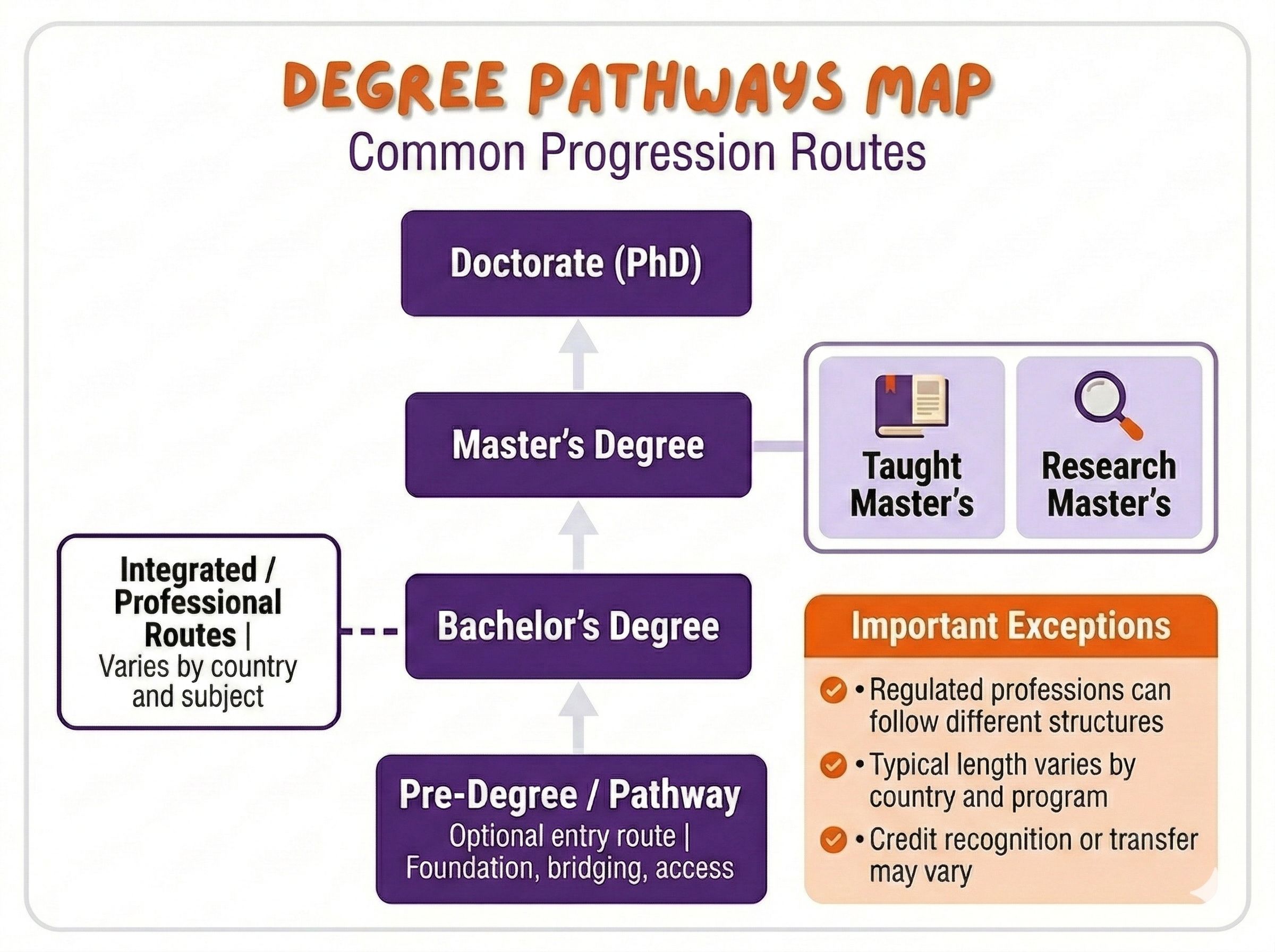
Higher education in Singapore includes different pathways, from applied diplomas to academic degrees. Many programs are modular, with students completing a set number of credits and required courses, and assessment often mixes exams with projects, labs, and continuous coursework.
Common levels and usual lengths
- Diplomas are commonly a few years in length and are designed for direct entry into work or progression to a degree
- Bachelor’s degrees are often three to four years, with some programs structured as direct honors
- Master’s and doctoral study exists across taught and research routes, with structure varying by field and institution
Credit and modular structure
- Study is typically organized into modules with credit values and progression rules
- Students usually follow a planned curriculum with some choice through electives, tracks, or interdisciplinary options depending on the program
Teaching and assessment model
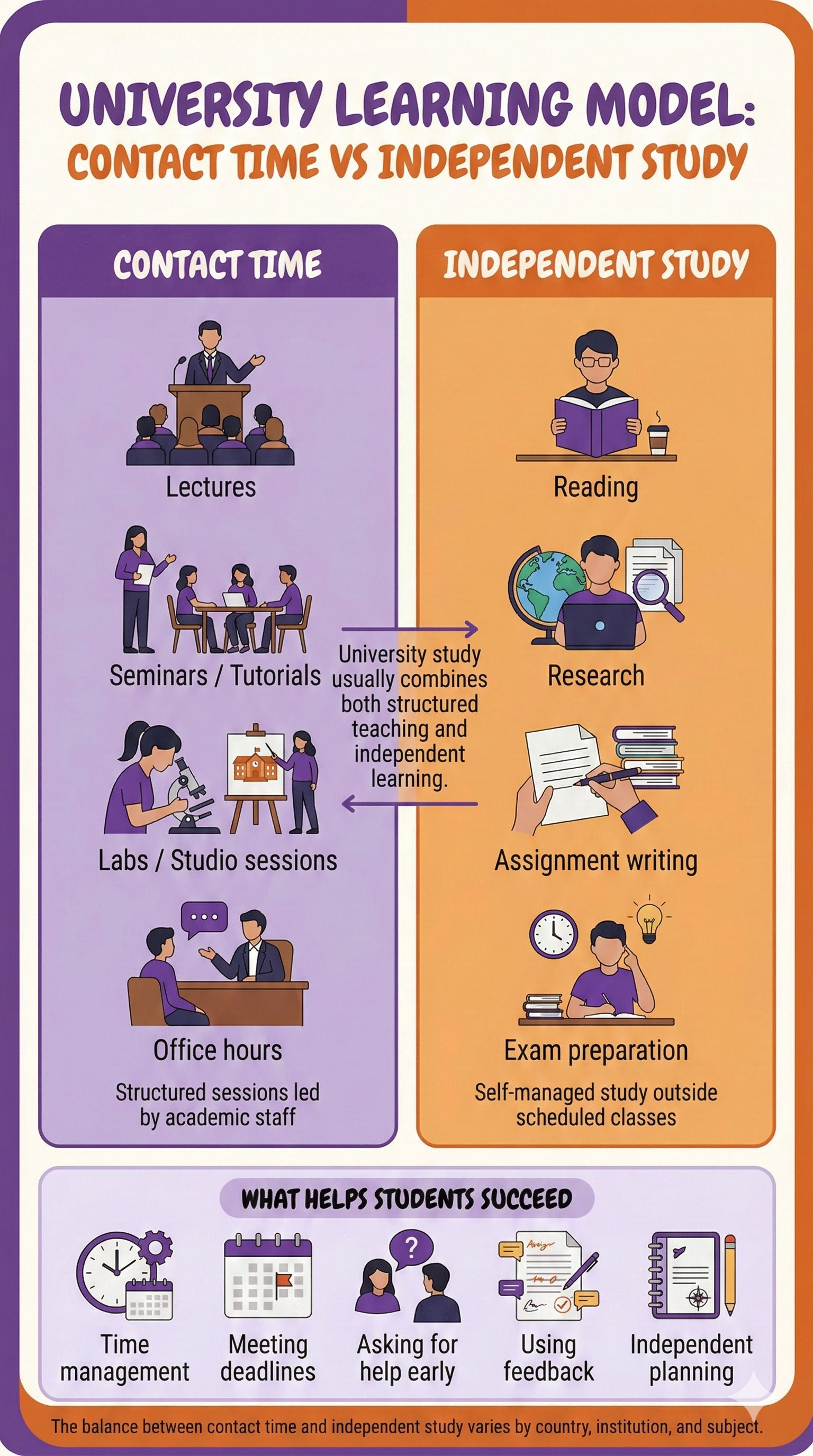
- Common formats include lectures, tutorials or seminars, labs, and team projects
- Assessment often combines exams with graded coursework, presentations, and practical work
Flexibility and pathways
- Some programs allow choice of specializations or second majors, but flexibility depends on the institution and course design
- Transfers between pathways are possible in some cases, but are not a single national norm and depend on academic fit and capacity
Major exceptions
- Regulated and professional fields can have longer or more prescribed structures, with tighter progression requirements and required practical components
❗ Pathway transfers are possible, but not automatic. Moving from a diploma route into a degree depends on the institution, academic fit, and capacity, so students should check progression rules early if they’re planning a step-by-step pathway.
Academic strengths & popular study fields
Singapore’s strengths are closely linked to its role as a regional hub for business, technology, and advanced manufacturing. Many programs are designed with industry needs in mind, and applied learning can be a strong feature in technical and professionally aligned routes.
Well-known fields and sector links
- Business, finance, and related professional disciplines linked to Singapore’s role as a financial center
- Computing, data, and engineering fields aligned with a strong technology ecosystem
- Life sciences, biomedical, and health care-related fields linked to national innovation priorities
- Logistics, supply chain, and maritime-related disciplines reflecting Singapore’s global connectivity
- Design, built environment, and urban solutions linked to Singapore’s focus on planning and infrastructure
What varies by institution type
- Applied institutions tend to emphasize hands-on learning and work-linked training
- Research-intensive routes tend to emphasize deeper theory, research methods, and advanced projects
Where strengths can vary
- Some strengths cluster around specific industry hubs and employer networks, so opportunities and exposure can differ by sector and location
Student life & learning style
Singapore is a dense, safe, and well-connected city with a fast pace and high everyday convenience. Student life can feel different depending on whether a student lives on campus or commutes, and expectations are often shaped by strong academic discipline and personal responsibility.
Classroom culture and independence
- Students are expected to manage deadlines, plan their workload, and ask for help when needed
- Many courses value clear communication, teamwork, and practical problem-solving
Contact hours and self-study
- Contact time can vary by subject, but independent study and preparation are important across most programs
Group work and participation
- Team projects are common in many fields, and students may be assessed on both outcomes and collaboration
- Participation expectations vary, but being proactive and prepared is usually valued
Campus versus commuter patterns
- Some students live on campus, while many local students commute from home
- Social life can be campus-centered for residential students and more city-centered for commuters
Accommodation and daily life
- Housing options and availability vary, and daily living is shaped by public transport, food courts, and a strong services culture
❗ Group work can affect grades. In many programs, teamwork and project delivery are assessed, so students benefit from strong time management, clear communication, and reliable collaboration habits.
What happens after graduation
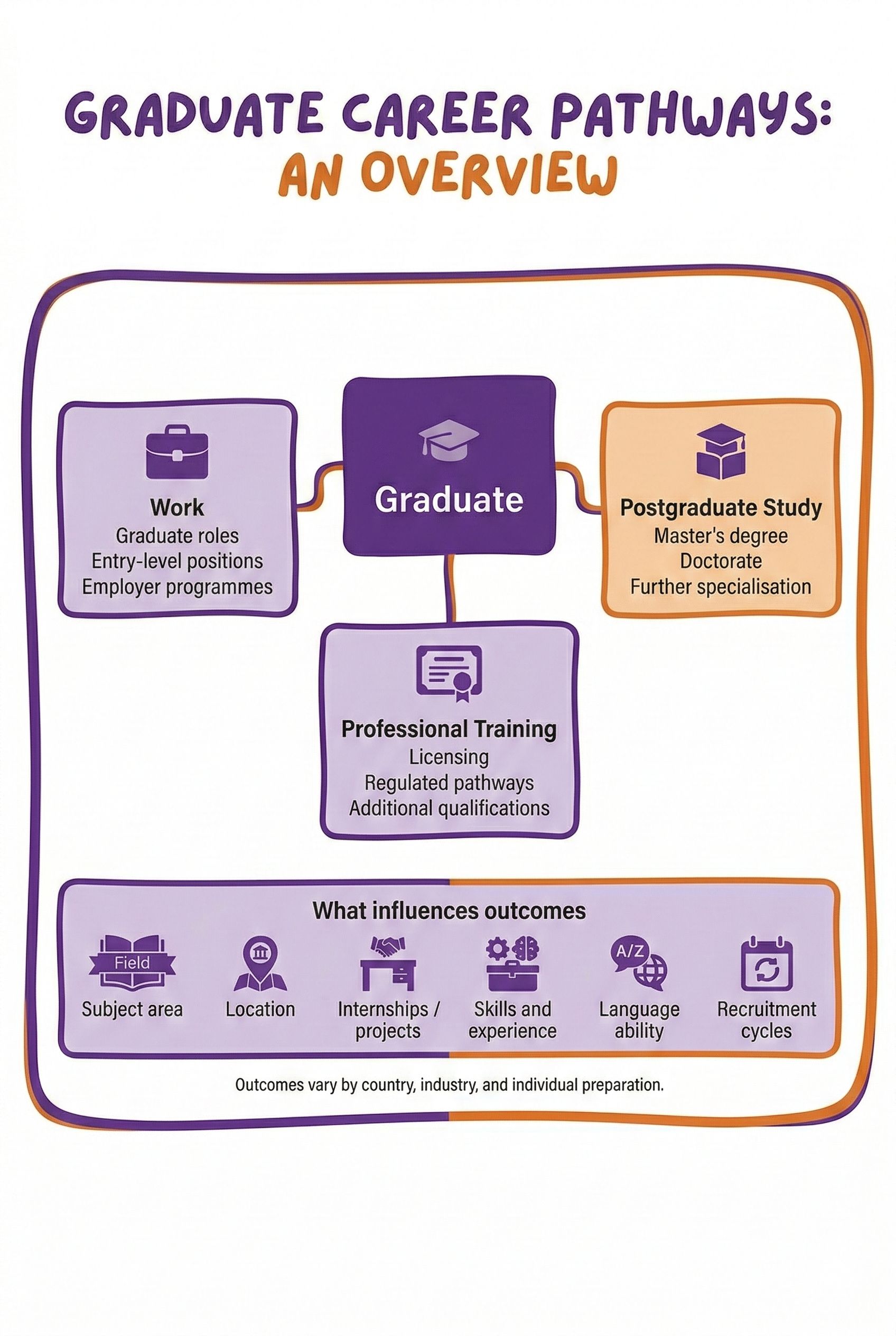
Graduates commonly move into work, further study, or structured professional training depending on their field. Hiring tends to be skills-focused, and practical experience, internships, and strong communication can matter alongside grades, especially in competitive sectors.
Common next steps
- Full-time employment in private sector, public sector, or regulated professions
- Further study such as specialized master’s programs or research routes
- Professional qualification pathways in fields that require licensing or supervised training
How employability tends to work
- Recruitment often includes structured graduate programs in larger employers, and direct hiring in smaller firms
- Internships, portfolios, and demonstrated skills can be important, especially in tech, business, and creative fields
- Careers support is typically available through institutional career centers, events, and employer networking
National measurement
- Graduate outcomes are tracked through national graduate employment surveys for key institutions
Important reality check
- Outcomes can vary a lot by subject area, economic conditions, and the local demand for specific skills
Costs & funding overview
Costs in Singapore are usually shaped by tuition, housing choices, and daily living in a major city. The biggest differences for families often come from where a student lives, lifestyle choices, and the type of institution and program.
Main cost categories
- Tuition and compulsory fees
- Accommodation and utilities
- Daily living costs such as transport, food, and study materials
- Health insurance and health care-related costs where applicable
What makes costs higher or lower
- Living on campus versus renting privately versus living with family
- Location and housing type, including proximity to campus and transport
- Lifestyle choices such as dining, travel, and personal spending
- Program features that require extra materials or specialized equipment
How study is usually funded
- Family funding is common
- Scholarships and bursaries exist but vary widely by provider and student profile
- Loan options may exist for eligible students depending on status and the institution’s framework
What varies
- Funding availability and eligibility rules differ across providers and student categories, so families should expect variation
❗ Housing decisions can change the total budget. On-campus, private rental, or living with family can lead to very different costs, so families should budget based on the student’s likely housing plan, not a single Singapore-wide estimate.
Typical costs
These figures are best used as high-level planning ranges. Exact costs vary by institution, program, housing choice, and student status. Singapore also has different fee outcomes depending on whether a student receives a Tuition Grant.
Typical cost of a degree
There is not one single national tuition figure that fits all international students in Singapore, because tuition depends on the institution, the program, and whether the student receives a Tuition Grant. For a more accurate estimate, students should check the Ministry of Education’s Tuition Grant guidance and then confirm the exact fee on their chosen institution’s program page.
Typical cost of living
Singapore does not have one standard national student living-cost figure. Costs are shaped strongly by housing choice and day-to-day spending in a major city, so families should build their budget around the student’s likely accommodation plan and campus location. For a practical example of how living costs are commonly broken down, students can check institution budgeting pages such as the NUS Living Costs page.
Scholarships
Scholarships for international students are available in Singapore, but they are not the main source of funding for most students. Many are tied to specific institutions, programs, or government schemes. For more information, see the Ministry of Education’s Tuition Grant guidance and institution-level scholarship pages.
Who is this country a good fit for?
Singapore can suit students who want structure, strong standards, and a practical link between study and careers. It often works well for students who are comfortable in a fast-paced city environment and who like clear expectations and measurable progress.
Students who often thrive
- Self-managed learners who keep up with deadlines and can balance multiple modules at once
- Students who like applied learning, projects, and real-world problem-solving
- Students motivated by strong employability links and skills development
Good fit by academic interests
- Business and finance-related fields
- Computing, data, engineering, and technology-linked areas
- Life sciences, health-related disciplines, and innovation-led fields
- Logistics, supply chain, and built environment-related study
Good fit by lifestyle preferences
- Students who enjoy an urban lifestyle with good transport and daily convenience
- Students who prefer a safe environment and organized systems
May feel challenging if
- A student strongly prefers a slow pace or a very traditional campus-town experience
- A student struggles without clear routines and consistent self-discipline
What may feel different in Singapore’s higher education system
Studying in Singapore can feel structured, fast-paced, and career-focused. Students are usually expected to manage workload across several modules, follow clear academic and administrative processes, and build practical skills alongside strong academic performance.
Teaching style
- Teaching often includes lectures, tutorials, seminars, labs, practical classes, and team projects, depending on the subject
- Many courses value clear communication, preparation, teamwork, and practical problem-solving
- Learning can feel closely linked to employability, with applied projects, case studies, and industry-relevant tasks in many programs
Assessment style
- Assessment commonly includes exams, graded coursework, presentations, lab work, practical tasks, group projects, and continuous assessment
- Teamwork and project delivery can be assessed, so collaboration and time management are important
- Academic expectations can feel high, with clear rules, structured deadlines, and strong emphasis on measurable progress
Independence level
- Students are expected to manage several modules at once, track deadlines, and follow institutional guidance carefully
- Support services are usually available, but students may need to ask for help early and use services proactively
- Students may need strong routines to balance study, commuting, group work, internships, and daily life in a busy city
Campus culture
- Student life can vary between residential campus life and a more commuter-based city routine
- Social life may be split between campus activities and the wider city, depending on housing and travel patterns
- Daily life is shaped by public transport, food courts, high convenience, city density, and housing availability
❗ Structure does not remove the need for self-management. In Singapore, students usually need strong routines, clear communication, and reliable teamwork habits to keep up with academic and project demands.
Singapore Student visa overview
Most international students who study a full-time degree in Singapore need a Student’s Pass. This is the main immigration permission for international students studying in Singapore, and it is usually linked to an approved full-time course.
For most degree students, the key dependency is acceptance into an approved full-time course in Singapore. After acceptance, the education provider usually gives instructions for the Student’s Pass process through Singapore’s Student’s Pass Online Application and Registration system, known as SOLAR. If the application is approved, the student receives an In-Principle Approval (IPA) letter before completing the final Student’s Pass formalities.
Main visa points
| Visa point | What students should know |
|---|---|
| Visa type | Student’s Pass |
| Main dependency | The student usually needs acceptance into an approved full-time course in Singapore |
| Typical application timing | Students usually begin Student’s Pass planning after acceptance and once the institution provides the required application details |
| Typical decision time | Processing times vary by institution type, season, application completeness, and whether extra checks are needed |
| Interview | An interview is not usually a standard requirement, but students may need to provide biometrics, documents, medical information, or attend appointments if requested |
| Extra requirements | Students may need to show they meet identity, admission, financial, medical, insurance, and Student’s Pass requirements |
Why this matters
The Singapore Student’s Pass timeline is closely connected to the admissions and enrollment timeline. A student may have an offer, but they usually still need the institution’s application details, SOLAR access, ICA approval, an IPA letter, and final Student’s Pass formalities before they are fully ready to study.
❗ A Singapore offer does not automatically mean a student has immigration permission to study. Student’s Pass processing, IPA timing, institutional instructions, medical checks where required, and arrival planning all need to fit around the course start date.