
Higher education in the United States is large and diverse, with many different types of colleges and universities and a wide range of teaching styles. Degrees are usually built from credit-based courses, with flexibility to explore subjects before specializing. After graduation, many students look for work through a mix of internships, networking, and campus recruiting, while others continue to postgraduate study.
How degrees are structured
Most programs are built from “credit hours” earned through individual courses, often across semesters. Students usually combine required courses in their main subject with broader general education requirements. The system is known for flexibility, but the exact structure still varies by institution and subject.
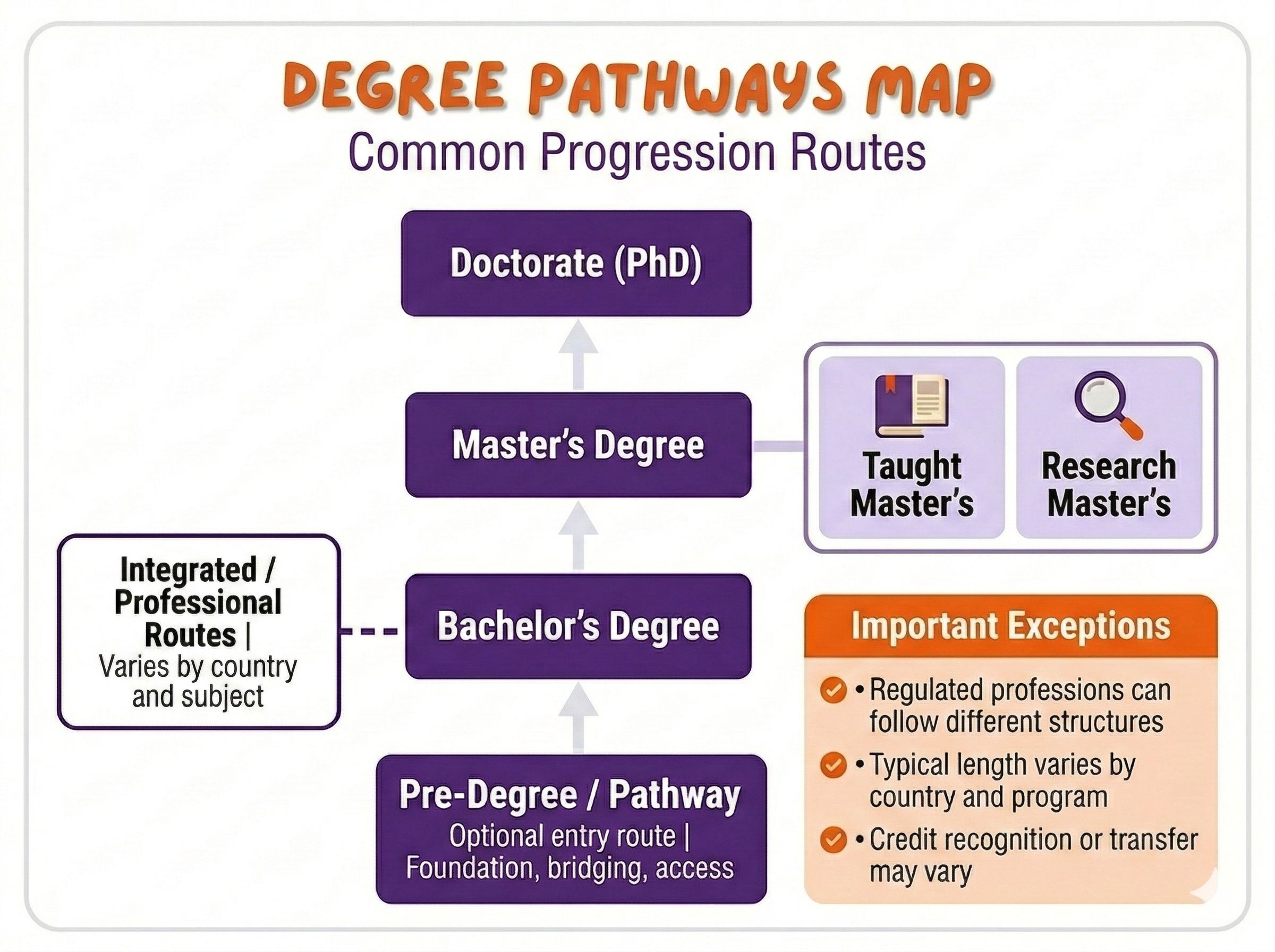
Common degree levels and usual lengths
- Associate degree: often designed as about 2 years of full-time study
- Bachelor’s degree: often designed as about 4 years of full-time study
- Master’s degree: often 1–2 years beyond a bachelor’s degree
- Doctoral degrees: often several years beyond a bachelor’s or master’s degree, depending on field and research expectations
Credit and course structure
- Programs are typically built from courses with credit values, adding up to a total needed to graduate
- Many institutions allow some choice in course selection, especially through electives
Teaching and assessment model
- Common formats include lectures, discussion classes, labs, tutorials, and project work
- Assessment can include exams, essays, lab reports, presentations, group projects, and continuous coursework
Flexibility and pathways
- It is common to have a major as the main subject, and sometimes a minor or second major
- Some students start at a two-year college and later continue at a four-year institution
Important exceptions
- Regulated and clinical fields can have stricter structures, fixed sequences of courses, practical training, or licensing steps after the degree
- Professional degrees in fields like law or medicine are typically postgraduate routes
❗ “Four years” is a plan, not a guarantee. Changing majors, repeating courses, adding a second major/minor, or transferring credits can extend (or sometimes shorten) time to graduate, so students should check credit requirements and course sequencing early.
Academic strengths & popular study fields
The US has a broad higher education landscape across public and private institutions, with strong links to research, industry, and regional economies. Many programs include practical learning through projects, labs, or work experience, especially in applied fields. Strengths can be shaped by local industry clusters and state-level investment in certain areas.
Well-known fields and industry links
- Engineering and technology, often linked to innovation ecosystems and applied research
- Business and entrepreneurship, including strong internship-focused pathways
- Life sciences and health-related fields, supported by large research and health care sectors
- Creative industries and media, with project-based learning in many programs
Common international choices
- Many international students choose STEM fields, business, and data-focused programs, but interest varies by trends and career goals
Where strengths can differ
- Strengths can vary by region, local employers, and whether an institution is research-focused or teaching-focused
- Some institutions are built around a liberal arts model, while others are more specialized or professionally oriented
Student life & learning style
Student experience varies widely, but many programs expect students to manage their time independently and to take responsibility for planning their studies. Classroom culture can range from large lectures to small, discussion-based classes. Campus life can be a major part of the experience at many institutions.
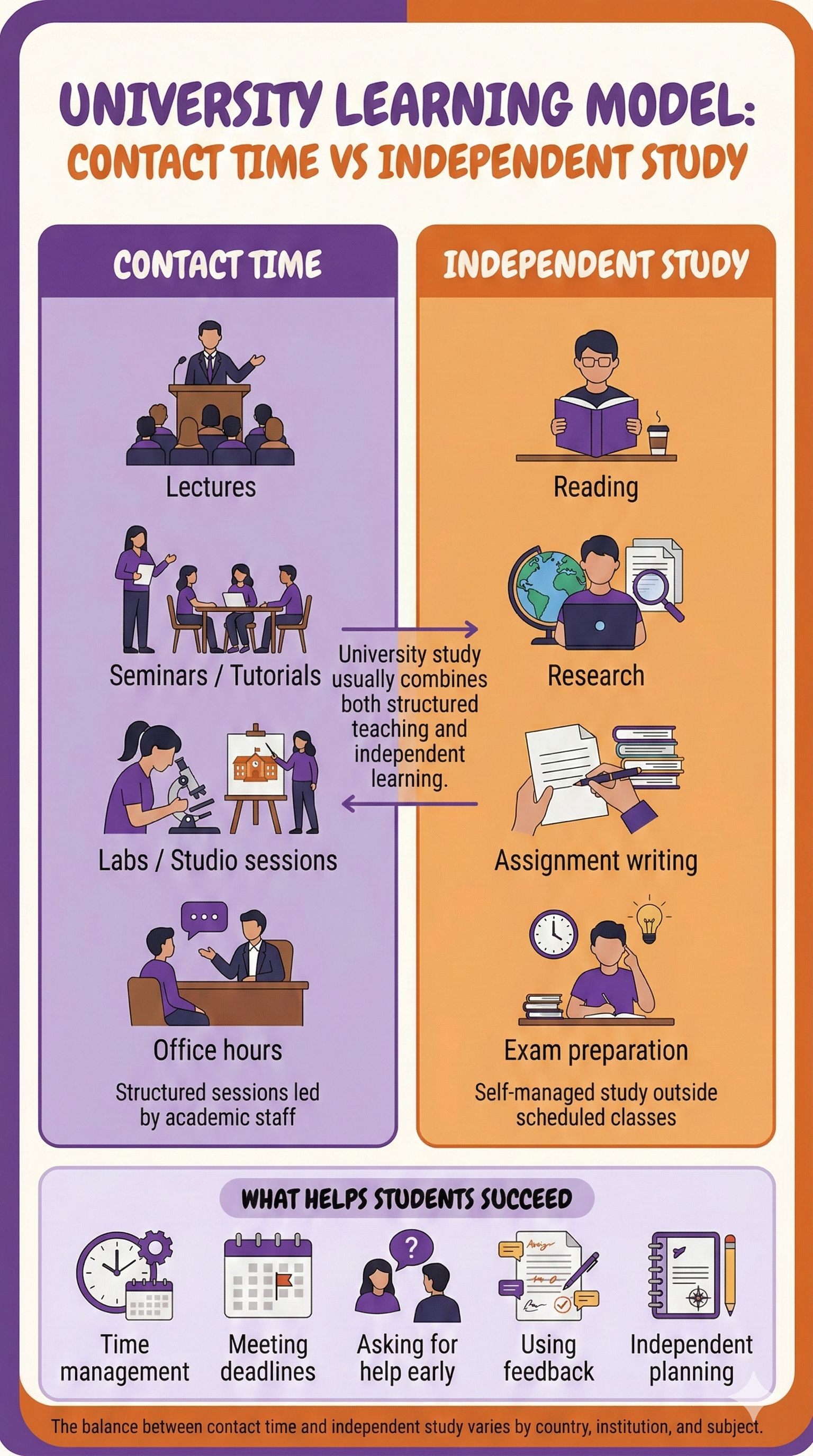
Classroom culture and independence
- Students are often expected to prepare before class, participate in discussions, and ask questions
- Support is available, but students usually need to seek it out through office hours, tutoring, or advising
Contact hours and self-study
- Many courses combine scheduled class time with significant independent reading, assignments, and project work
- Workload can feel continuous because assessment is often spread across the term
Group work and feedback
- Group projects are common in many subjects, especially business, engineering, and applied areas
- Feedback may come through rubrics, written comments, and graded coursework, with opportunities to discuss performance
Campus versus commuter patterns
- Many institutions have a strong campus community, with clubs, sports, and events
- Others, especially some urban or two-year institutions, can have more of a commuter culture
Accommodation and daily life
- Students may live in on-campus housing or in private rentals, depending on location and availability
- Daily life costs and routines differ a lot between major cities, smaller towns, and different states
❗ The workload is often steady all semester. Many courses grade multiple assignments, quizzes, and projects—not just finals—so students who build weekly routines tend to manage stress and grades better.
What happens after graduation
After graduating, students commonly move into work, further study, or professional training, depending on their field. The US job market often values a mix of academic achievement and evidence of practical skills. Outcomes vary a lot by subject, region, and the local job market.
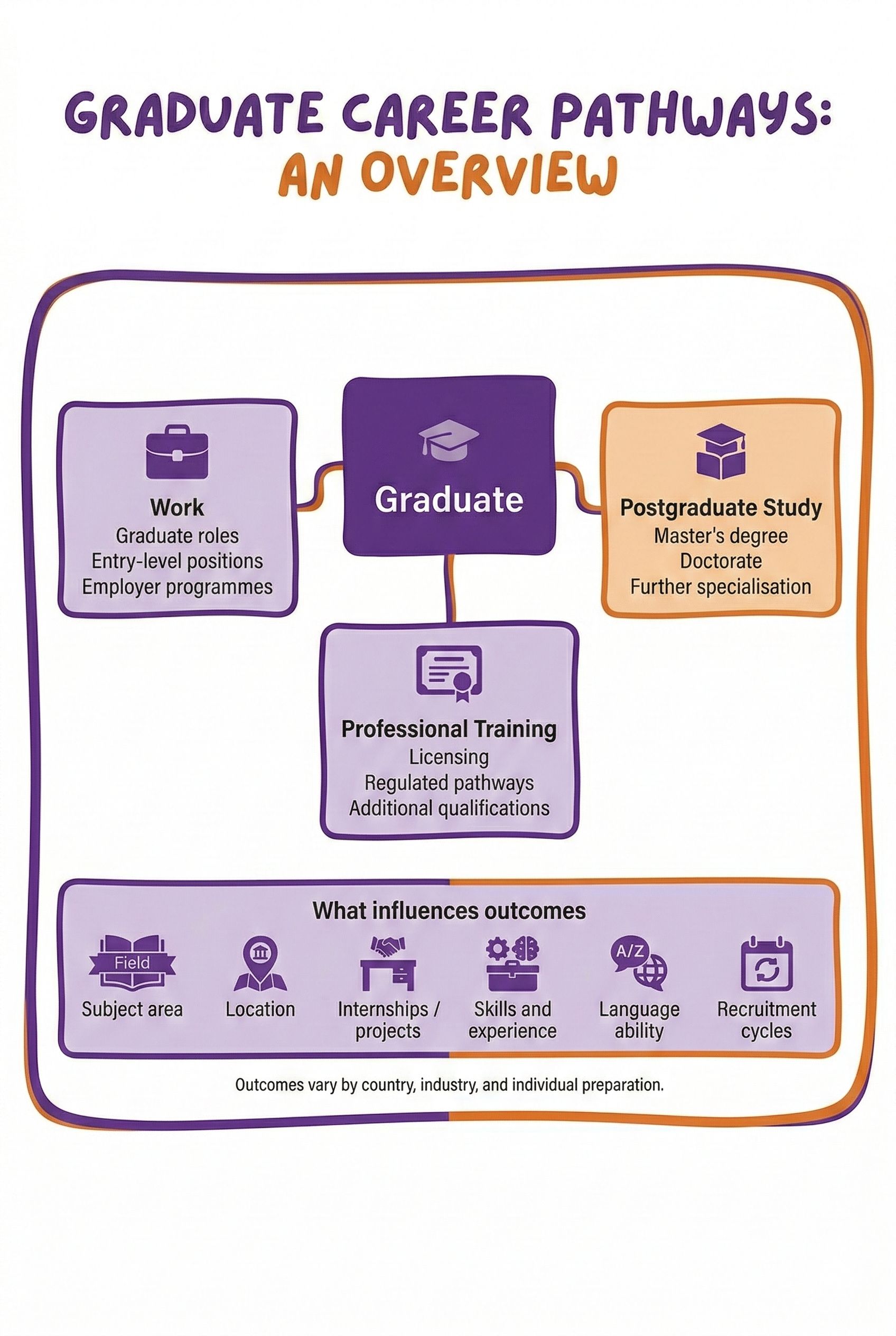
Common next steps
- Full-time work, often after internships or part-time work during study
- Postgraduate study, such as master’s degrees or research programs
- Professional training, certifications, or exams for regulated careers
How employability typically works
- Recruitment can be driven by internships, project experience, networking, and early applications to structured graduate programs
- Careers support often exists on campus, but students usually need to use it actively
National measurement
- The US tracks labor market outcomes by education level, including earnings and unemployment patterns
Important reality check
- Outcomes and pathways can vary significantly by major, institution type, location, and industry cycle
- Some fields have clearer pipelines than others, and regional job markets can be very different
Costs & funding overview
Costs in the US depend heavily on the type of institution, the state, the city, and whether a student lives on campus. Families usually plan for tuition and fees plus housing and living costs, and sometimes additional costs such as health insurance, books, and local transport. Published prices are a starting point, but the actual amount paid can differ depending on scholarships and financial support.
Cost categories families should expect
- Tuition and required fees
- Housing and living costs, including meals
- Health insurance, which is commonly required by institutions
- Books, supplies, and personal expenses
What makes costs higher or lower
- Public vs private institution
- In-state vs out-of-state pricing at public institutions
- City and housing market, plus whether a student lives on campus or off campus
- Lifestyle choices, such as meal plans, transport, and travel
How families usually fund study
- Family funding is common, especially for international students
- Scholarships and bursaries offered by institutions or external organizations
- Loans may be available in some cases, but eligibility and terms depend on student status and the funding system used
❗ The “sticker price” is not always the final price. Scholarships and institutional aid can change the real cost, but availability and rules vary widely. Students should compare offers using the total cost after aid, not tuition alone.
Typical costs
These figures are best used as high-level planning ranges. Exact costs vary by institution type, state, city, housing choice, and student status.
Typical cost of a degree
In the US, a single national figure is less precise than in some other countries because costs vary widely across public and private institutions, and public institutions may charge different rates for in-state and out-of-state students. As an official national reference point, NCES reports that average tuition and fees in 2022–23 at 4-year institutions were $9,800 per year at public institutions and $40,700 per year at private nonprofit institutions. On that basis, tuition alone for a typical 4-year bachelor’s degree is often around $39,200 at public institutions and $162,800 at private nonprofit institutions, before scholarships or other aid. Public-institution figures should be treated with caution for international students because NCES notes that public tuition figures use in-district rates rather than international or out-of-state pricing.
Typical cost of living
For an official national planning reference, NCES reports estimated average room and board charges in 2022–23 of about $12,639 per year at public 4-year institutions and $14,427 per year at private nonprofit 4-year institutions. These figures are useful as a broad baseline for housing and meals, but actual living costs can be higher or lower depending on city, housing choice, transport, and personal spending.
Scholarships
Scholarships for international students are available in the US, but they are not the main source of funding for most students. Support varies widely by institution, and many awards are institution-specific rather than part of one national system. For official information on scholarship and financial aid options for international students, see EducationUSA’s financial aid resources.
Who is this country a good fit for?
The US can suit students who want choice and flexibility, and who are comfortable navigating a large system with many options. It often works well for students who like combining academic learning with practical experience and campus activities. It can feel challenging for students who prefer a single fixed pathway with very clear national rules.
Students who tend to thrive
- Comfortable with independent planning and asking for help when needed
- Enjoy course choice, exploration, and building a personalized study path
- Motivated to gain experience through projects, internships, and extracurriculars
Good fit by interests
- Students looking for broad subject choice and interdisciplinary options
- Students drawn to applied learning alongside academic study
Good fit by lifestyle
- Students who want a strong campus community and student activities
- Students open to living in a wide range of environments, from big cities to small college towns
May feel challenging if
- You prefer a system where programs are mostly standardized nationally
- You find it difficult to manage continuous assessment and workload across the term
What may feel different in the USA’s higher education system
Studying in the US can feel more self-directed, with frequent assessment and a strong expectation that students manage their own time. Many programs give students flexibility, but that flexibility also means students need to understand course choices, credit requirements, deadlines, and support options.
Teaching style
- Teaching often includes lectures, discussion classes, labs, tutorials, workshops, or project-based sessions, depending on the subject
- Students are often expected to prepare before class, take part in discussion, and ask questions when they need clarification
- Class size can vary a lot, from large introductory lectures to small seminars or lab groups
Assessment style
- Assessment is often spread across the semester rather than based only on final exams
- Courses may include quizzes, essays, exams, lab reports, presentations, group projects, participation, and regular assignments
- Students may receive ongoing grades and feedback throughout the term, so weekly study habits are important
Independence level
- Students are expected to manage their schedule, track deadlines, and understand how each course contributes to graduation requirements
- Academic support, advising, office hours, and tutoring often exist, but students usually need to use them proactively
- Flexible course choice can be helpful, but students need to check prerequisites, major requirements, and credit progress carefully
Campus culture
- Campus life can be a major part of the student experience, especially at residential colleges and universities
- Student activities, clubs, sports, volunteering, and internships may be important ways to build community and experience
- Experiences can differ widely between large public universities, private colleges, urban institutions, two-year colleges, and commuter campuses
❗ Flexibility does not mean there are no rules. Students may have many choices, but they still need to follow credit requirements, prerequisites, major rules, visa conditions, and institutional deadlines carefully.
USA Student visa overview
Most international students who study a full degree in the United States need an F-1 student visa. Some vocational or non-academic programs may use an M-1 student visa, but F-1 is the main route for academic college and university study.
For most degree students, the key document is the Form I-20, also called the Certificate of Eligibility for Nonimmigrant Student Status. This is issued by a Student and Exchange Visitor Program-certified school after the student has been accepted and the school has the information needed to issue it. Students usually need the Form I-20 before they can apply for the correct student visa.
Main visa points
| Visa point | What students should know |
|---|---|
| Visa type | F-1 student visa for most academic degree study; M-1 student visa for some vocational or non-academic study |
| Main dependency | The student usually needs admission from a SEVP-certified school and a Form I-20 |
| Typical application timing | Students can usually start visa planning after receiving the Form I-20; interview appointment timing varies by embassy or consulate |
| Typical decision time | Timing varies by location, season, interview availability, and whether extra administrative processing is needed |
| Interview | Most student visa applicants should expect a visa interview, although rules can vary by age, location, and embassy or consulate process |
| Extra requirements | Students may need to show they meet identity, financial, academic, English language, SEVIS, and program-related requirements |
Why this matters
The US visa timeline is closely connected to the admissions timeline. A student may have an offer of admission, but they usually still need the Form I-20, SEVIS-related steps, and a visa appointment before they are ready to travel.
❗ A US offer does not automatically mean a student is ready to apply for a visa. Form I-20 timing, SEVIS requirements, interview availability, visa processing, and travel planning all need to fit around the program start date.