
The UK has a large and varied higher education system, with many degree routes and a strong focus on independent study. Most students study a specialized subject from the start, with teaching that combines lectures and smaller-group learning. After graduation, common directions include work, postgraduate study, or professional training, depending on the subject.
How degrees are structured
Across the UK, degrees sit within shared qualification frameworks, but there are important differences between nations, especially Scotland compared with England, Wales, and Northern Ireland. Most courses are built from modules, and students usually study one main subject area in depth rather than a broad general program.
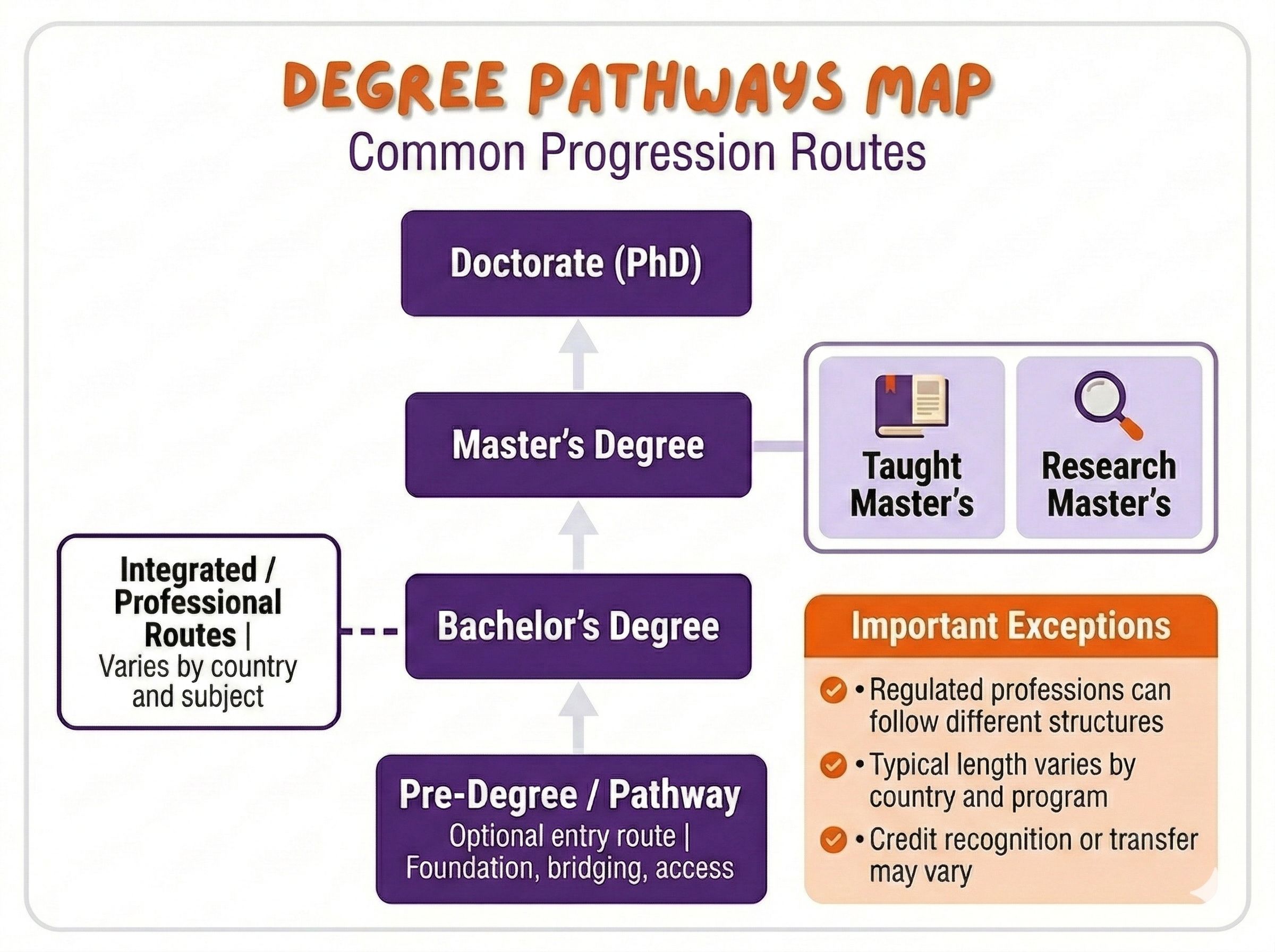
Main degree levels and usual lengths
- Bachelor’s degrees are commonly 3 years in England, Wales, and Northern Ireland
- Bachelor’s degrees are commonly 4 years in Scotland
- Master’s degrees are commonly 1 year for many taught courses, but can be longer in some fields
- Doctoral study is usually research-led and often takes multiple years
Credits and modular study
- Many courses are credit-based and made up of modules taken across the year
- A full-time academic year is commonly designed around a full study load, with module choices shaped by the course structure
Teaching and assessment
- Teaching often includes lectures, seminars or tutorials, labs or studio work where relevant, and supervised project work
- Assessment commonly mixes coursework and exams, with larger projects or dissertations in later years
Flexibility and pathways
- Many courses allow some module choice inside a set program structure, especially after the first year
- Changing subject or institution can be possible but is not always straightforward and depends on course structure and credit recognition
Important exceptions
- Regulated professions can have fixed course content, required placements, and additional professional assessments
- Integrated master’s routes exist in some subjects and may extend study length
❗ If a student doesn’t have A Levels or the IB Diploma, they may need to take a foundation program first. That can make a “3-year” bachelor’s degree in England effectively 4 years total (foundation + degree), depending on the university and program.
Academic strengths & popular study fields
The UK is known for research-led teaching and strong links between universities and industry across many sectors. Strengths often reflect the country’s economic hubs, public services, and established creative and scientific industries.
Areas with strong national visibility
- Business, finance, and management-related subjects
- Engineering, computing, and data-related fields
- Life sciences and health-related subjects
- Law, social sciences, and public policy-related fields
- Creative industries such as design, media, and performing arts
Industry ecosystem links
- Many courses include employer input, real-world projects, or work-based learning options, especially in applied subjects
- Some sectors recruit through structured graduate programs, while others hire directly into entry-level roles
Variation to be aware of
- Strengths can vary by city and region, and by the type of university and course focus
- Course style can differ a lot between subjects, especially between lab-based, studio-based, and essay-based disciplines
Student life & learning style
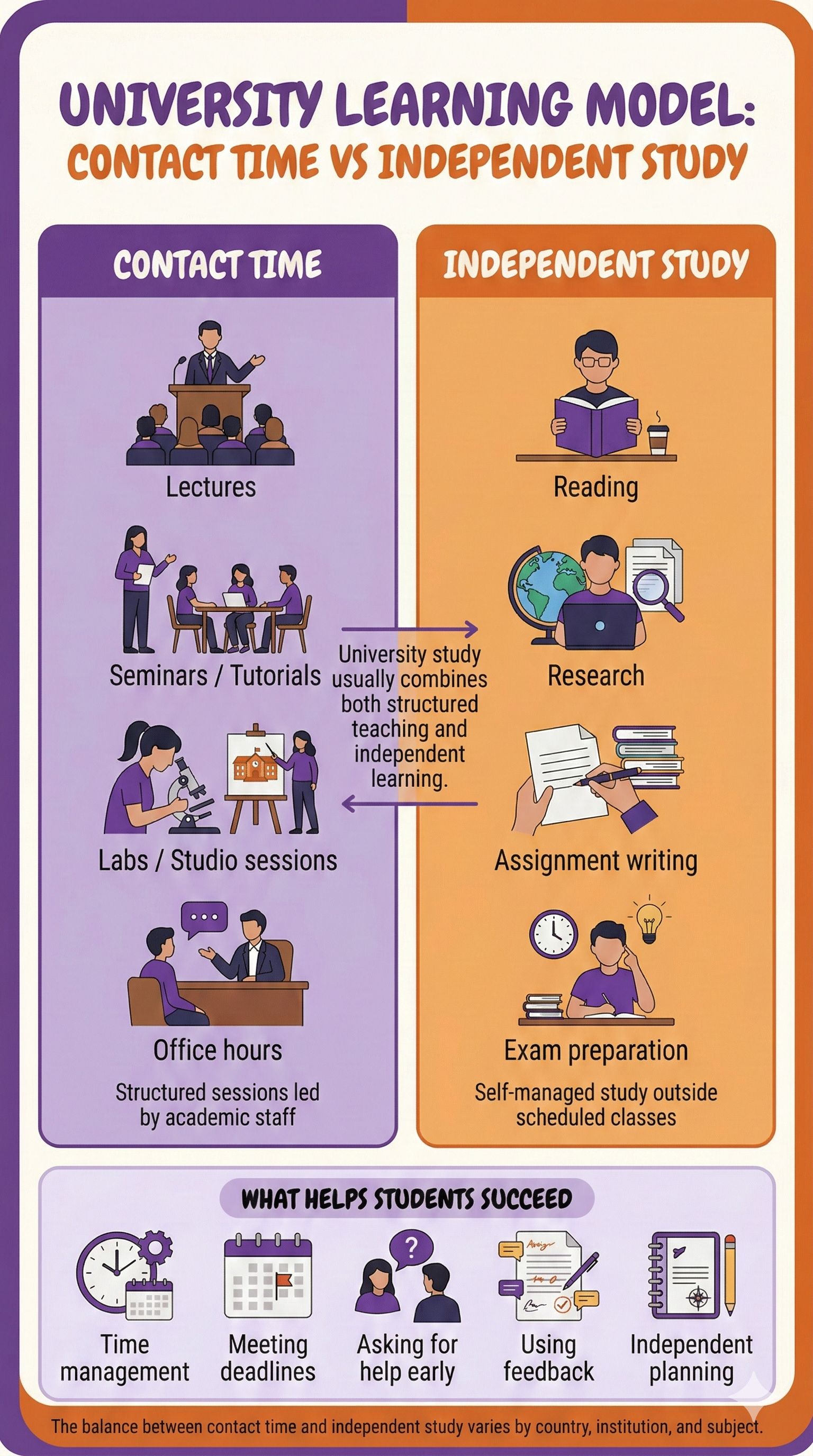
UK study culture usually expects students to manage their time well and take responsibility for keeping up with reading, preparation, and deadlines. Teaching time can feel lighter than school, but independent work is a major part of success.
Classroom culture
- Students are expected to ask questions, contribute in seminars, and discuss ideas respectfully
- Contact with teachers is often structured through timetabled sessions and office hours
Independent learning
- Many courses require substantial self-study each week, including reading, research, and preparation for seminars
Assessment and feedback
- Feedback is often written and focused on how to improve academic thinking and structure
- Deadlines matter, and late work can face penalties depending on university rules
Campus and commuting
- Some universities feel campus-based, while others are more city-based with a commuter mix
- Student experience can vary a lot by location, transport, and housing patterns
Accommodation and daily life
- First-year students often live in student housing, then move into shared housing later
- Daily life is shaped strongly by city size, travel time, and whether a student lives near campus
❗ Fewer contact hours doesn’t mean less work. In the UK, the workload often shifts into reading, research, and assignments outside class. Students who plan weekly study time early tend to settle faster.
What happens after graduation
Graduates commonly move into work, further study, or professional training. Outcomes depend heavily on subject area, location, prior experience, and how students use opportunities during their course.
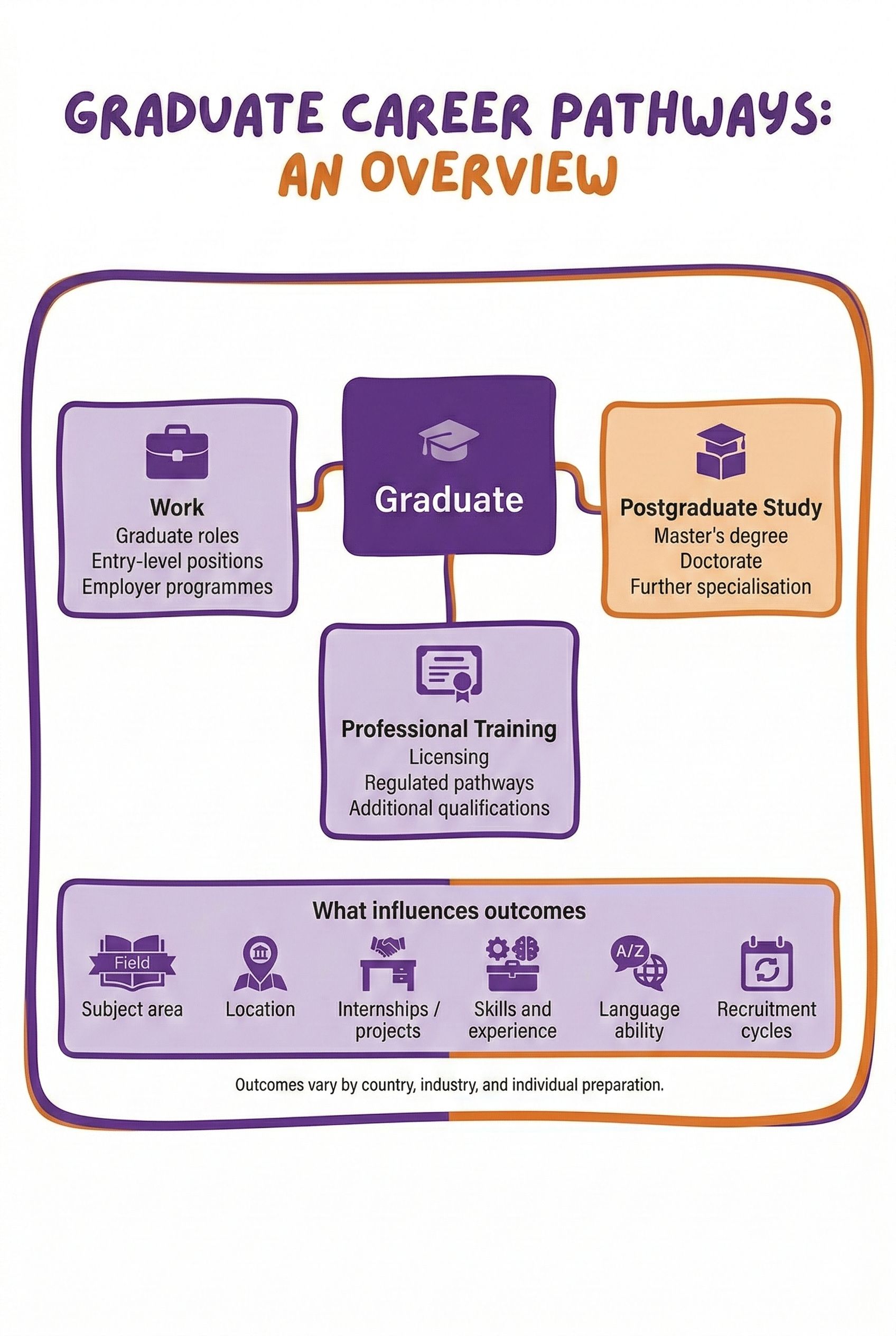
Common next steps
- Full-time work in graduate or entry-level roles
- Postgraduate study, including taught master’s programs or research routes
- Professional training pathways in regulated fields
How employability typically works
- Many universities provide careers services and support with CVs, applications, and interviews
- Recruitment can be seasonal for large employers, while smaller employers hire year-round
- Experience, projects, skills, and communication can matter as much as grades in many fields
Measurement and reporting
- National graduate outcomes data exists, but results vary widely by subject and region
Important reality check
- Job markets differ across cities and regions, and some industries are concentrated in particular areas
- Outcomes can vary significantly by subject, the local economy, and the type of role students target
Costs & funding overview
Costs in the UK usually include tuition, housing, and day-to-day living costs, plus course-related costs such as materials or travel in some subjects. Total cost depends strongly on where a student lives, housing choices, and course structure.
Main cost categories
- Tuition fees
- Housing and utilities
- Food, local transport, phone and internet
- Study costs such as books, equipment, and software where relevant
- Health costs and insurance expectations vary by situation and provider
What makes costs higher or lower
- City and region, especially major cities compared with smaller towns
- Housing type and whether students live in student accommodation or shared housing
- Course demands that increase costs, such as specialist equipment or travel
How families usually fund study
- Family funding is common, especially for living costs and any gaps
- Scholarships, bursaries, and fee discounts exist, but availability varies by provider and student status
- Student loans and public support depend on where in the UK a student studies and their eligibility status
- Funding rules differ across England, Scotland, Wales, and Northern Ireland, and also by course type and residency status
❗ Location can change the total cost more than tuition changes. Housing and daily living costs vary widely between major cities and smaller towns, so students should estimate costs for their specific city and housing plan, not a UK-wide average.
Typical costs
These figures are best used as high-level planning ranges. Exact costs vary by university, city, course, and student status.
Typical cost of a degree
For international students, official Study UK guidance says undergraduate tuition fees typically range from £11,400 to £38,000 per year. On that basis, tuition alone for a typical bachelor’s degree is often around £34,200 to £114,000 total in England, Wales, and Northern Ireland where many bachelor’s degrees last 3 years, and around £45,600 to £152,000 total in Scotland where many bachelor’s degrees last 4 years. Medicine and some other specialist subjects can cost more.
Typical cost of living
For a clear official planning baseline, the UK student visa financial requirement is currently £1,529 per month in London and £1,171 per month outside London, for up to 9 months. That equals £13,761 for 9 months in London and £10,539 for 9 months outside London. This is a useful minimum planning benchmark, but actual living costs can be higher depending on city and lifestyle.
Scholarships
Scholarships for international students are available in the UK, but they are not the main source of funding for most students. Many awards are offered by individual universities, and the type and amount of support can vary by course and study level. For official information on scholarship options, see the Study UK scholarships and funding page.
Who is this country a good fit for?
The UK can suit students who like focused subject study and are ready to learn independently. It can work well for students who want a clear academic route and are comfortable speaking up, managing deadlines, and using support services when needed.
Students who often thrive
- Students who are organized and comfortable planning their own study time
- Students who enjoy analyzing ideas, writing clearly, and building arguments
- Students who like learning through seminars, projects, labs, or studio work, depending on subject
Good fit by goals
- Students looking for a specialized degree path from the start
- Students interested in connecting study to internships, projects, or employer pathways where available
Good fit by lifestyle
- Students who enjoy living in diverse cities and adapting to different local cultures
- Students who want a mix of structured teaching and flexible independent time
May feel challenging if
- A student needs very high day-to-day structure and close monitoring to stay on track
- A student prefers broad general study before choosing a main subject
What may feel different in the UK’s higher education system
UK universities often expect students to take more responsibility for their learning than they may be used to at school. Teaching is structured, but students are expected to manage reading, preparation, deadlines, communication, and support-seeking more independently.
Teaching style
- Teaching often includes lectures, seminars or tutorials, labs, workshops, or studio sessions, depending on the subject
- Smaller classes are often used for discussion, problem-solving, feedback, or applied work
- Students may be expected to prepare before class and take part actively, especially in seminars and tutorials
Assessment style
- Assessment commonly includes coursework, exams, presentations, reports, practical work, and larger projects
- Later years may include a dissertation, research project, design project, or final portfolio, depending on the course
- Feedback is often written and focused on improving academic thinking, structure, evidence, and argument
Independence level
- Students may have fewer taught hours than they expect, but more work happens outside class
- Students are expected to plan their week, track deadlines, and ask for help early when needed
- Support services are available, but students usually need to find the right service and take the first step
Campus culture
- Some universities are campus-based, while others are spread across a city
- Student life can vary depending on location, housing, transport, course type, and whether students commute
- Daily life may involve managing a budget, cooking, using public transport, joining societies, and balancing study with social life or part-time work
❗ Fewer contact hours does not mean less work. In the UK, students are often expected to use independent study time seriously, especially for reading, research, assignments, and exam preparation.
UK Student visa overview
Most international students who study a full degree in the UK need a Student visa. This visa is linked to the course and university that accepts the student, so visa planning usually comes after the student has received an offer and is moving toward enrollment.
For most degree students, the key document is the Confirmation of Acceptance for Studies (CAS). This is issued by the university after the student has accepted their place and met the conditions needed for sponsorship. A CAS is not the same as a visa approval, but students usually need it before they can apply for their Student visa. GOV.UK guidance says a CAS is valid for six months from the date it is assigned, and it does not guarantee that a visa will be granted.
Main visa points
| Visa point | What students should know |
|---|---|
| Visa type | Student visa |
| Main dependency | The student usually needs an offer and a CAS from a licensed student sponsor |
| Typical application timing | Students applying from outside the UK can usually apply up to 6 months before the course starts |
| Typical decision time | GOV.UK says decisions are usually made within 3 weeks for applications from outside the UK |
| Interview | Not all students are interviewed, but some may be asked questions to check they are genuine students |
| Extra requirements | Students may need to show they meet financial, English language, and other visa requirements |
Why this matters
The UK visa timeline is closely connected to the admissions timeline. A student may have an offer, but they usually still need to meet conditions, accept their place, and receive a CAS before the visa stage can move forward.
❗ A UK offer does not automatically mean a student is ready to apply for a visa. CAS timing, financial evidence, visa processing, and travel planning all need to fit around the course start date.