
The Netherlands has a well-structured higher education system with two main types of degree study, and a strong focus on independent learning and clear planning. Many programs are taught through a mix of lectures, small-group teaching, and practical work, depending on the subject and institution type. After graduation, students commonly move into work or further study, often in international-facing workplaces.
How degrees are structured
Higher education in the Netherlands is mainly split into research-oriented university education and more practice-oriented higher professional education. Most study is organized in modules with a clear study workload system, and students are expected to manage their time and progress carefully. The degree system follows the bachelor–master structure used across much of Europe.
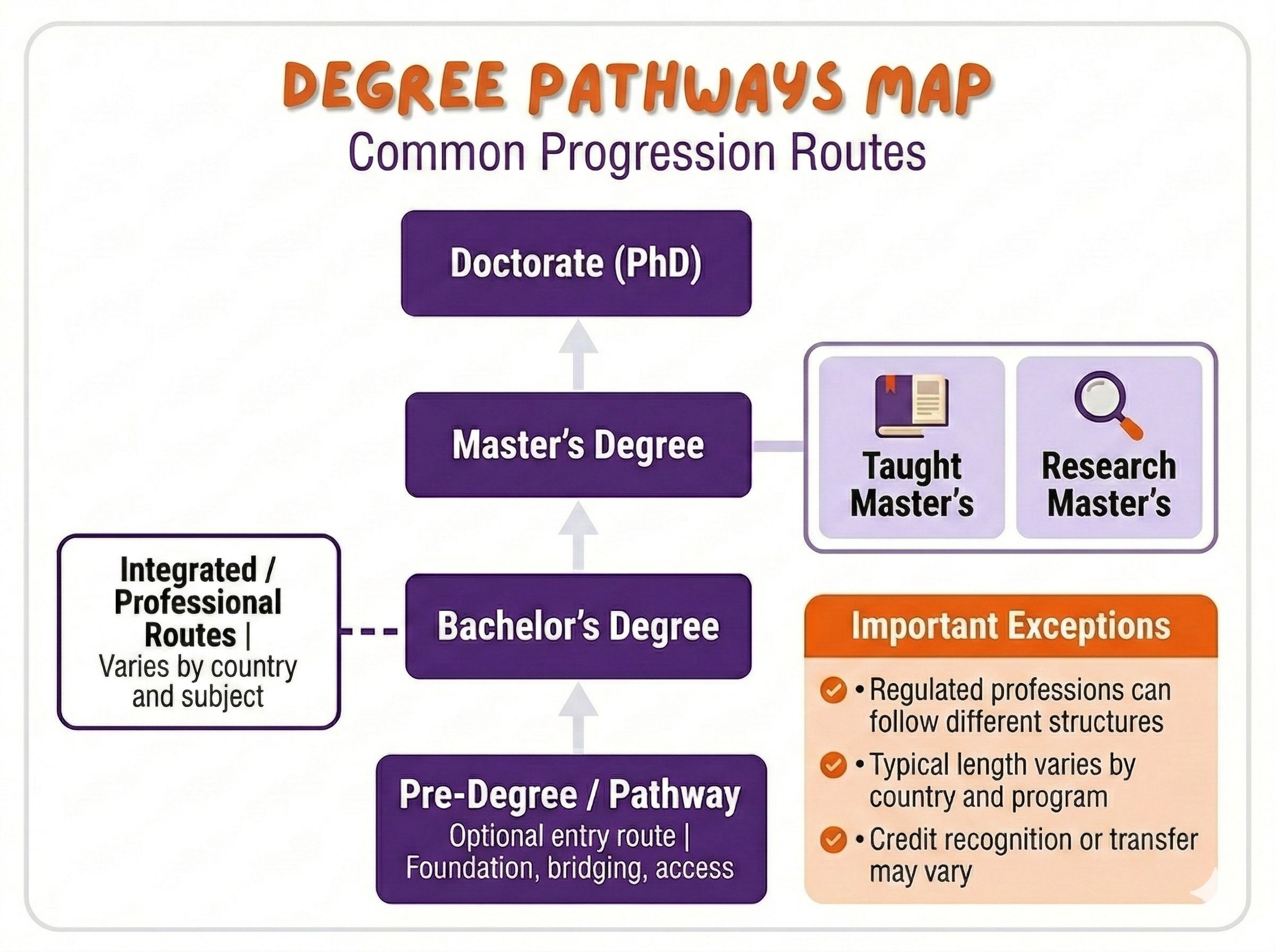
- Two main institution types: Research universities and universities of applied sciences, with different teaching goals and learning styles
- Common degree levels and lengths: Bachelor’s and master’s degrees are standard, with length varying by institution type and subject
- Study workload system: Programs use ECTS credits, with 60 credits as one year of full-time study and a defined workload per credit
- Teaching and assessment mix: Lectures and seminars are common, alongside labs, projects, and practical assignments depending on the field
- Progress expectations: Steady performance and on-time progress are emphasized; support exists, but students are expected to take responsibility
- Exceptions to know: Some regulated or specialist fields can have longer or more structured study routes than the general pattern
❗ The institution type shapes teaching and career outcomes. Research universities are typically more theory- and research-led, while universities of applied sciences are more practice- and project-focused, so students should choose based on learning style, not just university name.
Academic strengths & popular study fields
The Netherlands is known for study that connects well to real-world practice, strong research culture in many areas, and a broad international outlook in higher education. Many programs link learning to current challenges through applied projects, labs, or research-led teaching. Strengths can vary by region and by whether a program is university-based or applied-sciences based.
- Engineering and technology-related fields with strong project work and applied problem-solving
- Business and economics with an international outlook and strong emphasis on teamwork and communication
- Life sciences and health-related fields with structured training routes in some areas
- Environmental and sustainability-related study connected to national expertise in water, planning, and resource management
- Social sciences and international-focused subjects reflecting the Netherlands’ global connections and multilingual environment
- Creative and design-related study often shaped by practical work and portfolio-based learning culture in some areas
Student life & learning style
Student life in the Netherlands often combines a high level of independence with structured academic expectations. Many students plan their week around timetables, group work, and self-study, and students are expected to communicate directly with teaching staff when they need support. Living arrangements and daily routines vary by city and whether students live in dedicated student housing or private rentals.

- Independent learning culture: Students are expected to prepare, read, and study outside class as a normal part of success
- Balanced teaching formats: Contact hours can be steady, but self-study time is a major part of the workload
- Active participation: Asking questions, joining discussions, and working in groups is common in many subjects
- Project and teamwork: Group assignments and applied projects are widely used, especially in applied-sciences programs
- Campus and city life: Student experience is often city-based, with many institutions integrated into towns and cities rather than closed campuses
- Daily living patterns: Cycling and public transport are common parts of student life, and students often manage their own routines early on
❗ Progress rules can be strict. Many programs expect students to keep up with credits and deadlines, and falling behind can have consequences, so planning the weekly workload early is part of success.
What happens after graduation
Graduates often move into work, professional training routes, or further study, depending on the field. Employers commonly look for evidence of relevant skills, practical experience, and strong communication, especially for roles in international environments. Pathways can differ a lot by subject and by the local job market where students want to work.
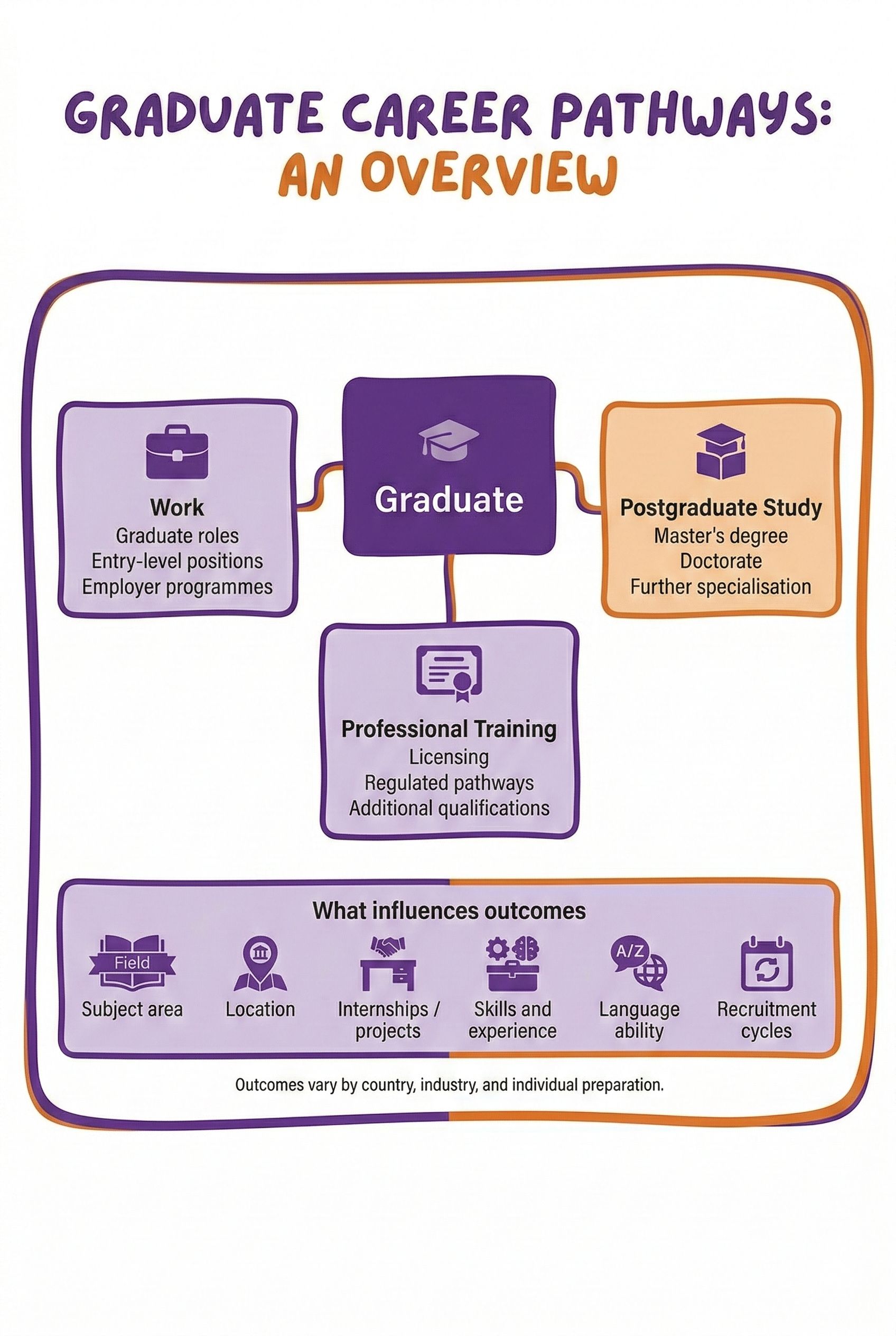
- Common next steps: Entry-level roles, graduate programs, professional training pathways, or a master’s degree after a bachelor’s
- How employability tends to work: Skills, practical project experience, and clear motivation often matter alongside grades
- Experience signals: Work placements, applied projects, and research experience can strengthen a student’s profile where available
- Support structures: Many institutions provide careers services, employer events, and practical guidance for CVs and interviews
- Variation to note: Outcomes differ by subject area, language needs in the workplace, and region-specific demand
Costs & funding overview
Costs for study in the Netherlands usually come from tuition fees plus living costs such as housing, food, transport, and insurance where relevant. Total costs can change a lot depending on the city, the type of housing a student chooses, and whether a student qualifies for statutory tuition or pays an institutional fee.
Main cost categories
- Tuition fees
- Housing
- Daily living costs
- Study materials
- Transport
- Insurance-related costs, where relevant
What makes costs higher or lower
- City size
- Housing market pressure
- Distance from campus
- Whether students choose shared housing or private rentals
How families usually fund study
- Family funding is common, especially for living costs and set-up expenses
- Scholarships and bursaries exist, but availability and eligibility vary by provider and student status
- Government-backed support can apply for some students depending on status and personal circumstances
❗ Check which tuition category applies. Costs can change significantly depending on whether a student pays statutory tuition or a higher institutional fee, so families should confirm the fee type for the student’s status and program before budgeting.
Typical costs
These figures are best used as high-level planning ranges. Exact costs vary by institution, city, housing choice, and student status.
Typical cost of a degree
In the Netherlands, the most important first question is whether a student pays the statutory tuition fee or a usually higher institutional tuition fee. The statutory tuition fee for higher education is €2,694 for the 2026–2027 academic year. Students who do not meet the conditions for statutory tuition are generally charged institutional tuition fees, which are set by the institution and tend to be higher. Because institutional fees vary by provider and program, it is better to direct readers to the institution’s official fee page where statutory tuition does not apply.
Typical cost of living
For an official student-facing benchmark, an average room in the Netherlands costs about €550 per month, with many rooms ranging from €450 to €1,000 per month depending on city and region. Housing is usually the biggest cost variable, and total living costs will also depend on food, transport, insurance, and personal spending.
Scholarships
Scholarships for international students are available in the Netherlands, but they are not the main source of funding for most students. Many options are institution-specific, and Study in NL notes that the scholarships it lists are not all scholarships available, so students should also check directly with their chosen institution. For official information on scholarship options, see the Study in NL scholarships pages, including the NL Scholarship page for eligible non-EEA students.
Who is this country a good fit for?
The Netherlands can suit students who like structured systems but also want day-to-day independence. It often works well for students who enjoy learning through discussion, projects, and practical problem-solving, and who are comfortable managing deadlines and planning their week.
- Good fit if you like independent study and taking responsibility for progress
- Good fit if you enjoy group work, discussion, and project-based learning
- Good fit if you want a clear credit-based structure and predictable study planning
- Good fit if you prefer city-based student life and being part of everyday local routines
- May feel challenging if you want very close supervision or constant reminders about tasks
- May feel challenging if you find it hard to speak up, ask for help early, or self-advocate
What may feel different in the Netherlands’ higher education system
Studying in the Netherlands can feel highly independent, even when programs have clear structures and credit requirements. Students are usually expected to plan their workload, keep track of deadlines, communicate directly with staff, and take responsibility for steady progress across the year.
Teaching style
- Teaching often includes lectures, seminars, tutorials, workshops, labs, or project-based sessions, depending on the subject and institution type
- Students may be expected to prepare before class, ask questions, join discussions, and work actively with classmates
- Teaching can feel more theory-led at research universities and more practice-led at universities of applied sciences
Assessment style
- Assessment commonly includes exams, reports, presentations, projects, practical assignments, and group work
- Many programs place strong emphasis on steady progress, credit completion, and meeting deadlines throughout the year
- Feedback can be direct and detailed, with students expected to use it to improve future work
Independence level
- Students are expected to manage their study time, understand course requirements, and keep up with credits
- Support services are available, but students usually need to contact the right person or team themselves
- Clear structures can help students plan, but they also make it important to stay organized from the start
Campus culture
- Student life is often integrated into the city, rather than based around a closed campus
- Cycling, public transport, shared housing, and independent daily routines are common parts of student life
- Group work, student associations, and city-based activities can be important ways to build community
❗ A clear structure does not mean close supervision. In the Netherlands, students are often expected to manage their own progress, ask for help early, and keep up with credits and deadlines.
Netherlands Student visa overview
Many international students from outside the EU/EEA who study a full degree in the Netherlands need a residence permit for study. Depending on nationality, some students also need an MVV, which is a long-stay entry visa used to travel to the Netherlands before collecting the residence permit.
For most degree students, the key dependency is admission to a recognized Dutch education provider that can act as the sponsor for the residence permit process. The education provider usually submits the student’s residence permit application to the Dutch Immigration and Naturalisation Service, known as the IND, after the student has accepted their place and provided the required information.
Main visa points
| Visa point | What students should know |
|---|---|
| Visa type | Residence permit for study; some students also need an MVV long-stay entry visa |
| Main dependency | The student usually needs admission from a recognized sponsor institution that can submit the application to the IND |
| Typical application timing | Visa and residence permit planning usually starts after offer acceptance and after the institution opens its immigration process |
| Typical decision time | IND decision timing can vary, but study residence permit applications are commonly planned several weeks before travel and may take up to around 60 days |
| Interview | A visa interview is not usually a standard requirement, but students may need an appointment to provide details, collect an MVV, or complete related formalities depending on nationality and location |
| Extra requirements | Students may need to show they meet identity, financial, study progress, insurance, and other immigration requirements |
Why this matters
The Netherlands visa and residence permit timeline is closely connected to the admissions and enrollment timeline. A student may have an offer, but they usually still need to accept their place, follow the institution’s immigration process, and wait for the IND decision before they are ready to travel or begin study.
❗ A Netherlands offer does not automatically mean a student is ready to travel. Institution immigration deadlines, IND processing, MVV requirements, financial evidence, insurance, and arrival planning all need to fit around the course start date.