
Sweden’s higher education is part of the European degree structure and is built around a flexible, course-based system. Students usually study through a mix of lectures, seminars, labs, and projects, with a strong expectation of independent work. After graduation, many students move into work or further study, and programs often connect to employers through projects and collaboration.
How degrees are structured
Swedish degrees follow a clear cycle structure, and study is measured in higher education credits that align with the European credit system. Many institutions offer both full programs and freestanding courses, which can make study paths more flexible.
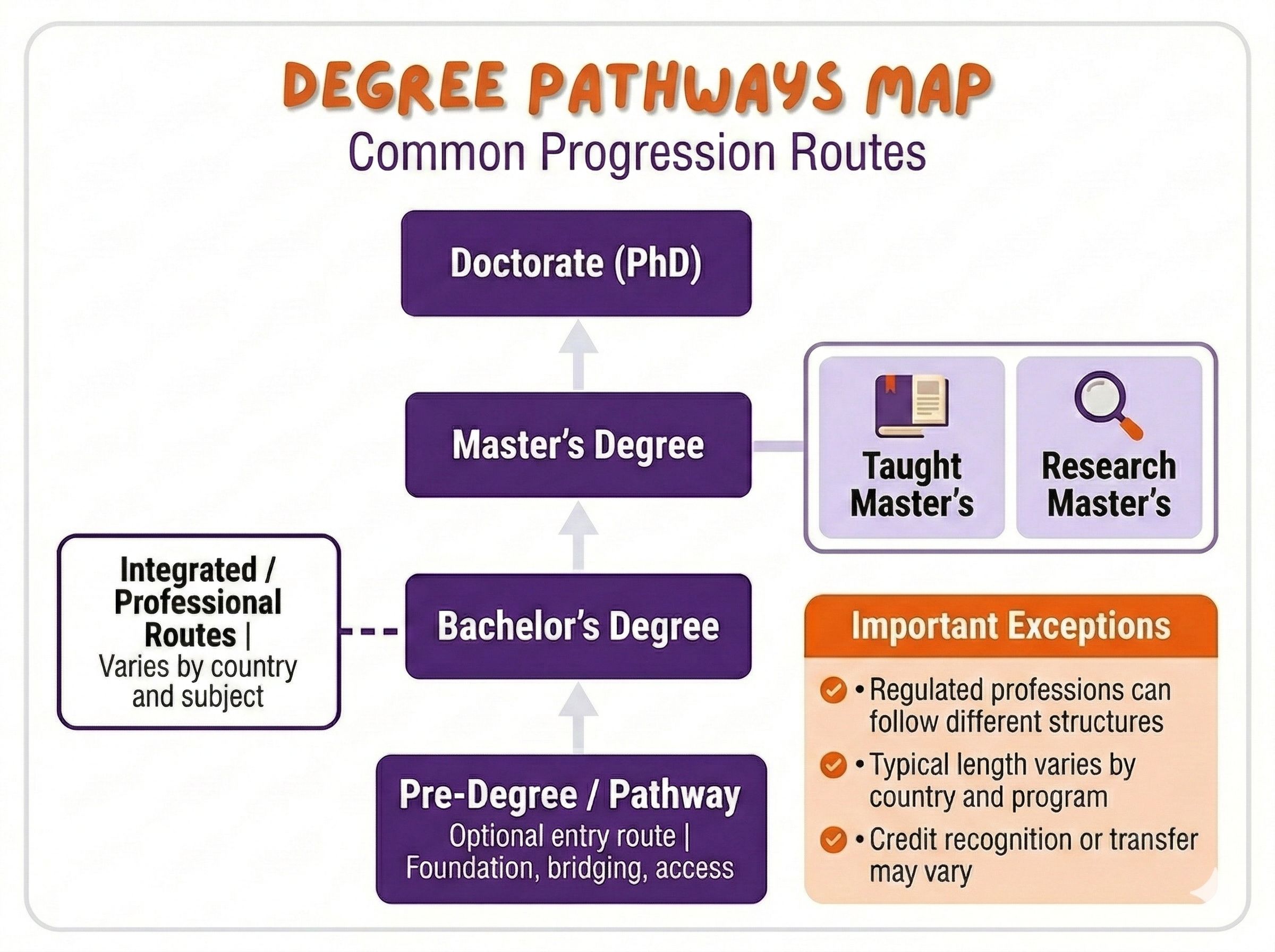
Main degree levels and usual lengths
- First cycle: Bachelor-level degrees are commonly 180 credits, often studied over 3 years
- Second cycle: Master-level degrees are commonly 60 or 120 credits, often 1–2 years
- Third cycle: Doctoral studies lead to a PhD, and are research-focused
Credits and study load
- A full-time study load is commonly 60 credits per academic year, with 30 credits per semester
- Credits are designed to be compatible with ECTS for recognition across Europe
Teaching and assessment model
- Teaching often combines lectures and seminars with labs, workshops, and project work, depending on the subject
- Assessment can include written exams, reports, presentations, group projects, and thesis work
Flexibility and pathways
- Many institutions offer course-based study with options to combine courses into a program path, depending on the institution and subject
- Distance and online study options are common across the system
Key exceptions
- Some professional and regulated fields can have more structured program paths and specific training components, and flexibility may be more limited
❗ “Course-based” study can work in different ways. Some students follow a full program, while others combine freestanding courses into a pathway, so students should confirm whether their chosen route leads to the intended degree structure and timeline.
Academic strengths & popular study fields
Sweden is known for research-led education and close links between universities, public services, and industry. Many programs reflect Sweden’s focus on innovation, sustainability, and practical problem-solving, with learning that often connects to real-world projects.
Well-known fields and industry links
- Engineering and technology, including areas linked to industrial innovation and digital development
- Sustainability-related study, including environmental science, energy, and sustainable design approaches
- Life sciences and health-related fields, supported by a strong public sector and research culture
- Business, economics, and management, often shaped by international trade and modern workplace practices
- Design and creative industries, where project-based learning is common
International study patterns
- A wide range of programs are available in English, especially at master’s level
Where strengths can vary
- Strengths can differ by region and by institution type, and some programs are more closely tied to local industry clusters than others
Student life & learning style
Student life in Sweden often feels calm, structured, and independent. Learning culture tends to be collaborative and discussion-based, with students expected to take responsibility for planning their work and meeting deadlines.
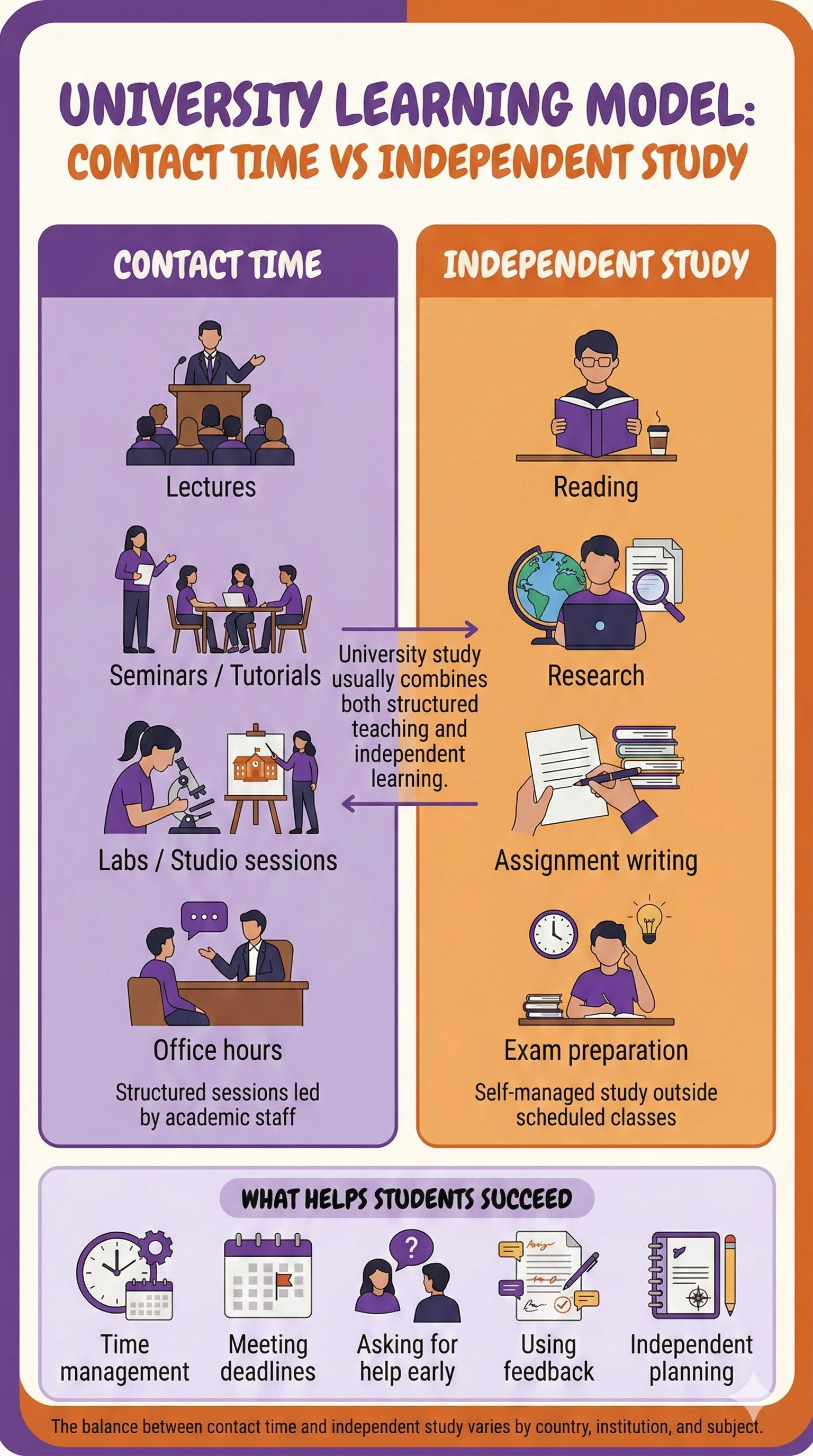
Classroom culture and independence
- Students are expected to manage self-study time and prepare for seminars and group work
- Communication with teaching staff can feel informal, with a focus on dialogue and feedback
Contact hours and self-study
- Many programs require significant self-study alongside scheduled teaching
Group work and participation
- Group projects and seminar discussion are common in many subjects
- Feedback is often direct and focused on improvement and learning outcomes
Campus and daily life patterns
- Some students live in a campus-style environment, while others experience a more city-based or commuter routine depending on location
- Accommodation availability and student housing experiences vary by city and local market conditions
❗ Collaboration is part of how you’re assessed. Many courses use group projects and seminar participation as real learning components, so students who speak up and engage consistently tend to settle faster.
What happens after graduation
After finishing a degree, common next steps include entering the job market, continuing to a higher degree, or moving into professional training depending on the field. Employment outcomes can differ by subject area, region, and local demand, so it helps to view pathways in a broad, realistic way.
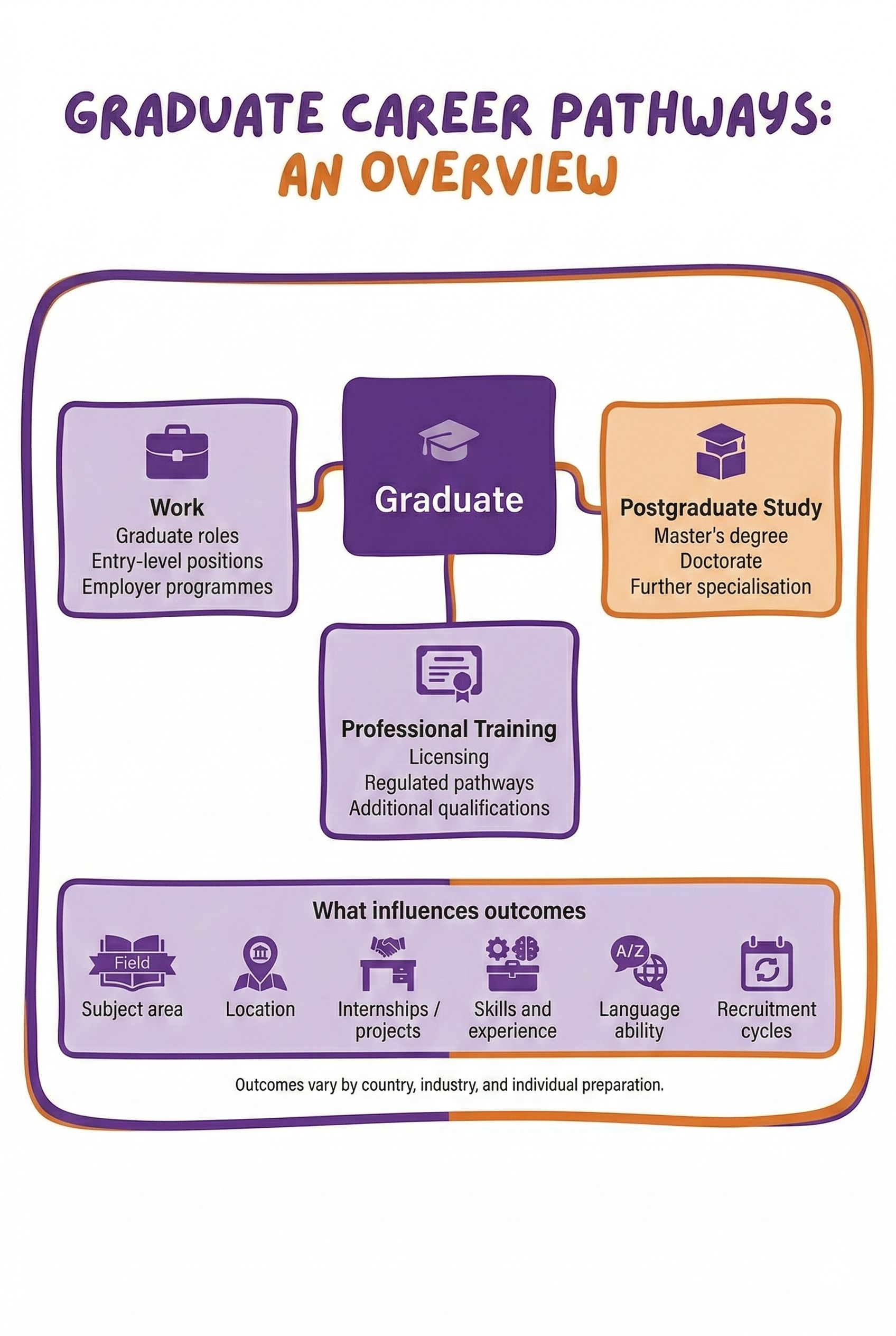
Common next steps
- Work in Sweden or internationally
- Further study, especially moving from bachelor to master, or into research routes
- Profession-specific training routes in regulated fields
How employability commonly works
- Employers often value relevant skills, project experience, communication, and evidence of problem-solving
- Many programs include thesis or project components that can connect students to external partners
- Career support exists at many institutions, but students are generally expected to be proactive in using it
National measurement
- Sweden produces national statistics on employment and income after completed education, which helps show broad patterns over time
Important reality check
- Outcomes vary by subject and region, and local labor market conditions can shape early career options
Costs & funding overview
Costs depend heavily on student status, location, and lifestyle choices. Families should plan for both study-related costs and day-to-day living costs, and be aware that funding options can differ depending on eligibility rules.
Main cost categories
- Tuition and study-related fees where applicable
- Housing and utilities
- Daily living costs such as food, local transport, and personal spending
- Course materials and equipment in some subjects
- Health and insurance-related costs where relevant to the student’s situation
What makes costs higher or lower
- City size and housing market conditions
- Housing type and distance from campus
- Personal lifestyle and travel choices
How study is usually funded
- Family funding is common for international students
- Scholarships and bursaries exist, often tied to specific institutions or organizations
- Loans and study support can exist for eligible groups, depending on status and rules
Availability and eligibility
- Funding availability and eligibility vary by student status and by provider, so families should treat funding as something to check carefully early on
❗ In Sweden, tuition depends on fee status. EU/EEA students are generally not charged tuition fees, while many non-EU/EEA students pay tuition, so families should confirm fee status early and budget for the specific program and city.
Typical costs
These figures are best used as high-level planning ranges. Exact costs vary by institution, city, housing choice, and student status.
Typical cost of a degree
Tuition in Sweden depends on fee status and on the program and university. EU/EEA students are generally exempt from tuition fees, while many non-EU/EEA students pay tuition. For the most relevant estimate, students can check fees in the University Admissions Sweden course search and then confirm the exact amount on the university’s program page.
Typical cost of living
A useful planning figure for living costs is around SEK 10,656 per month. This works well as a broad benchmark, but actual costs can be higher or lower depending on city, housing, and lifestyle.
Scholarships
Scholarships for international students are available in Sweden, but they are not the main source of funding for most students. Many are tied to individual universities or specific scholarship schemes. For more information, see Study in Sweden’s scholarships page.
Who is this country a good fit for?
Sweden can suit students who want a balanced, independent study environment with a strong focus on critical thinking and practical problem-solving. It often works well for students who are comfortable managing their time and learning through projects and teamwork.
Students who often thrive
- Independent learners who can plan their week and stay organized
- Students who like collaborative work and learning through discussion
- Students who prefer a calm, structured environment and clear expectations
Fit by academic interests
- Students interested in technology, engineering, sustainability, life sciences, business, and design-related learning
- Students who enjoy applied learning through projects and thesis work
Fit by lifestyle preferences
- Students who like a safe, orderly environment and a strong focus on everyday well-being
- Students comfortable with seasonal changes and darker winter months
May feel challenging if
- You prefer very close day-to-day supervision and frequent reminders
- You find group-based learning and open discussion uncomfortable
What may feel different in Sweden’s higher education system
Studying in Sweden can feel calm, collaborative, and independent. Students are usually expected to manage their own study time, prepare for seminars and group work, communicate directly with staff, and take responsibility for steady progress.
Teaching style
- Teaching often includes lectures, seminars, workshops, labs, projects, or thesis work, depending on the subject
- Learning can be discussion-based and collaborative, with students expected to prepare, speak up, and share ideas
- Communication with teaching staff can feel informal and direct, with a focus on dialogue and feedback
Assessment style
- Assessment commonly includes written exams, reports, presentations, group projects, seminar participation, and thesis work
- Many courses use project-based or group-based assessment as part of the learning process
- Feedback is often focused on improvement, learning outcomes, and independent thinking
Independence level
- Students are expected to plan their time, track deadlines, manage self-study, and ask for help early when needed
- Support services are available, but students usually need to take the first step to use them
- Coursework and self-study can be intensive in bursts, especially around project deadlines, exams, and thesis periods
Campus culture
- Student life can vary between campus-based, city-based, and commuter patterns depending on the location
- Student unions, clubs, societies, and events can help students build community
- Accommodation availability, seasonal changes, and darker winter months can shape daily routines and well-being
❗ Collaboration is part of the Swedish study experience. Students who prepare for seminars, contribute to group work, and manage self-study time consistently are usually better prepared.
Sweden Student visa overview
Many international students from outside the EU/EEA who study a full degree in Sweden need a residence permit for studies in higher education. EU/EEA citizens follow different rules and do not usually need this permit for study in Sweden.
For most degree students, the key dependency is admission to full-time studies at a Swedish higher education institution. Students usually need to show that they have been admitted, can support themselves financially, and meet the permit requirements before the residence permit process can move forward.
Main visa points
| Visa point | What students should know |
|---|---|
| Visa type | Residence permit for studies in higher education for many non-EU/EEA students |
| Main dependency | The student usually needs admission to full-time studies at a Swedish higher education institution |
| Typical application timing | Students should usually begin residence permit planning after admission and well before travel, because processing and appointment timing can vary |
| Typical decision time | Processing times vary by season, application completeness, and whether extra checks or passport appointments are needed |
| Interview | An interview is not always a standard requirement, but students may need to present their passport, provide biometrics, or attend an appointment if requested |
| Extra requirements | Students may need to show they meet identity, financial, tuition-fee, insurance, full-time study, and residence-permit requirements |
Why this matters
The Sweden residence permit timeline is closely connected to the admissions and enrollment timeline. A student may have an offer, but they usually still need admission documents, tuition-fee evidence where relevant, proof of financial support, passport checks, and a residence permit decision before they are ready to travel.
❗ A Swedish offer does not automatically mean a student is ready to travel. Residence permit requirements, proof of funds, tuition-fee evidence, passport checks, processing times, and travel planning all need to fit around the course start date.