
South Korea has a large, highly structured higher education system with a strong focus on academic achievement and professional preparation. Degrees are usually studied in a credit-based, semester system, with a mix of lectures, labs, and group projects depending on the subject. Many graduates aim for employment in a competitive labor market, while others continue to postgraduate study or professional training.
How degrees are structured
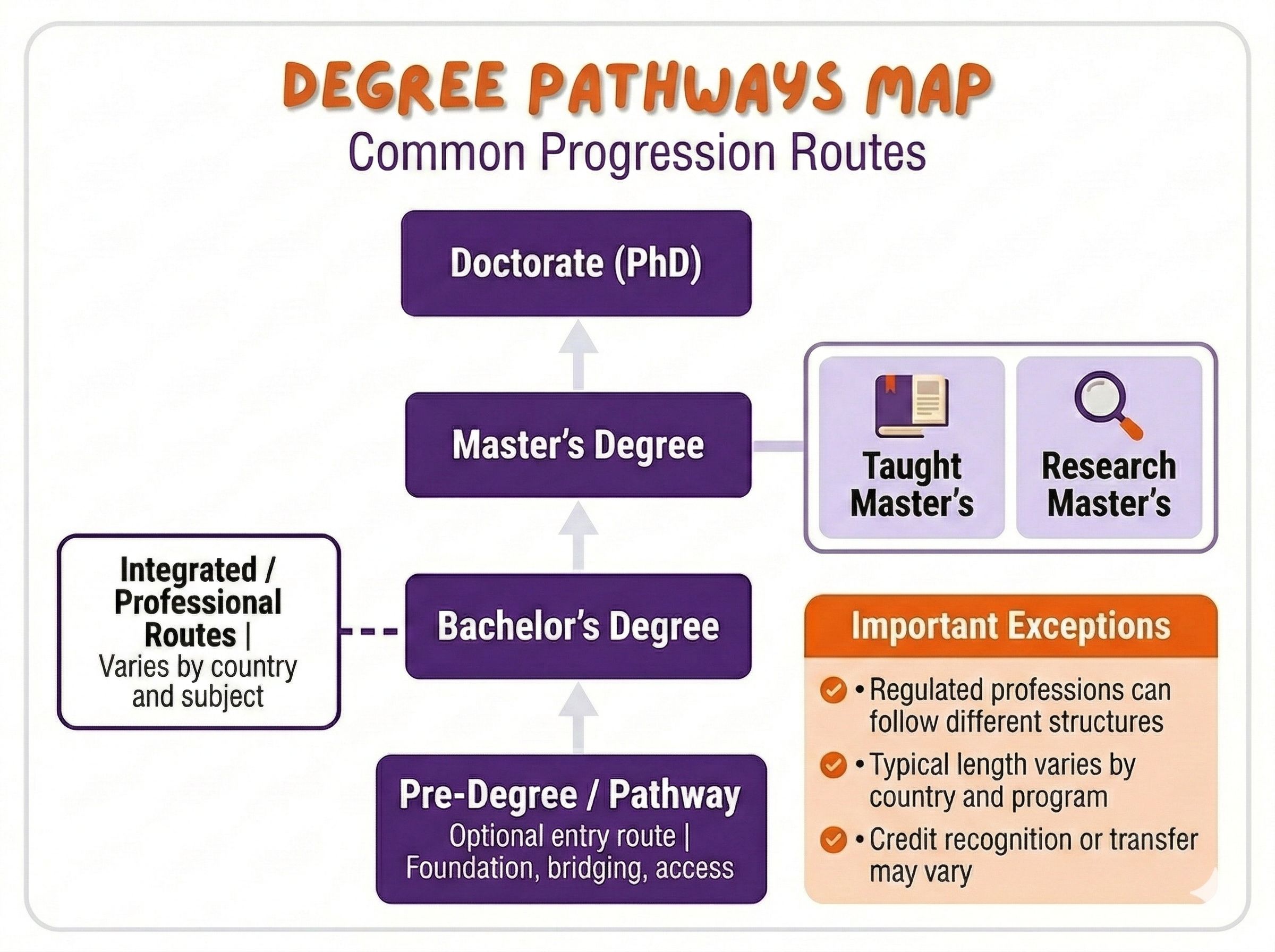
Most study follows a clear ladder of degree levels, delivered by different types of institutions such as universities and junior colleges. Programs are usually organized into semesters, with students earning credits from required and elective modules. Teaching often combines lectures with smaller classes, labs, and assessed projects, with expectations rising over time for independent study.
Common degree levels and usual lengths
- Associate degrees are commonly 2 to 3 years in junior colleges
- Bachelor’s degrees are commonly 4 years, and can be longer in some professional fields
- Master’s and doctoral programs exist in graduate schools, with duration varying by field and research requirements
- Some institutions offer integrated master’s and doctoral pathways
Credit and modular structure
- Courses are credit-based and organized by semester
- Graduation credit requirements are set by institutions and can vary by department and major
Teaching and assessment model
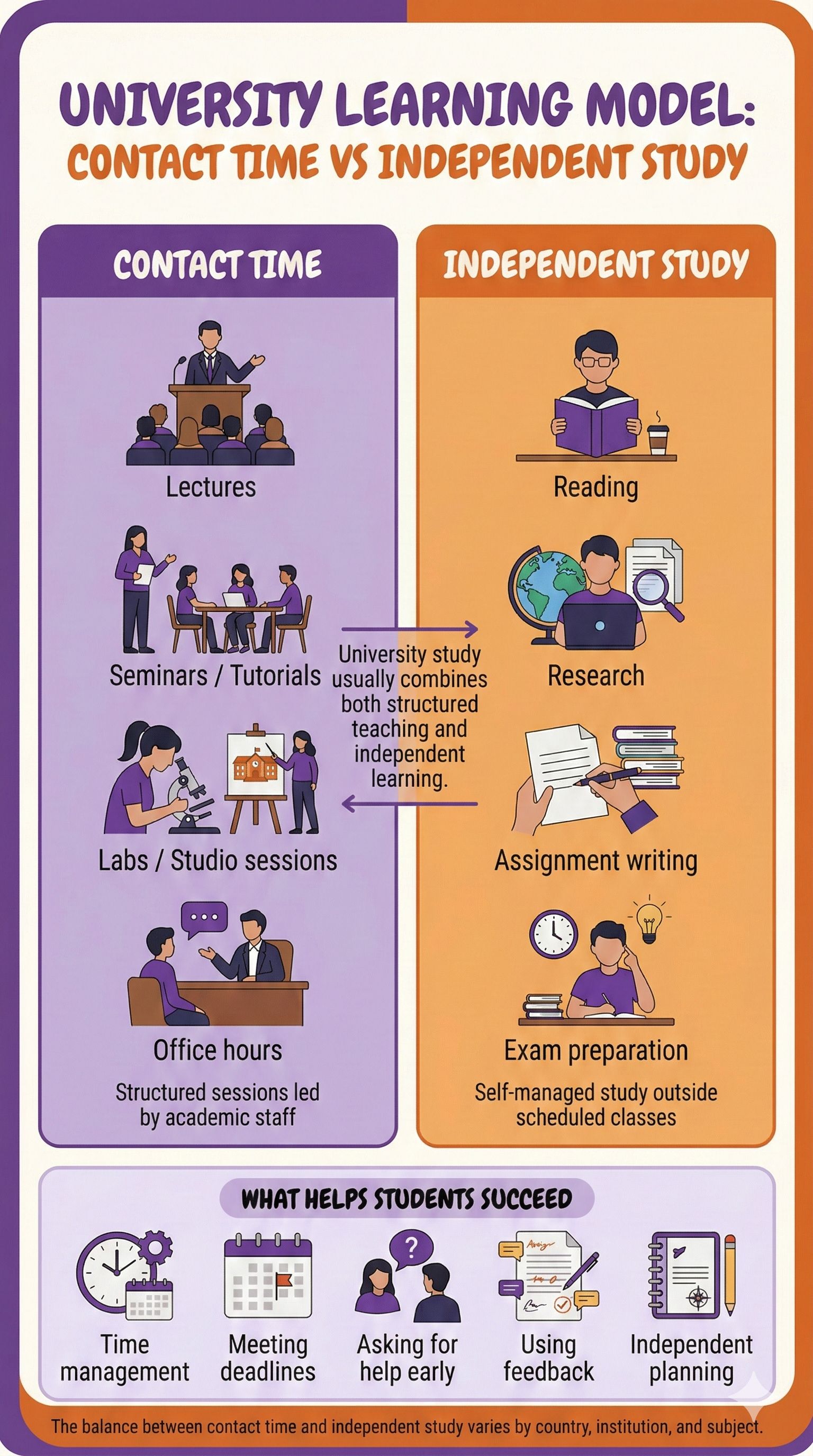
- Often includes lectures, seminars, tutorials, labs, and practical classes depending on subject
- Assessment can include midterms and finals, presentations, group projects, reports, and continuous coursework
Pathways and flexibility
- Students commonly study within a major and may have options for electives and additional fields of study, depending on institutional rules
- Credit recognition and transfer policies can exist, but vary across institutions
Major exceptions
- Regulated and licensed fields can have longer study routes and structured training requirements
- In some cases, alternative degree pathways exist through national systems that recognize learning and credits gained outside a traditional university route
❗ “4 years” can be longer in licensed or professional tracks. Some fields have stricter sequences, extra practical training, or additional requirements, so students should check the program structure before assuming the standard duration.
Academic strengths & popular study fields
South Korea is known for strong links between education, technology, and industry, and for a culture that values high academic standards. Many programs are designed with clear progression from foundational knowledge to applied skills. Strengths can vary by institution type and region, but national investment has supported growth in research and advanced industries.
Well-known fields and industry-aligned areas
- Engineering and technology-related fields, including computing and digital industries
- Business, management, and international trade-related study areas
- Natural sciences and applied research fields
- Design, media, and cultural industries in some programs and hubs
Links to the wider economy
- Industry collaboration, internships, and project-based learning can be part of some programs, especially in applied fields
What international students often look for
- Many are attracted by programs connected to technology, innovation, and Korea’s global-facing industries
- Availability of English-taught options varies by institution and level
Where strengths vary
- Opportunities and learning style can differ between research-focused universities, teaching-focused institutions, and vocationally oriented colleges
- Some fields are more concentrated in major cities and specific regional clusters
Student life & learning style
Student life in South Korea can feel fast-paced, with high expectations for organization and consistent performance. Many students balance scheduled classes with significant self-study time, especially around exam periods. Day-to-day experience varies a lot by city, campus setup, and whether students live in dorms or private housing.
Classroom culture and independence
- Clear course structures and deadlines are common
- Students are expected to manage timetables, requirements, and administrative tasks independently
Contact hours and self-study
- Structured class time is supported by substantial independent study, reading, and assignment preparation
Participation and group work
- Group projects and presentations are common in many subjects
- Participation norms vary by classroom and professor, but preparation and professionalism are typically valued
Campus and commuting
- Many students commute, especially in large cities
- Campus clubs and student societies exist, but participation depends on personal schedule and workload
Accommodation and daily life
- Options can include dormitories, shared apartments, studios, and other private housing formats
- Cost and convenience are strongly shaped by location and housing type
❗ Study intensity often peaks around midterms and finals. Students who build steady weekly study habits early usually handle exam periods better than those who rely on last-minute revision.
What happens after graduation
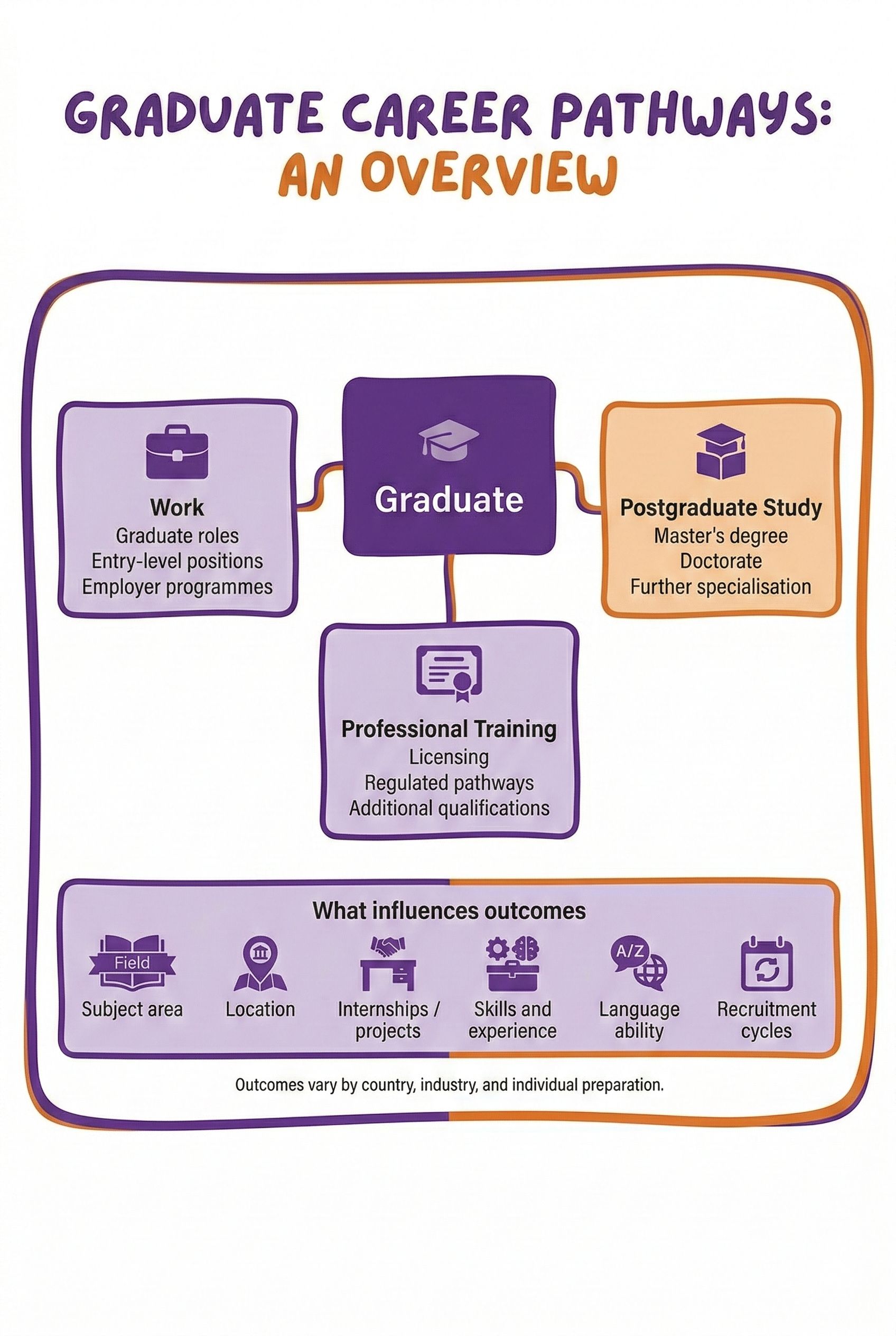
Graduates commonly move into employment, further study, or professional training, depending on subject and goals. Recruitment can be competitive, and employers may look at a combination of academic performance, practical experience, and job-ready skills. Outcomes can vary a lot by field, region, economic cycle, and language ability for roles that require Korean.
Common next steps
- Employment in private companies, public-sector routes, or startups
- Postgraduate study and research pathways
- Professional training routes in regulated fields
How employability commonly works
- Hiring processes often combine application screening, tests and interviews, and evidence of skills and experience, depending on employer
- Work experience, internships, portfolios, and project experience can matter in many fields
- University careers services and employer events can support job search, but student initiative is important
National measurement and data
- Graduate outcomes and labor market patterns are tracked through national statistics and graduate surveys
Important reality check
- Job outcomes depend strongly on subject area, local labor demand, and individual profile, and can differ widely between industries and regions
❗ Language can shape career options. Many roles in South Korea expect Korean proficiency, while some international-facing paths may use English, so students should think early about language goals alongside their degree and work plans.
Costs & funding overview
Costs in South Korea depend heavily on where a student lives and the type of institution and program they choose. Families should plan for both study costs and living costs, with daily expenses changing a lot between major cities and smaller locations. Funding is often a mix of family support and scholarships, with eligibility depending on the student’s status and the provider.
Cost categories to expect
- Tuition and mandatory university fees
- Accommodation and utilities
- Food, transport, phone and internet
- Health-related costs and insurance arrangements where applicable through the institution or personal cover
- Course-related costs such as materials, lab fees, or specialist equipment in some subjects
What makes costs higher or lower
- City and neighborhood, especially in large metropolitan areas
- Housing type and whether dorms are available
- Lifestyle choices and commuting distance
- Program type, especially subjects with labs, studios, or specialist requirements
How study is commonly funded
- Family funding is common
- Scholarships and fee reductions may be offered by universities, government-backed schemes, and other organizations
- Loan access depends on eligibility rules and student status
Availability and eligibility
- Funding options and criteria vary by institution and by the student’s residency or fee status
❗ City and housing choice can change costs significantly. Budgets often look very different depending on whether a student lives in a dormitory or private housing, and whether they study in a major metropolitan area or a smaller city.
Typical costs
These figures are best used as high-level planning ranges. Exact costs vary by institution, city, course, and student status.
Typical cost of a degree
A useful national planning figure for undergraduate study is around KRW 6,820,244 per year on average. Public universities are lower on average at around KRW 4,265,842 per year, while private universities average around KRW 7,625,336 per year. On that basis, tuition alone for a typical 4-year bachelor’s degree is often around KRW 27,280,976 total, before scholarships or fee reductions.
Typical cost of living
A useful planning range for living costs is around KRW 750,000 to 1,000,000 per month. Within that, housing is often the largest item at around KRW 500,000 to 700,000 per month, while food is estimated at around KRW 200,000 to 300,000 per month. Actual costs vary by city, housing type, and lifestyle.
Scholarships
Scholarships for international students are available in South Korea, but they are not the main source of funding for most students. Options include university scholarships and government-backed routes such as the Global Korea Scholarship (GKS). For more information, see the Study in Korea scholarships page.
Who is this country a good fit for?
South Korea can suit students who are motivated, organized, and comfortable working steadily across the semester. It can be a good match for students who like clear academic structure, measured progress, and a learning culture where effort and consistency matter. Fit depends not only on academics, but also on comfort with pace, language environment, and daily-life style.
Students who often thrive
- Self-motivated students who plan ahead and manage deadlines well
- Students who are comfortable with exam periods and sustained assessment
- Students who enjoy structured courses with clear expectations
Good fit by academic interests
- Students interested in technology, engineering, applied sciences, and business-related fields
- Students open to practical projects and industry-connected learning where offered
Good fit by lifestyle preferences
- Students who enjoy busy cities and strong public transport networks
- Students who like a safe, organized environment with clear routines
May feel challenging if
- A student prefers very flexible deadlines or minimal exam pressure
- A student finds fast-paced urban living and dense city environments stressful
What may feel different in South Korea’s higher education system
Studying in South Korea can feel structured, fast-paced, and performance-focused. Students are usually expected to manage deadlines, course requirements, exam preparation, and administrative steps carefully, while adapting to a learning environment that can feel formal in some settings.
Teaching style
- Teaching often includes lectures, seminars, tutorials, labs, practical classes, and project-based work, depending on the subject
- Some classes may feel more lecture-led, while others use group projects, presentations, and discussion
- Communication with staff may feel more formal or rule-based, depending on the institution, department, and professor
Assessment style
- Assessment commonly includes midterms, final exams, reports, presentations, group projects, practical tasks, and continuous coursework
- Study intensity often increases around midterm and final exam periods
- Consistent performance across the semester can matter, especially where attendance, participation, assignments, and exams all contribute to grades
Independence level
- Students are expected to manage timetables, credits, deadlines, administrative tasks, and course requirements independently
- Support services are available, but students usually need to ask questions, follow processes, and seek help proactively
- Students may need to plan carefully around exams, group projects, housing, health cover, language learning, and daily routines
Campus culture
- Student life can vary between residential campuses, commuter-based city campuses, and private housing arrangements
- Clubs, student societies, group activities, and peer networks can help students build community
- Daily life can feel compact and fast-moving in major cities, with routines shaped by public transport, housing, study intensity, and language environment
❗ Exam periods can feel intense in South Korea. Students who build steady study habits, track requirements carefully, and ask for help early are usually better prepared.
South Korea Student visa overview
Most international students who study a full degree in South Korea need a D-2 student visa. This is the main visa type for degree-seeking students at universities and other eligible higher education institutions.
For most degree students, the key dependency is admission to an eligible Korean higher education institution. Students usually need admission documents from the institution and evidence that they meet visa requirements before the D-2 visa process can move forward.
Main visa points
| Visa point | What students should know |
|---|---|
| Visa type | D-2 student visa for most full-time degree study |
| Main dependency | The student usually needs admission documents from an eligible Korean higher education institution |
| Typical application timing | Students should usually begin visa planning after admission and before travel, following the instructions from the Korean embassy, consulate, or visa center for their location |
| Typical decision time | Processing times vary by consulate, season, application completeness, and whether extra checks are needed |
| Interview | Students may need an appointment or interview depending on the embassy, consulate, visa center, and application circumstances |
| Extra requirements | Students may need to show they meet identity, admission, financial, academic, health, insurance, and visa requirements |
Why this matters
The South Korea visa timeline is closely connected to the admissions and arrival timeline. A student may have an offer, but they usually still need the correct admission documents, visa application arrangements, approval, and any post-arrival registration steps before they are ready to begin study.
❗ A South Korean offer does not automatically mean a student is ready to travel. D-2 visa requirements, consular timing, financial evidence, health or insurance checks, processing times, and arrival planning all need to fit around the semester start date.