
New Zealand’s higher education is called tertiary education and includes both academic and vocational options. Many courses are taught through a mix of lectures, tutorials, labs, and practical projects, with increasing independence as you progress. After graduation, students commonly move into work, further study, or structured professional training, depending on the field.
How degrees are structured
New Zealand uses a national qualifications framework with 10 levels, from school-level qualifications through to doctoral degrees. Tertiary study includes certificates and diplomas as well as degrees, and you can often build learning step-by-step from one level to the next. The system includes universities, vocational and applied education providers, and Māori-led wānanga.
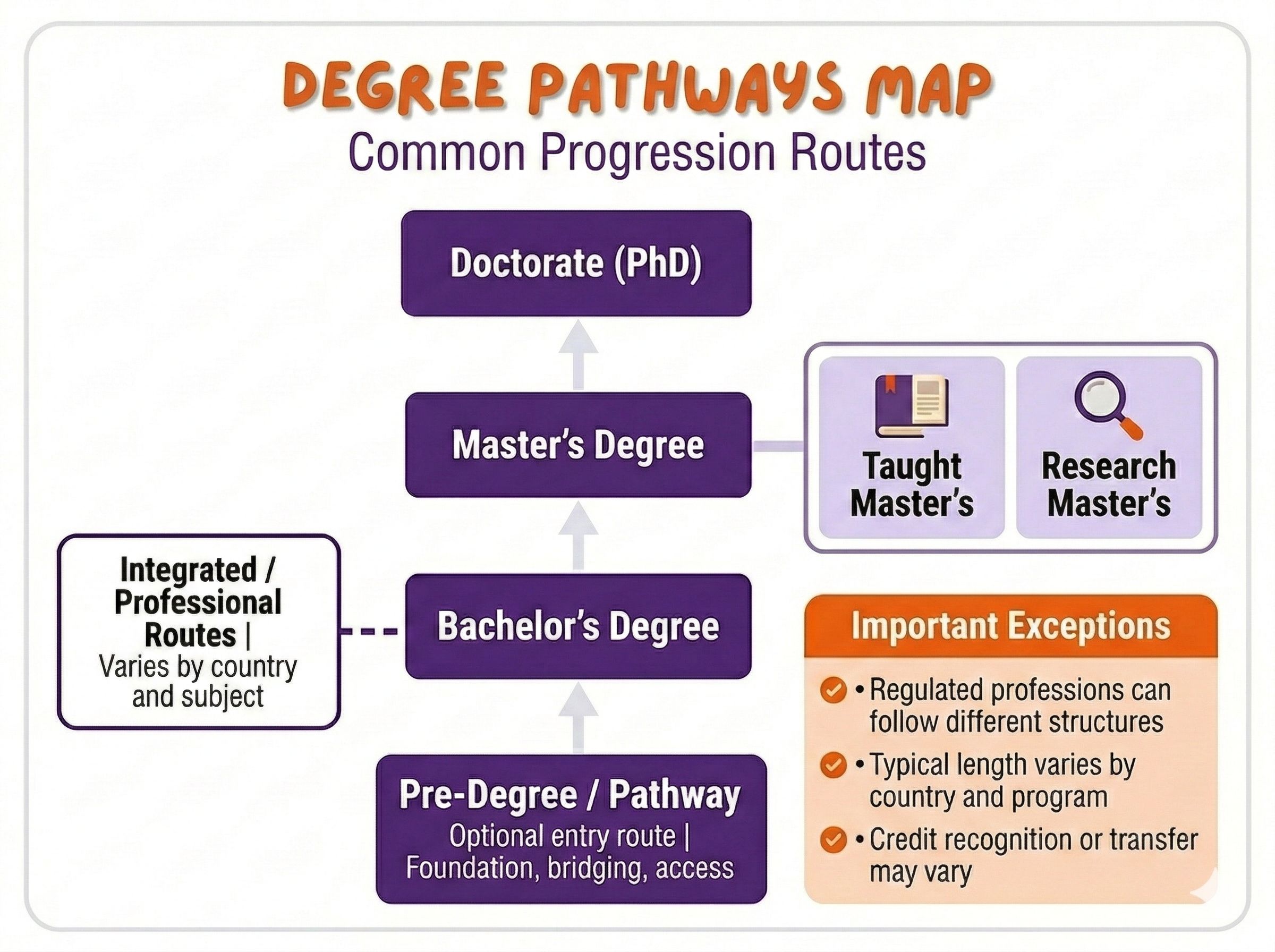
Common degree levels and usual lengths
- Bachelor’s degree: often about 3 years full-time, though some subjects can take longer
- Honours: often an additional year or an integrated structure in some courses
- Master’s degree: commonly 1–2 years full-time after a relevant bachelor’s degree
- Doctoral degree: commonly 3–4 years full-time, often research-focused
Credit and workload structure
- Many providers use a points or credits system
- A common full-time workload is about 120 points per year, with the exact course pattern varying by provider and program
Teaching and assessment model
- Teaching often combines lectures and smaller classes, plus labs, studios, fieldwork, or workshops in practical subjects
- Assessment commonly includes a mix of coursework, projects, presentations, group work, and exams
Flexibility and pathways
- Many students can combine subjects within a degree, and some programs allow movement between related study areas
- Transfers and credit recognition can be possible, but policies vary by provider
Major exceptions to be aware of
- Regulated or practice-based fields can have more fixed structures, extra practical training, and specific progression rules
❗ NZQF levels make progression clearer. Students can often move step-by-step from certificates and diplomas into degrees, but entry and credit recognition are provider-specific, so they should check the exact progression route for their institution and program.
Academic strengths & popular study fields
New Zealand’s tertiary education is shaped by a strong link between study, applied learning, and real-world problem solving. Across the country, there is a mix of broad academic degrees and industry-aligned programs. Strengths can vary by region and local industry, especially in smaller cities.
Well-known fields connected to national strengths
- Environmental and sustainability-related study
- Agriculture and food-related study
- Marine and earth-related study in many programs
- Engineering and technology across many providers
- Health and community-focused study, often with practical components
Industry ecosystem links
- Many programs connect to employers through projects, placements, or work-integrated learning, depending on the subject
Common variation to expect
- Some providers are more research-focused, while others focus more on applied or work-based training
- Practical training is more common in vocational and professional programs, and less common in purely academic subjects
Student life & learning style
Students are usually expected to manage their time independently and keep up with weekly reading, preparation, and assignments. Teaching can be friendly and approachable, but students are expected to ask questions, use office hours, and seek help when needed. Student life can feel different depending on whether you study in a large city or a smaller regional center.
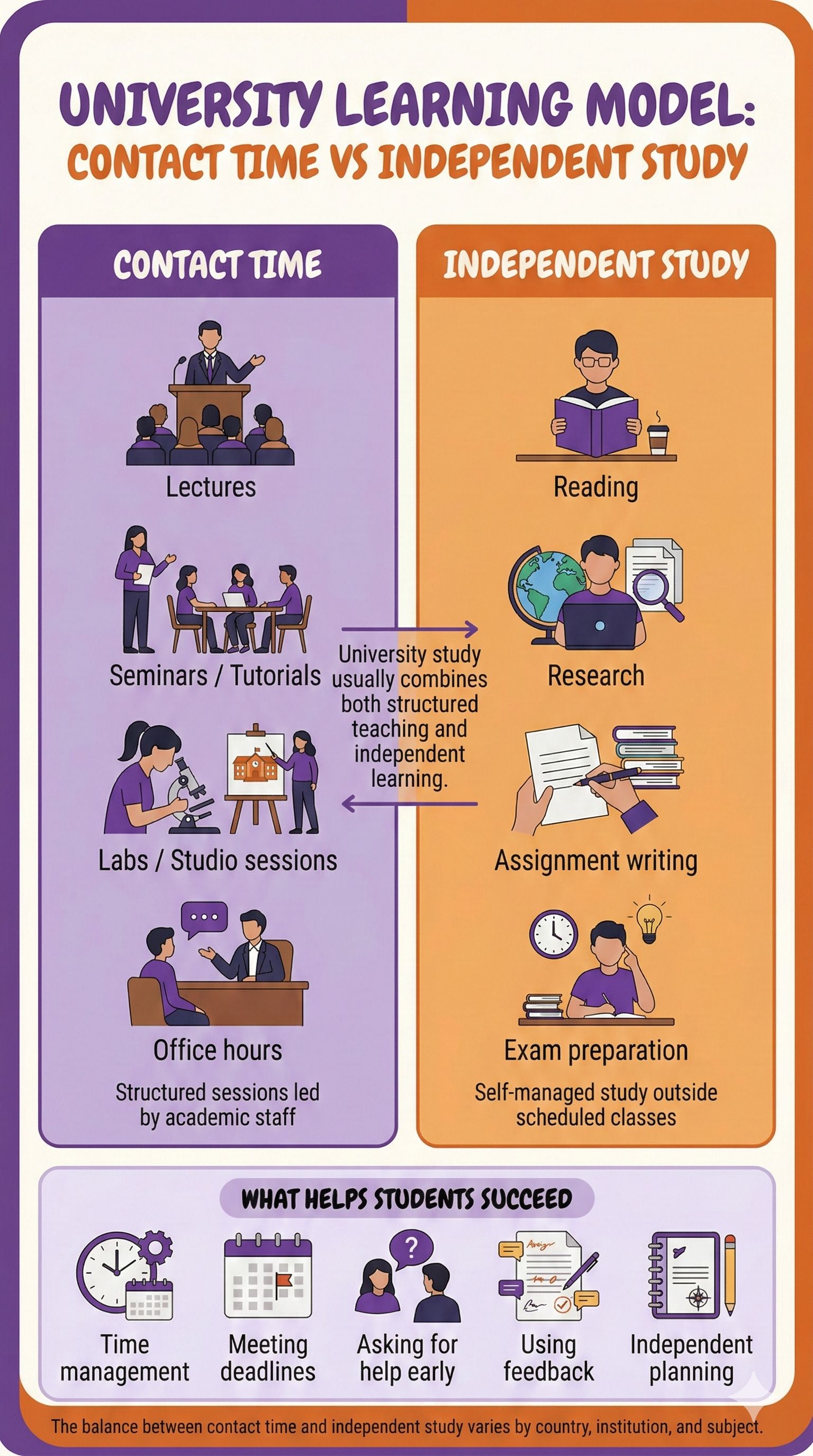
Classroom culture and independence
- You are expected to plan your study schedule, meet deadlines, and take responsibility for your progress
- Participation is often encouraged, especially in tutorials, seminars, and project work
Contact hours vs self-study
- Many courses have fewer scheduled hours than school, with more time expected for self-study and assignments
Group work and feedback
- Group projects are common in many subjects
- Feedback is often practical and linked to clear learning outcomes, with rubrics used in many courses
Campus and commuting
- Some students live near campus and spend a lot of time there, while others commute and manage study around work and family
Accommodation and daily life
- Accommodation can include shared flats, student residences, or homestays, depending on location and availability
- Daily life costs and routines vary a lot between major cities and smaller towns
❗ Location changes day-to-day life more than many students expect. Class size, housing options, transport, and part-time work opportunities can differ between major cities and regional centers, so students should factor lifestyle into their study choice, not just the course.
What happens after graduation
Graduates commonly move into work, further study, or professional training, depending on the subject area and local job market. New Zealand publishes national information on what graduates do after study and how outcomes vary by qualification level and field. Outcomes can differ significantly by region, industry demand, and whether a job requires specific professional registration.
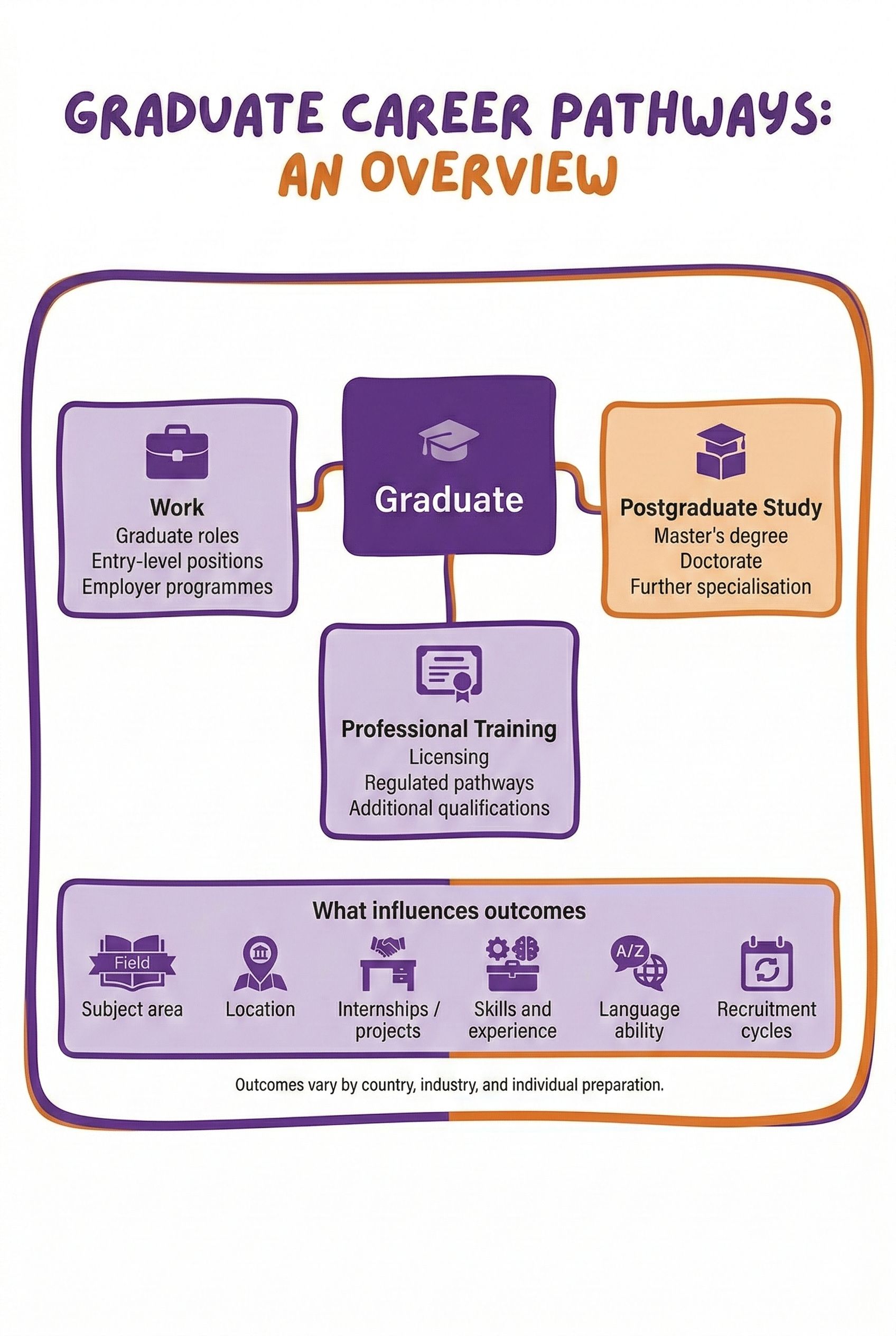
Common next steps
- Employment in New Zealand or internationally
- Postgraduate study, especially for research or specialist fields
- Professional training pathways, common in regulated careers
How employability commonly works
- Employers often look for a mix of academic results, practical experience, and evidence of skills such as communication and teamwork
- Many providers offer careers support, but students are expected to use it actively
National measurement
- Graduate destinations and outcomes are tracked and reported at a national level
Important reality check
- Outcomes vary by subject and region, and some careers have clearer pathways than others
Costs & funding overview
Costs in New Zealand are usually made up of tuition plus living expenses such as housing, food, transport, and course-related costs. The biggest cost differences often come from location, housing choice, and lifestyle. Tuition fees for international students do not have a single national price and vary by course, provider, and level of study.
Cost categories families should expect
- Tuition fees
- Accommodation and utilities
- Food, local transport, and personal spending
- Course costs such as materials, equipment, and field trips in some subjects
What makes costs higher or lower
- Major cities vs smaller towns
- Student residence vs shared flat vs homestay
- Whether your course has extra materials, lab fees, or specialist equipment
How families usually fund study
- Family funding is common, especially for living costs
- Scholarships and bursaries may be available, but they vary a lot by provider and student profile
- Some students use education loans or sponsorships where they are eligible, depending on their status and funding rules
❗ There isn’t one “New Zealand tuition fee.” International costs vary by provider, level, and subject, so families should budget using the specific program and campus location, not a country-wide estimate.
Typical costs
These figures are best used as high-level planning ranges. Exact costs vary by provider, city, course, and student status. Tuition fees for international students vary by course type, where a student studies, and how long they study.
Typical cost of a degree
There is no single national tuition figure for international undergraduate study in New Zealand, because costs vary by provider, program, and level of study. For the most accurate estimate, students should check the Study with New Zealand cost guidance and course search tool for their specific course and institution.
Typical cost of living
For an official planning benchmark, students studying at tertiary level usually need to show NZD $20,000 per year for living costs, or NZD $1,667 per month for courses shorter than a year. For day-to-day budgeting, accommodation costs can range from NZD $140 per week for a room in a shared house up to NZD $484 per week for a catered hall of residence, groceries of at least NZD $80–$120 per week, and public transport up to NZD $37 per week depending on distance.
Scholarships
Scholarships for international students are available in New Zealand, but they are not the main source of funding for most students. Many awards are provider-specific. For more information, see the Study with New Zealand scholarships page.
Who is this country a good fit for?
New Zealand can suit students who want a balance of structured teaching and personal independence. It often works well for students who like learning by doing, especially in programs with projects, labs, fieldwork, or work-integrated learning. It can feel like a good match for students who want a supportive environment but can also take initiative.
Students who tend to thrive
- Comfortable managing deadlines and self-study time
- Happy to ask for help and communicate with teachers and support services
- Interested in practical learning and applied projects
Good fit by academic interests
- Students drawn to environmental, agriculture, health, engineering, business, and technology pathways
- Students interested in learning that connects to local community and industry needs
Good fit by lifestyle preferences
- Students who like smaller class environments and a calmer pace in many locations
- Students open to living in a smaller city or regional area as well as a major city
May feel challenging if
- You prefer highly guided day-to-day learning with constant reminders
- You find it difficult to learn independently outside class
What may feel different in New Zealand’s higher education system
Studying in New Zealand can feel less structured day to day than students may be used to at school. Teaching is usually supportive and approachable, but students are expected to manage their own study time, follow up when they need help, and keep steady progress across the term.
Teaching style
- Teaching often includes lectures, tutorials, seminars, labs, workshops, fieldwork, or project-based sessions, depending on the subject
- Students may be expected to ask questions, join discussions, and take part in group activities, especially in tutorials and practical classes
- Teaching can feel approachable and informal, but students are still expected to communicate professionally and take responsibility for their learning
Assessment style
- Assessment commonly includes coursework, exams, presentations, practical tasks, group projects, lab work, and fieldwork
- Many courses assess students through steady work across the term, not only through final exams
- Feedback is often linked to learning outcomes or rubrics, with students expected to use it to improve future work
Independence level
- Students are expected to plan their weekly study time, meet deadlines, and keep up with reading, preparation, and assignments
- Support services are available, but students usually need to contact teachers, advisors, or support teams themselves
- Students may need to manage academic work alongside accommodation, transport, part-time work, and daily routines
Campus culture
- Student life can vary between larger city campuses, smaller regional centers, and more commuter-based study patterns
- Students may build community through clubs, societies, sport, volunteering, shared housing, or course-based activities
- Location can strongly shape the experience, including housing options, transport, class size, and part-time work opportunities
❗ Friendly teaching does not mean students are closely monitored. In New Zealand, students are often expected to manage their own workload, ask for help early, and keep steady progress across the term.
New Zealand Student visa overview
Most international students who study a full degree in New Zealand need a Fee Paying Student Visa. This visa is for students who are paying international tuition fees themselves or through family support, a loan, or a partial scholarship.
For most degree students, the key document is an offer of place from an approved education provider. Students usually also need to show they have paid, or can pay, tuition fees and that they have enough money for living costs before the visa process can move forward.
Main visa points
| Visa point | What students should know |
|---|---|
| Visa type | Fee Paying Student Visa for most international students paying tuition fees |
| Main dependency | The student usually needs an offer of place from an approved education provider |
| Typical application timing | Immigration New Zealand strongly encourages international students to apply around 3 months before their intended travel date |
| Typical decision time | Immigration New Zealand currently lists 80% of Fee Paying Student Visa applications as processed within 10 weeks |
| Interview | A visa interview is not usually a standard requirement, but students may be asked for further information or checks |
| Extra requirements | Students may need to show they meet identity, financial, tuition-fee, health, character, insurance, and genuine-intentions requirements |
Why this matters
The New Zealand visa timeline is closely connected to the admissions and enrollment timeline. A student may have an offer, but they usually still need the right provider documents, evidence of tuition-fee payment or ability to pay, financial evidence, and a visa decision before they are ready to travel.
❗ A New Zealand offer does not automatically mean a student is ready to travel. Offer documents, tuition-fee evidence, financial requirements, visa processing, insurance, and travel planning all need to fit around the course start date.