
Ireland’s higher education system includes universities, technological universities, and other recognized higher education providers, with national quality assurance and a national qualifications framework. Degrees are usually taught through a mix of lectures, smaller-group classes, labs, and project work, with growing independence as students progress. After graduating, many students move into work, further study, or structured professional training, depending on the subject.
How degrees are structured
Most Irish qualifications sit on the National Framework of Qualifications, which helps show how different awards compare and how students can progress between levels. Many courses use a credit-based structure aligned to European credit norms, so each year of full-time study normally adds up to a standard study load. Teaching and assessment commonly combine exams with continuous assessment such as essays, reports, lab work, group projects, and presentations.
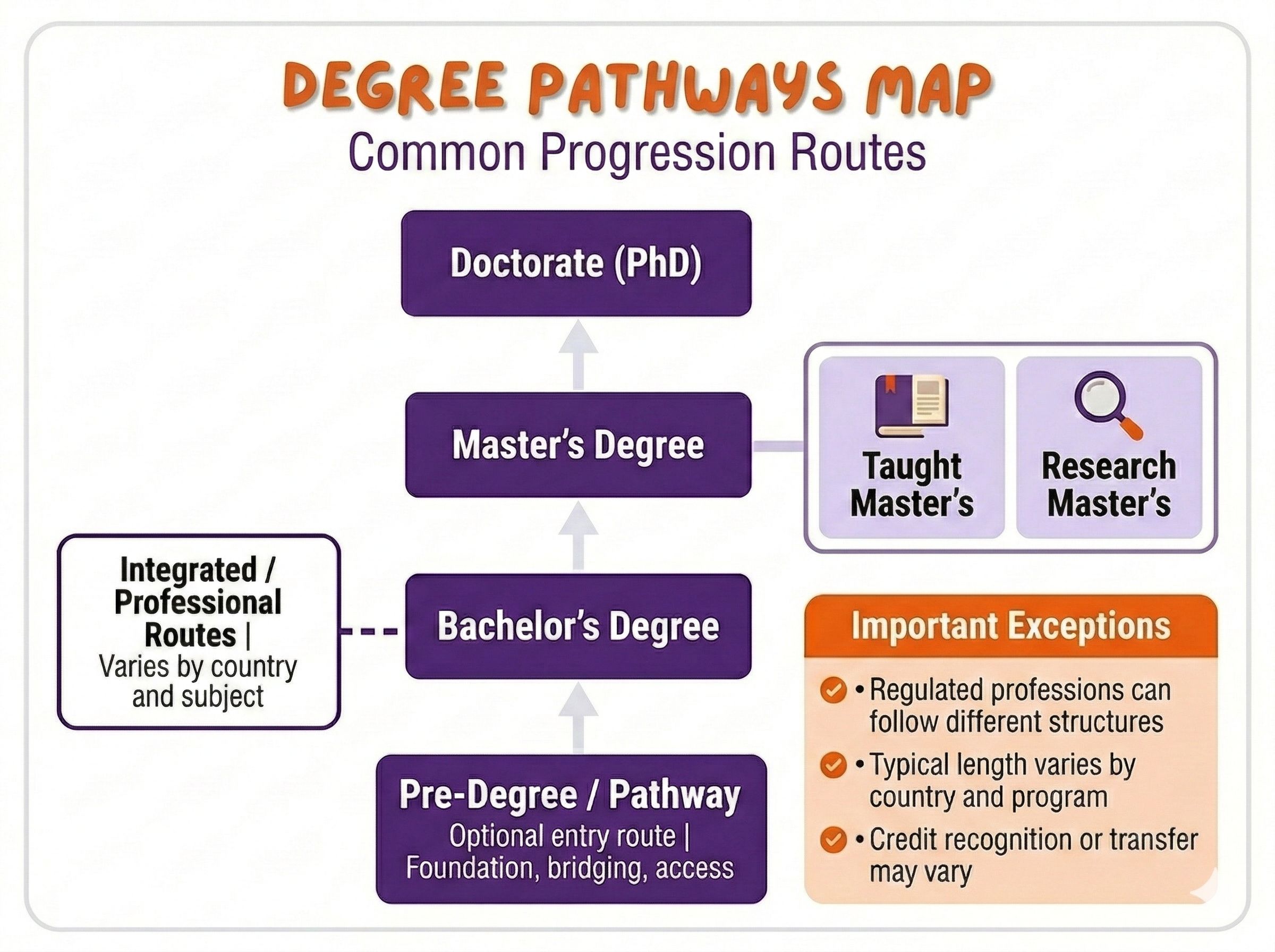
Common degree levels and usual lengths
- Higher certificate and ordinary bachelor degrees are often shorter programs at earlier higher-education levels
- Honours bachelor degree is commonly 3 to 4 years
- Taught masters degrees are commonly 1 to 2 years
- Doctoral degrees are often several years and are mainly research-based
Credits and modular study
- Many programs are built from modules with credits, often aligned to a standard full-time yearly workload
Teaching and assessment model
- A mix of lectures, small-group teaching, labs and practical work where relevant, and independent study
- Assessment often blends final exams with coursework completed during the term
Flexibility and pathways
- Many programs allow some choice through optional modules, especially after the early stages
- Progression routes exist within the framework, but how easy it is to change direction depends on the subject and institution
Important exceptions
- Some professional fields can be longer, more structured, and more regulated, with required practical training and specific assessment formats
❗ In Ireland, the NFQ level tells you what an award “counts as.” It helps students understand progression routes (for example, moving from an earlier-level award into an honours bachelor), so they should check the NFQ level of their course when planning long-term pathways.
Academic strengths & popular study fields
Ireland has a strong track record in areas linked to its international business presence, public services, and research activity. Many courses are designed with input from professional bodies or industry partners, especially in applied and technical areas. Subject strengths can vary by region and by the type of institution, with some providers more focused on research and others more focused on applied learning.
Strong and well-established fields often include
- Computing and digital fields
- Engineering and technology-related subjects
- Business, management, and related professional areas
- Health, life sciences, and health care-related fields
- Education and social sciences
Industry links are often visible through
- Guest speakers, applied projects, and work-related assignments
- Professional accreditation in some fields
- Collaboration with employers on course content in more applied programs
Student life & learning style
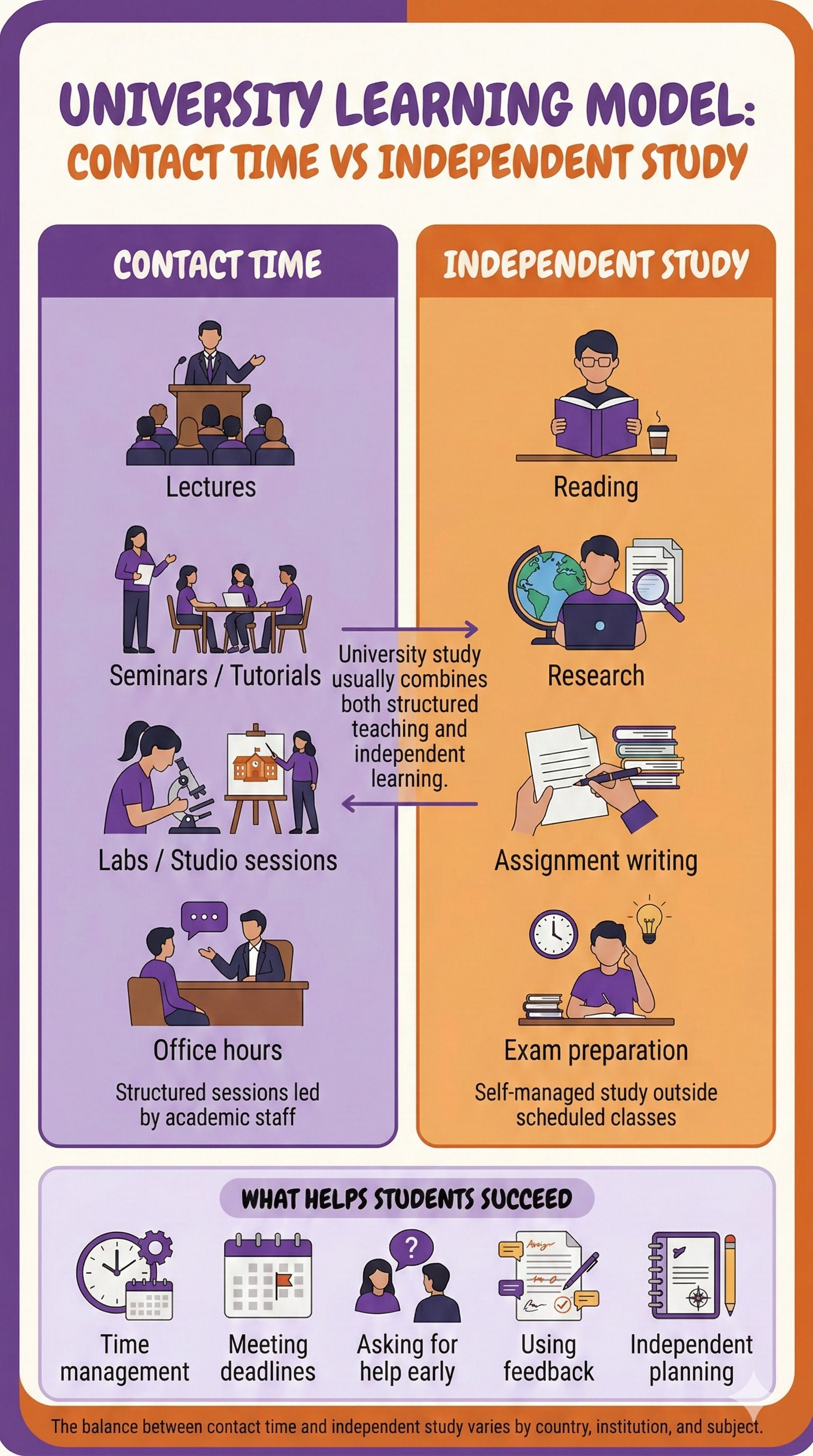
Student life in Ireland can feel varied: some students live on or near campus, while others commute, depending on the city and the institution. Learning typically expects students to manage their own time, keep up with reading and assignments, and ask for help when needed. Many programs include group work and regular coursework, so steady effort across the term matters.
Classroom culture
- Students are often expected to participate, ask questions, and share ideas in smaller-group sessions
Independent study
- Contact hours can be lower than school, with more self-study, reading, and assignment time outside class
Feedback and assessment
- Regular feedback may come through marked coursework, tutorials, and office-hour style support
Campus and daily life
- A mix of campus-based clubs and societies and city-based student life, depending on where students study
- Accommodation choices can shape experience strongly, especially in larger cities
❗ Housing choices can change the whole experience. Commute time, location, and availability can affect study routines and well-being, so students should think about accommodation early, not as a last step after offers.
What happens after graduation
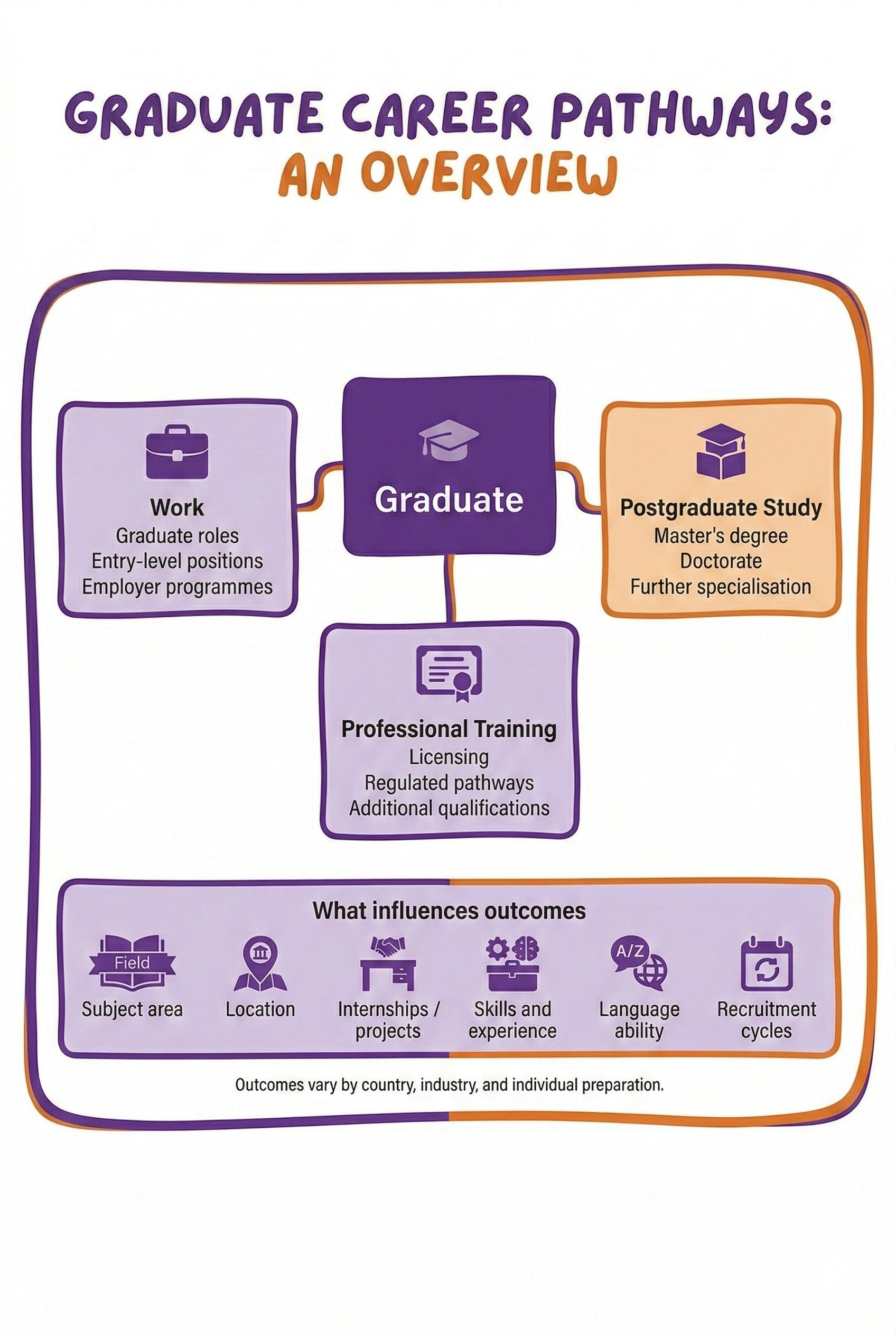
Graduate pathways in Ireland commonly include starting work, continuing to postgraduate study, or entering structured training routes linked to specific professions. Recruitment patterns often depend on the field: some areas use formal graduate programs, while others hire through internships, entry-level roles, and networking. Ireland also runs a national graduate outcomes survey that tracks what graduates are doing after they finish.
Common next steps
- Employment in Ireland or internationally, depending on subject and sector
- Further study such as taught masters programs and research degrees
- Professional training routes in regulated or specialist fields
How employability tends to work
- Employers often look for relevant skills, evidence of project work, and clear communication
- Work experience can help in many fields, but its role varies by subject
- Careers services commonly support CVs, interviews, and employer events, but students usually need to engage actively
National measurement
- Ireland’s Graduate Outcomes Survey tracks destinations around nine months after graduation
Important reality check
- Outcomes can vary a lot by subject area, location, and the local job market
Costs & funding overview
Costs in Ireland usually include tuition or fees, housing, and day-to-day living costs, plus course-related costs such as materials or field trips in some subjects. The biggest cost differences often come from where students live and how they arrange accommodation. For many families, funding is a mix of family support and student funding options where eligible.
Main cost categories families should plan for
- Tuition or course fees
- Accommodation and utilities
- Living costs such as food, transport, and study materials
- Health insurance may be relevant depending on the student’s situation and provider expectations
What makes costs higher or lower
- City versus smaller town location
- Accommodation type and whether students live on campus, rent privately, or live at home
- Program type and subject-specific costs
- Whether a student is charged domestic-style fees or international fees
How families usually fund study
- Family funding is common, especially for living costs
- Scholarships and bursaries can exist at provider level, often competitive and variable
- Public student support may be available for eligible students through national schemes, but eligibility depends on the student’s status and personal circumstances
❗ Fee status makes a big difference in Ireland. Costs can change significantly depending on whether a student qualifies for domestic-style fees (and schemes like “free fees” where eligible) or pays international fees, so families should confirm fee status early when budgeting.
Typical costs
These figures are best used as high-level planning ranges. Exact costs vary by institution, city, accommodation choice, program, and student status.
Typical cost of a degree
In Ireland, a single national “typical degree cost” is less reliable than checking the student’s fee category first. Under the Free Fees Initiative, eligible full-time undergraduate students at publicly funded institutions usually do not pay tuition fees, but they may still pay the student contribution, which is currently up to €3,000 per year. Students who do not qualify for free fees, including many international students, may pay significantly higher tuition set by the institution. Because international fees vary widely by provider and course, it is better to confirm the exact tuition directly with the institution where free fees do not apply.
Typical cost of living
For an official planning benchmark, students coming to Ireland for courses lasting more than 8 months must normally show access to €10,000 per year for living costs as part of the student visa process. This is a useful baseline for budgeting, but actual costs can be higher depending on city and housing. Private rented student accommodation usually requires rent paid monthly in advance plus a deposit, which reinforces how strongly housing affects total costs.
Scholarships
Scholarships for international students are available in Ireland, but they are not the main source of funding for most students. Many options are provider-specific, while national schemes such as the Government of Ireland International Education Scholarships are competitive and limited in number. For official information on scholarship options, see the Higher Education Authority’s Government of Ireland scholarship materials.
Who is this country a good fit for?
Ireland can suit students who want a recognized European-style degree structure with clear qualification levels and a mix of academic and applied learning options. It often works well for students who are ready to manage deadlines, organize independent study time, and communicate with tutors when they need support. The experience can vary a lot by location and institution type, so comfort with adapting to different environments helps.
May suit students who
- Like structured programs with steady assessment across the term
- Want a mix of theory and practical learning through projects and applied assignments
- Are comfortable learning independently and using support services proactively
- Enjoy a sociable student culture and learning alongside students from many backgrounds
May feel challenging if you
- Prefer very high contact hours and daily teacher-led structure
- Find it hard to manage multiple deadlines across different modules at the same time
What may feel different in Ireland’s higher education system
Studying in Ireland can feel more independent than students may be used to at school. Teaching is usually structured, but students are expected to manage reading, coursework, deadlines, communication, and support-seeking more proactively as they move through their degree.
Teaching style
- Teaching often includes lectures, tutorials, seminars, labs, practical classes, or project-based sessions, depending on the subject
- Smaller classes may expect students to ask questions, join discussions, and share ideas
- Contact hours can be lower than school, with more learning happening through reading, preparation, and assignments outside class
Assessment style
- Assessment commonly includes exams, essays, reports, presentations, lab work, group projects, and continuous coursework
- Many programs assess students across the term, not only through final exams
- Feedback may come through marked coursework, tutorials, office-hour support, or written comments on assignments
Independence level
- Students are expected to plan their study time, track deadlines, and manage work across several modules
- Support services are available, but students usually need to ask for help through the right channels
- Students may need to manage academic, accommodation, budgeting, and daily-life decisions more independently
Campus culture
- Student life can vary depending on whether students live on campus, near campus, in private accommodation, or commute
- Clubs, societies, volunteering, sports, and student events can be important ways to build community
- Housing location and commute time can strongly shape daily routines, especially in larger cities
❗ Independent study is a normal part of Irish higher education. Students who plan their week early, keep up with coursework, and ask for help before problems build up are usually better prepared.
Ireland Student visa overview
Many international students from outside the EU/EEA and Switzerland who study a full degree in Ireland need a long-stay study visa before traveling to Ireland. Some students may not need an entry visa based on nationality, but students staying for more than 90 days usually still need to follow immigration registration requirements after arrival.
For most degree students, the key dependency is an offer or letter of acceptance from an eligible Irish education provider. Students usually need their acceptance documents and evidence that they meet immigration requirements before the study visa or immigration permission process can move forward.
Main visa points
| Visa point | What students should know |
|---|---|
| Visa type | Long-stay study visa for visa-required students studying for more than 90 days; immigration registration is usually needed after arrival for longer study |
| Main dependency | The student usually needs an offer or letter of acceptance from an eligible Irish education provider |
| Typical application timing | Students can usually apply up to 3 months before their intended travel date |
| Typical decision time | Processing times vary by visa office and season; some official guidance gives around 8 weeks or 4–8 weeks for study visa decisions |
| Interview | A visa interview is not always a standard requirement, but students may be asked for documents, further information, or checks depending on their application |
| Extra requirements | Students may need to show they meet identity, financial, academic, English language, health insurance, fee payment, and immigration requirements |
Why this matters
The Ireland visa timeline is closely connected to the admissions and arrival timeline. A student may have an offer, but they usually still need the right acceptance documents, financial evidence, health insurance arrangements, visa processing where required, and immigration planning before they are ready to travel or begin study.
❗ An Irish offer does not automatically mean a student is ready to travel. Acceptance documents, visa requirements by nationality, financial evidence, processing times, health insurance, and immigration registration all need to fit around the course start date.