
Germany has a large, diverse higher education system with many study options across academic and applied fields. Most degrees follow the bachelor’s and master’s structure, with a strong focus on clear subject knowledge and independent study. After graduation, common directions include starting work in industry, continuing to a master’s degree, or moving into research-oriented pathways.
How degrees are structured
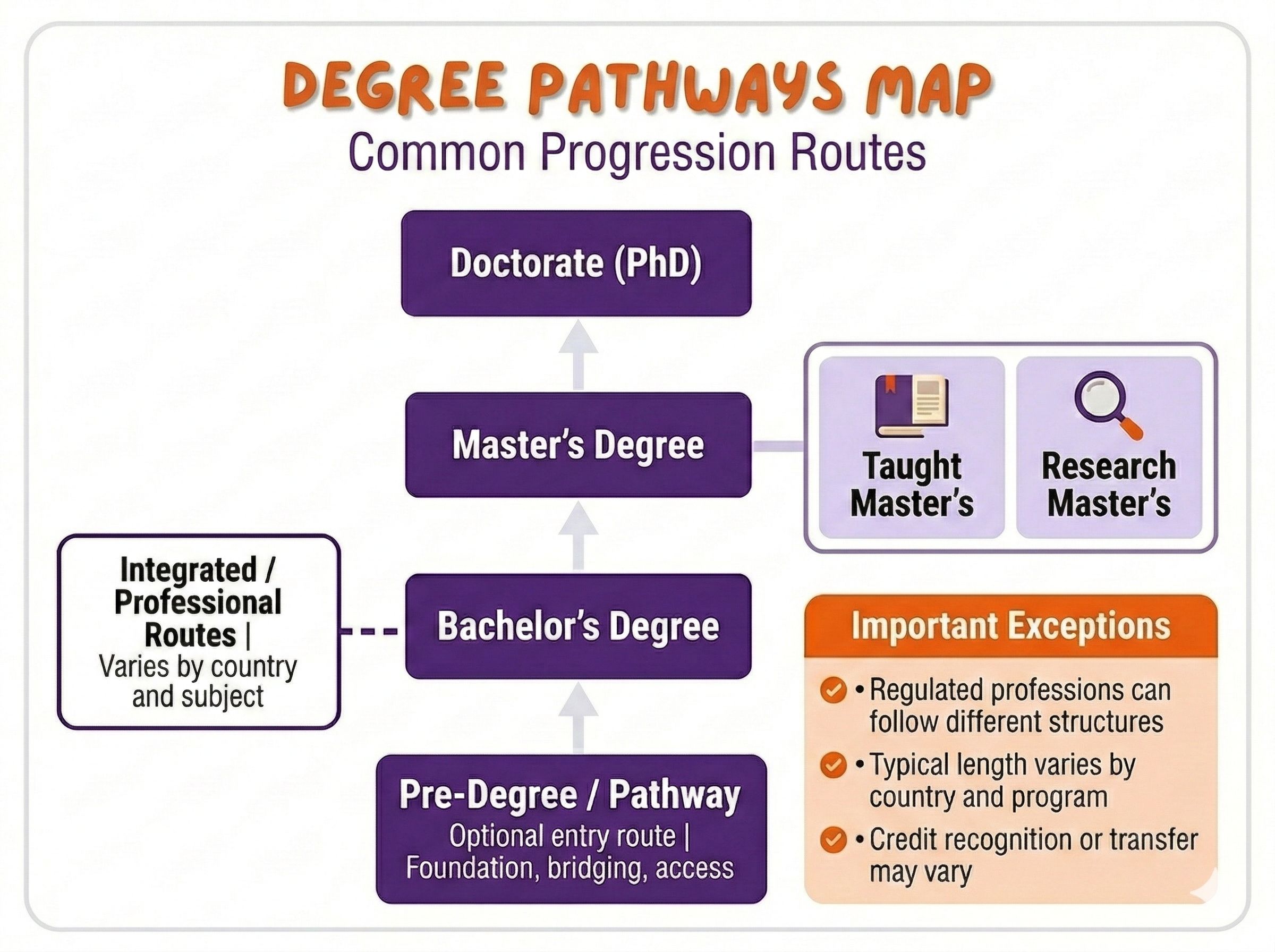
Most programs are organized into modules that build toward a clear qualification. Germany uses a credit-based structure that supports mobility across Europe, and many courses combine lectures with smaller-group teaching and independent work. Some subjects follow different, regulated qualification routes.
Common degree levels and usual lengths
- Bachelor’s degree is commonly 3 to 4 years depending on the program structure and field
- Master’s degree is commonly 1 to 2 years
- Doctoral study is available, often research-focused and usually longer than a taught degree
Credits and workload
- Programs are modular and typically use ECTS credits to show workload and progress
Teaching and assessment style
- Common formats include lectures, seminars, labs, tutorials, and project work
- Assessment often includes end-of-term exams, written assignments, presentations, and practical work in lab-based subjects
Flexibility and pathways
- Many programs have a set structure, especially in the first years, with more choice later
- Changing direction can be possible, but may depend on how closely the subjects match and how credits transfer
Important exceptions
- Some regulated professions use state examination style qualifications rather than the standard bachelor’s and master’s route, especially in areas like medicine and law
❗ Not every German degree is bachelor → master. Some regulated fields (for example medicine and law) can follow state examination routes with different structures and timelines, so students should check the qualification route for the specific subject.
Academic strengths & popular study fields
Germany is known for strong links between higher education, research institutes, and industry, especially in technical and applied areas. Study options exist across a wide range of subjects, and strengths can vary by region due to local industry clusters. Many programs emphasize practical problem-solving alongside theory, particularly in applied universities.
Well-known fields and ecosystems
- Engineering and manufacturing-related fields, including mechanical, electrical, and industrial engineering
- Computer science, data-related fields, and technology-focused programs
- Natural sciences such as chemistry, physics, and life sciences, often linked to research environments
- Business and economics, often connected to regional industry and international trade
Applied and practice-linked study
- Many programs include practice-oriented components, especially in universities of applied sciences
- Projects with real-world cases and collaboration with companies can be a common feature in applied programs
Regional variation
- Some subject strengths are shaped by local employers and research centers, so the experience can differ between major cities and smaller university towns
Student life & learning style
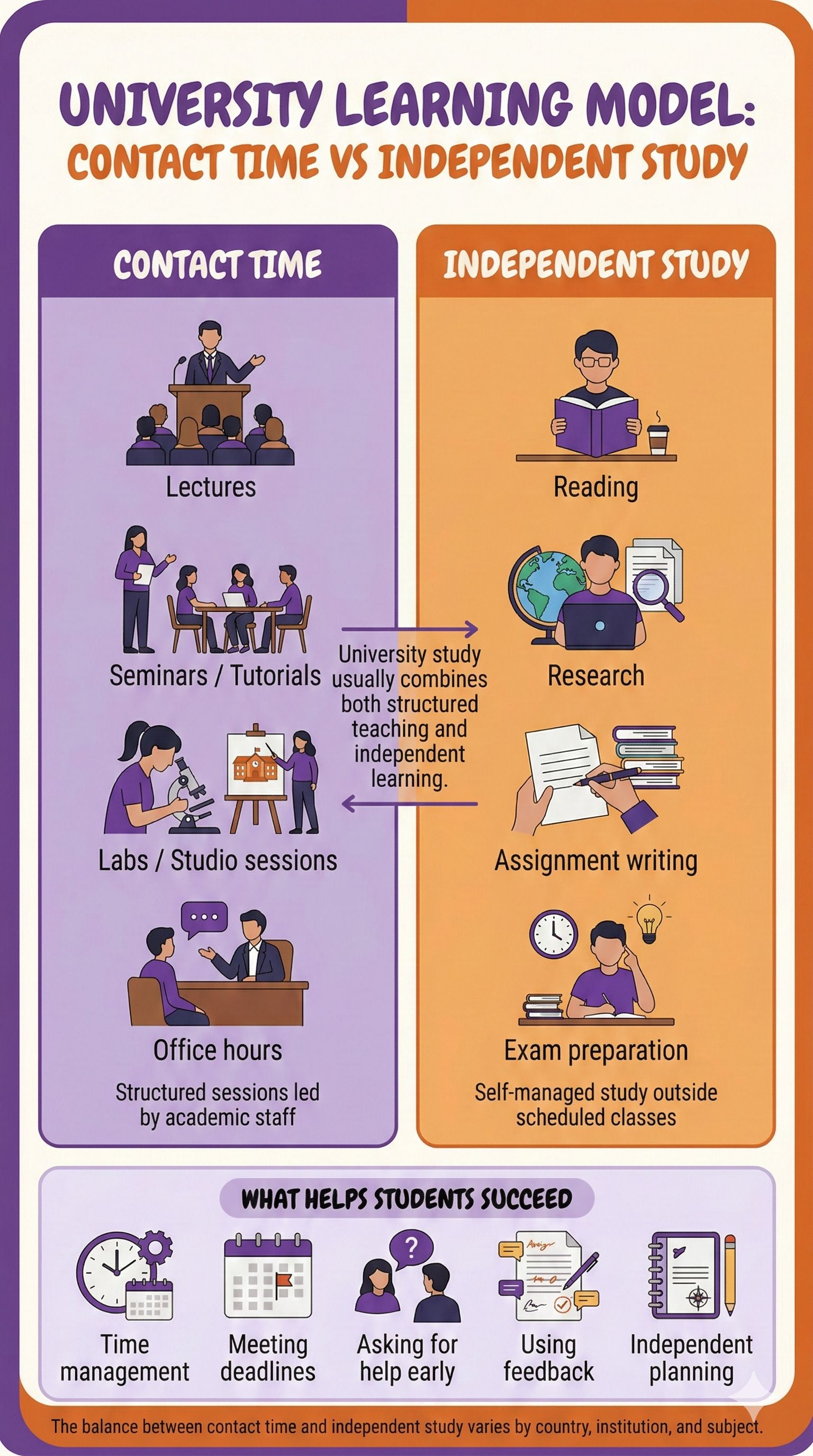
Student life in Germany often expects maturity and self-management. Teaching can be structured, but students are usually responsible for planning their weekly study time, keeping up with materials, and meeting deadlines. The experience can feel different depending on whether students live in a campus setting or commute.
Classroom culture
- Students are expected to work independently and take responsibility for their progress
- Participation varies by subject and teacher, but seminars often expect discussion and preparation
Contact hours and self-study
- A significant part of learning may happen outside class through reading, problem sets, lab preparation, and exam revision
Feedback and assessment rhythm
- Feedback can be direct and focused on academic standards
- Some programs place strong weight on major exams or final assessments at the end of a term
Campus and daily life
- Many students live in cities or towns and commute to classes rather than staying on a single closed campus
- Daily life can be shaped by housing availability, transport, and whether students join student groups and clubs
What happens after graduation
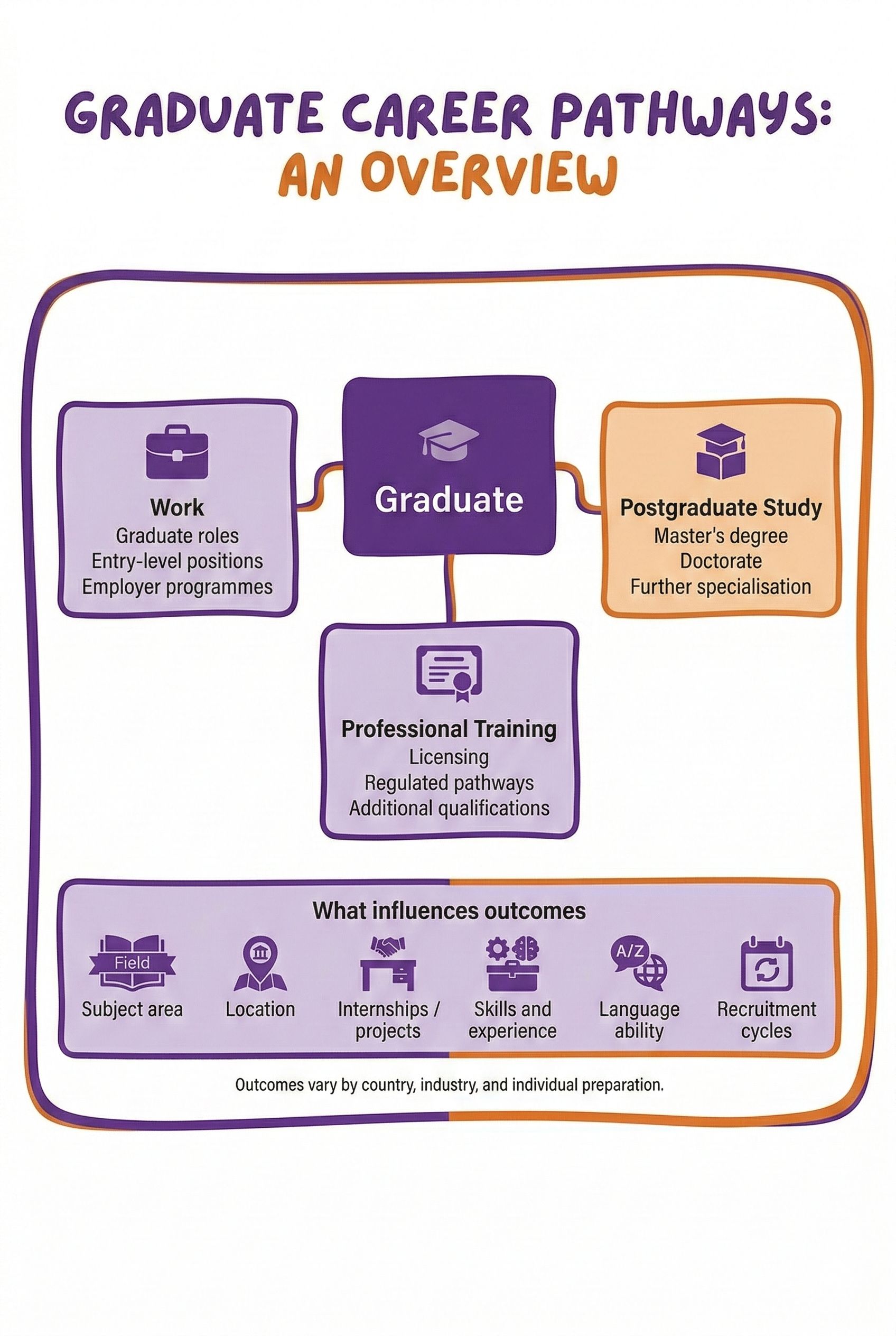
After graduating, students commonly enter the job market, continue to further study, or move into professional training depending on the field. Recruitment often values subject knowledge, practical experience, and German-language ability for many roles, while some international roles may use English. Outcomes can vary a lot by subject area and local job market conditions.
Common next steps
- Starting work in industry, especially in technical, business, and applied fields
- Continuing to a master’s degree to specialize or strengthen employability in a field
- Research pathways for students aiming for academic or research-focused careers
How employability often works
- Internships, working student roles, and project experience can matter alongside the degree
- Employers may look for clear evidence of skills, such as technical tools, lab experience, or portfolio-style work in creative fields
- Career support exists in many institutions, but students are often expected to be proactive in using it
Variation by subject and region
- Opportunities can be stronger in regions with relevant industry clusters
- Regulated professions may require additional steps after graduation that are specific to the profession
❗ Experience during study can be a key advantage in Germany. Internships and “working student” roles often help students build local experience and employer connections, especially in applied and technical fields.
Costs & funding overview
Costs in Germany are usually a mix of study-related charges and living costs. Even where tuition is low or not charged in many public settings, families should still plan for housing and day-to-day living expenses. Costs often change based on city size, housing type, and lifestyle choices.
Cost categories families should expect
- Tuition or program fees where applicable, plus term-based charges and student service fees where required
- Housing
- Food
- Local transport
- Health insurance, where typical
- Study materials
What makes costs higher or lower
- Large cities and high-demand housing markets tend to be more expensive
- Student housing availability and shared housing options can significantly affect budget
- Personal lifestyle choices, travel, and leisure spending can shift costs
How families usually fund study
- Family funding is common, especially for living costs
- Scholarships and support schemes exist, but availability varies by student background and provider rules
- Some students use part-time work to support daily expenses, depending on workload and personal schedule
❗ The biggest cost is usually living, not tuition. Housing prices vary a lot by city, and budgets can change significantly depending on rent and availability, so families should plan costs around the specific city and housing options, not a Germany-wide assumption.
Typical costs
These figures are best used as high-level planning ranges. Exact costs vary by city, housing choice, program, and student status.
Typical cost of a degree
In Germany, many public universities do not charge general tuition fees for most degree programs, but students usually pay a semester contribution. This contribution typically ranges from €70 to €430 per semester. There are exceptions where tuition applies, including some programs and some non-EU students in Baden-Württemberg, where there are tuition fees of €1,500 per semester for non-EU students. Because tuition rules depend heavily on institution, program, and student status, it is better to confirm the exact fee structure with the institution.
Typical cost of living
For an official planning benchmark, students in Germany had average expenses of €876 per month based on the latest social survey from 2023. For visa planning, students can prove funding with a blocked account containing a minimum of €11,904 per year, or €1,091 per month, as of 2026.
Scholarships
Scholarships for international students are available in Germany, but they are not the main source of funding for most students. Many options are selective, and scholarships are aimed primarily at graduates, doctoral students, and postdocs, rather than forming a broad funding system for all undergraduate international students. For official information on scholarship options, see the DAAD scholarships pages and scholarship database.
Who is this country a good fit for?
Germany can suit students who want a structured academic path, strong subject depth, and a learning environment that rewards independence. It can also work well for students interested in study with clear links to industry and applied learning. The best fit often depends on comfort with self-directed study and adapting to a more independent university culture.
Students who often thrive
- Independent learners who can plan their time and stay organized without close monitoring
- Students who like clear academic standards and building expertise step by step
- Students who enjoy practical problem-solving, labs, and applied projects
Good fit by academic interests
- Strong fit for technical and scientific interests, and for programs linked to applied industry needs
- Good option for students who want a wide range of subject choices across academic and applied routes
Good fit by lifestyle preferences
- Students who like living in well-connected cities and towns with access to travel across Europe
- Students comfortable building their own community through clubs, societies, and local life
May feel challenging if
- You prefer very high levels of guided support and frequent reminders from teachers
- You find it difficult to manage long-term deadlines and exam-focused assessment periods
What may feel different in Germany’s higher education system
Studying in Germany can feel more independent and less guided day to day than students may be used to at school. Teaching is often structured and academically rigorous, but students are usually expected to organize their own study time, keep up with course material, and seek support when they need it.
Teaching style
- Teaching often includes lectures, seminars, tutorials, labs, workshops, or project-based sessions, depending on the subject
- Students are expected to work independently and take responsibility for their progress between taught sessions
- Seminars may expect preparation, discussion, and active engagement, while larger lectures can feel more self-directed
Assessment style
- Assessment commonly includes exams, written assignments, presentations, lab work, practical tasks, and project work
- Some programs place strong weight on major exams or final assessments at the end of a term
- Feedback can be direct and focused on academic standards, accuracy, and subject knowledge
Independence level
- Students are expected to plan their weekly study schedule, manage longer-term deadlines, and keep up without close supervision
- Support services are available, but students usually need to contact the right office, teacher, or adviser themselves
- Administrative steps, course registration, housing, insurance, and deadlines may require careful self-management
Campus culture
- Student life may be less centralized than in a closed-campus model, with many students living across the city or commuting to classes
- Students often build community through student groups, subject associations, sports, local activities, or shared housing
- Daily routines can be shaped by housing availability, public transport, city size, and whether the student studies in a large city or smaller university town
❗ Independence is a major part of the German university experience. Students who plan ahead, track deadlines, and ask for help early are usually better prepared for the academic and administrative expectations.
Germany Student visa overview
Many international students from outside the EU/EEA who study a full degree in Germany need a national visa for study before entering Germany. Some students from certain countries may be able to enter Germany without a visa and apply for a residence permit after arrival, but many students need the visa before travel.
For most degree students, the key dependency is admission to a recognized higher education institution and proof that they can meet the conditions for study in Germany. Students usually need an admission letter or equivalent confirmation, proof of financial resources, and health insurance arrangements before the visa or residence permit process can move forward.
Main visa points
| Visa point | What students should know |
|---|---|
| Visa type | National visa for study, usually followed by a residence permit after arrival |
| Main dependency | The student usually needs admission or confirmed enrollment from a recognized higher education institution |
| Typical application timing | Students should usually begin visa planning after admission and well before the intended travel date, because appointment and processing times can vary |
| Typical decision time | Processing times vary by embassy, location, season, and whether local immigration authority approval is needed; some official guidance gives around 25 days, while other cases may take 1–3 months |
| Interview | Many students should expect an appointment or visa interview as part of the national visa process |
| Extra requirements | Students may need to show they meet identity, financial, health insurance, academic, language, and residence permit requirements |
Why this matters
The Germany visa timeline is closely connected to the admissions and arrival timeline. A student may have an offer, but they usually still need the correct admission documents, proof of funding, health insurance arrangements, a visa appointment, and a decision before they are ready to travel.
❗ A German offer does not automatically mean a student is ready to travel. Admission documents, visa appointment availability, proof of funding, health insurance, processing times, and residence permit steps all need to fit around the course start date.