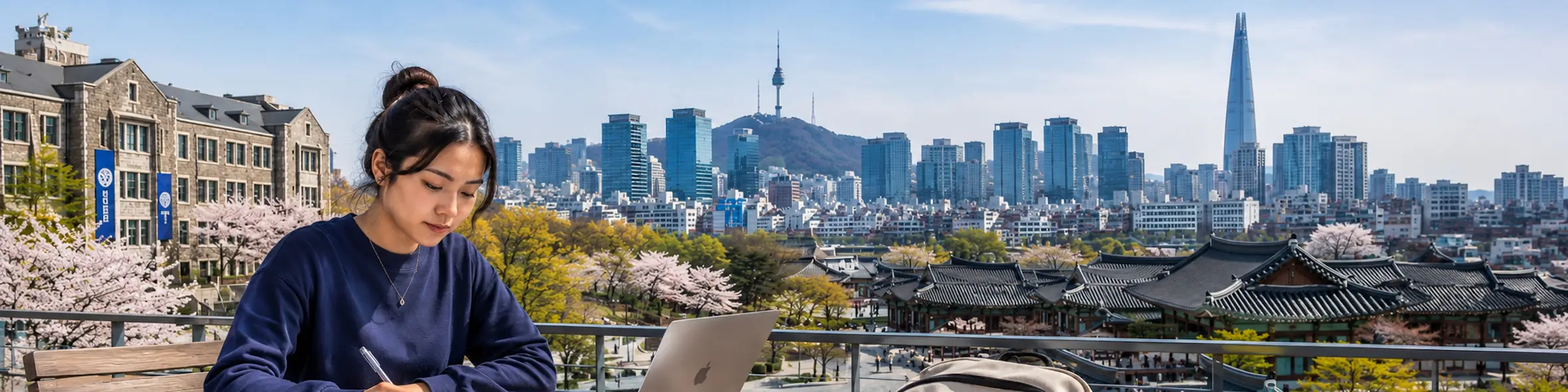
South Korea is an attractive alternative when students want a research-active system with a strong technology and innovation profile, plus a distinctive campus-and-city experience in East Asia. The main trade-offs versus the Big 4 are the Korean-language environment outside class and a more structured academic culture in many institutions.
South Korea at a glance
South Korea can work as an alternative destination when counselors want a large higher education system with expanding international pathways and broad subject coverage. It tends to suit students who are comfortable living in a mostly Korean-language environment outside the classroom.
Quick signals
- International student momentum: Growing
- English-taught availability: Moderate
- Total cost positioning: Low to moderate
- Employer recognition outside the region: Moderate
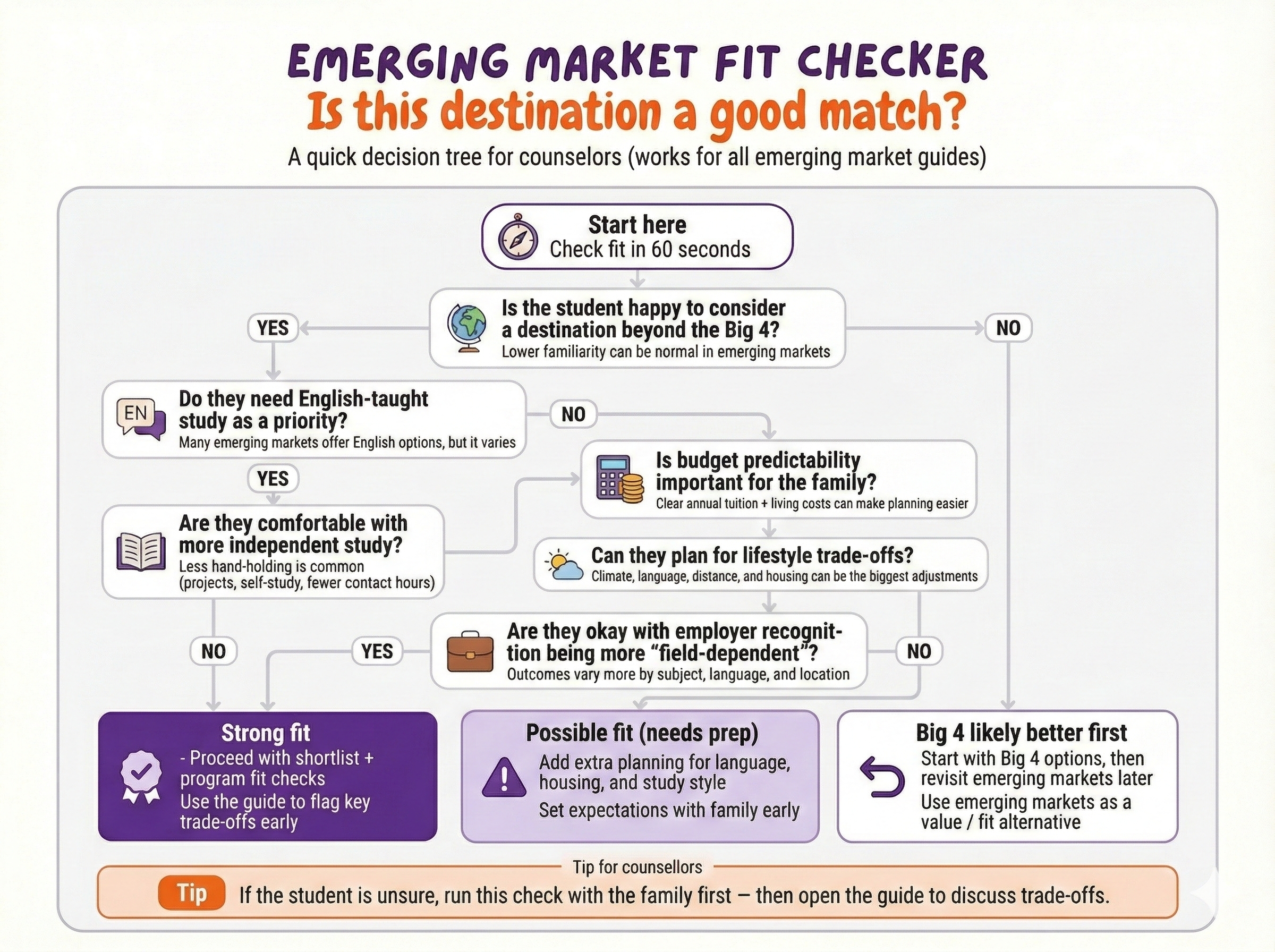
Why students are considering South Korea
- International recruitment has been scaling, with national coordination and clearer student support infrastructure.
- Rankings presence is supported by consistent representation in major international rankings.
- Tuition for international students is often positioned below the Big 4, with wide variation by institution type and field.
- English-taught options are increasing, especially at graduate level and in STEM-linked areas, but remain uneven.
- The economy’s strengths in technology, engineering, and digital industries shape program supply and student interest.
- Government-backed scholarships exist, but they are competitive and policy-led rather than broadly available.
❗ “English-taught” doesn’t mean “English-everywhere.” Program availability is strongest in certain graduate and STEM areas, but can be thinner in other fields, so students should treat English-taught supply as program-specific, not a nationwide guarantee.
Academic and ranking landscape
- Rankings presence is noticeable, with a concentration of globally visible institutions alongside a larger domestic-focused sector.
- Research activity is strong in science and technology-aligned areas, with applied research commonly linked to industry needs.
- Business, engineering, computing, and life sciences are frequent international demand clusters.
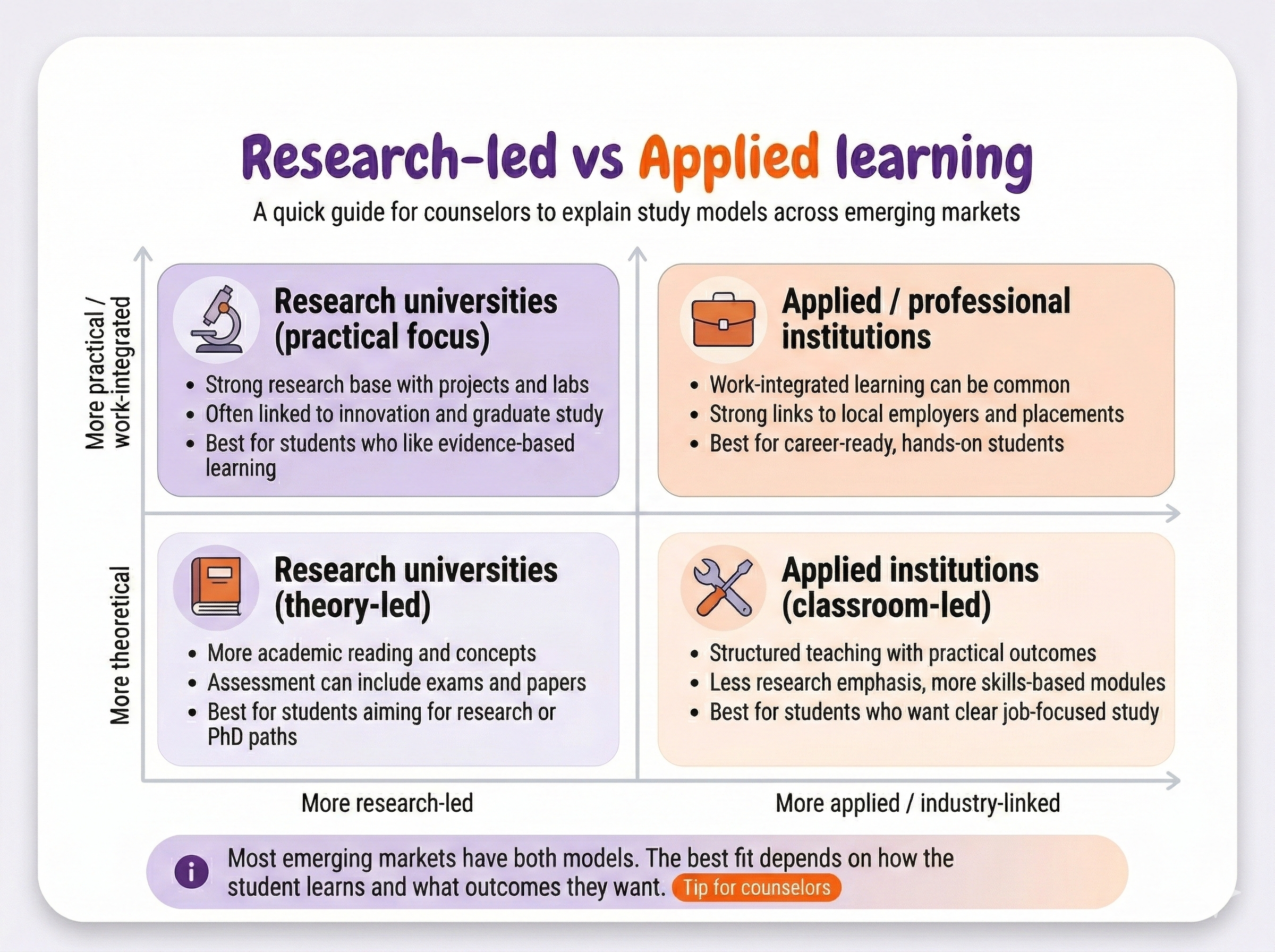
- Teaching styles can be more structured and assessment-led than many Anglo models, depending on institution and department.
- Quality and international student experience can vary, so South Korea should be treated as a system with meaningful internal range.
Degree structure and study model
- Undergraduate degrees are commonly four years, with some regulated fields taking longer.
- Master’s degrees are often one to two years, with research and taught formats depending on program orientation.
- Specialization typically starts earlier than in liberal-arts-heavy systems, with fewer late switches in many pathways.
- Course delivery may combine lectures, labs, and team projects, with a relatively high expectation of attendance and deadlines.
- Internship integration exists but is not uniformly built into curricula, and patterns vary by field.
- Korean language learning is widely available and often becomes practically important for day-to-day life.
Admissions and timeline reality
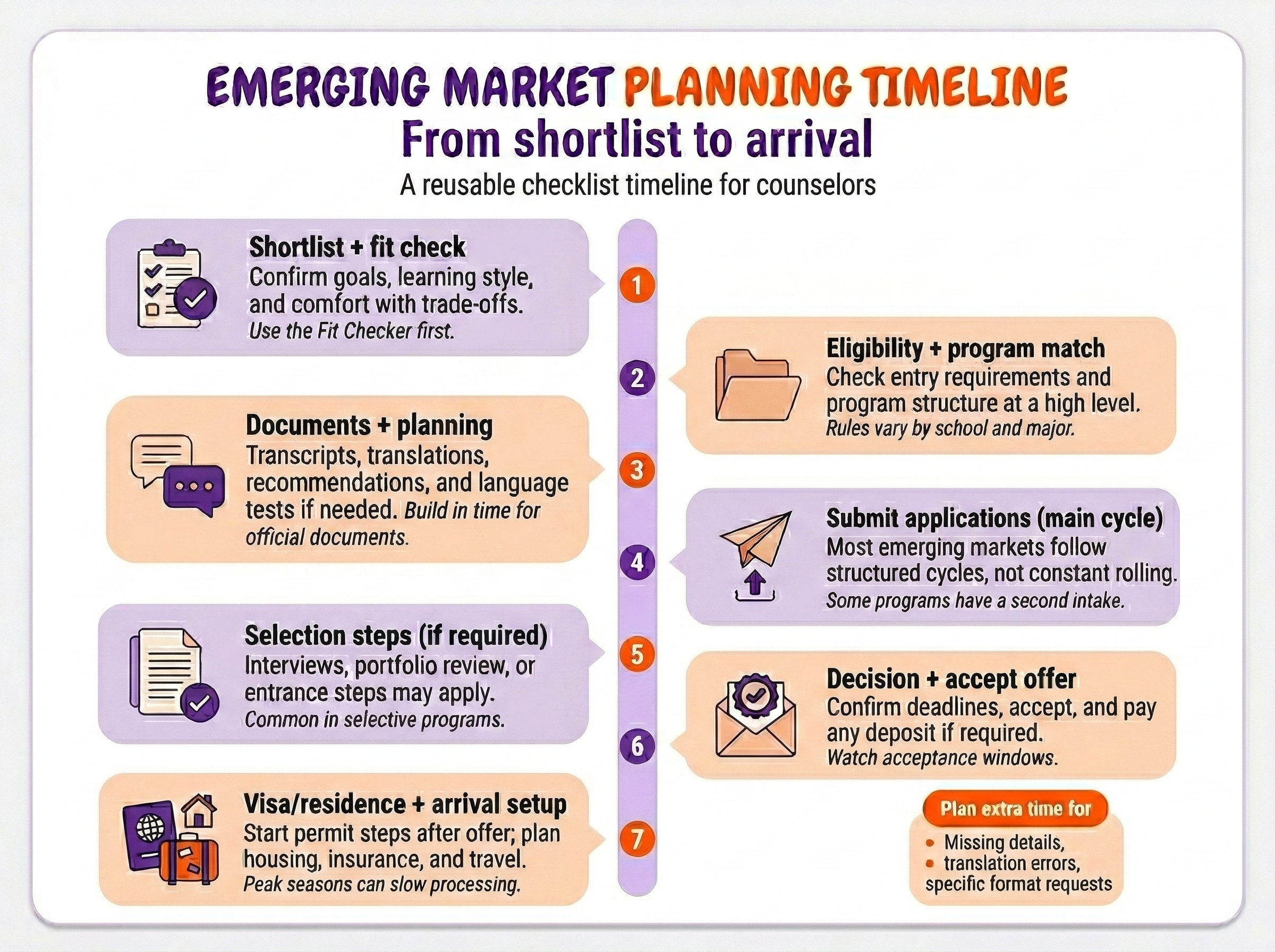
- Intakes are usually twice per year, which can support multiple planning cycles within a single year.
- Decision speed tends to be moderate, with faster outcomes more common where places are managed by capacity.
- Competitiveness varies widely by institution and subject, with sharper pressure in high-demand fields.
- Cycles can feel more structured than in some rolling-admissions systems, but practices differ across institutions.
- Overall volume pressure is typically lower than the largest Anglo destinations, but selectivity can still be high in specific pockets.
Visa and post-study environment
- Approval reputation: Generally predictable when documentation is consistent, but outcomes vary by nationality and case profile.
- Financial evidence intensity: Moderate, with clear proof expectations common.
- Post-study work pathway existence: Present, with conditions and eligibility varying by status and policy.
- Policy stability: Moderate, with periodic adjustments linked to national priorities.
- Processing efficiency perception: Moderate, with busier periods and location differences influencing timelines.
Cost and value proposition
- Tuition positioning is often lower than the Big 4, with higher fees in specialist and high-demand areas.
- Public and private institutions can differ in fee levels and scholarship approach, so pricing bands are not uniform.
- Living costs sit below many Big 4 cities, but can rise meaningfully in prime urban areas and near major campuses.
- Scholarships exist across government and institutional channels, but access is competitive and criteria-led.
- Degree duration can support total-cost planning, especially where programs follow standard lengths with limited extensions.
- Additional cost items can include language study, housing deposits, and administrative fees, which vary by city and provider.
❗ City and housing choice can reshape total cost. South Korea can look affordable on paper, but rent near major campuses and in prime city areas can shift budgets fast, so families should plan around the specific city + housing plan, not a national average.
Who this market is a good fit for
- Students who want an East Asian study environment without relying on a fully English-speaking society.
- STEM-leaning students who prefer structured teaching, regular assessment, and clear academic expectations.
- Families seeking a lower overall cost band than the Big 4, while keeping a globally recognizable system profile.
- Students motivated to build Korean language ability alongside their degree for daily life and integration.
- Students open to cultural adaptation and dense urban living, including smaller living spaces and fast-paced city norms.
- Students comfortable with high academic discipline and less informal staff-student interaction in some settings.
- Students prioritizing a distinctive regional experience and access to a wide range of campus services.
Trade-offs to consider
- Employer recognition outside the region can be moderate and uneven, depending on sector and employer familiarity.
- The non-English environment is a real friction point, and daily life can be challenging without Korean language progress.
- English-taught availability is not consistent across all fields, and depth can be thinner outside common international clusters.
- Academic culture can be more hierarchical and rule-bound than students expect from some Anglo campuses.
- Housing and cost pressure can rise sharply in key urban areas, affecting the lower-cost assumption.
- Student support quality varies by institution, including English-language administration capacity.
- Mobility and exchange options exist, but the practical fit depends on program structure and credit alignment.
❗ Korean becomes practical quickly. Even with English-taught study, daily services, part-time work, and admin often run in Korean, so students who plan basic language learning early usually adjust faster and access more options.
Common counselor questions
Is South Korea mainly an English-taught destination?
English-taught options are available and expanding, but coverage is uneven by field and level. Students should expect Korean to matter for daily life regardless of classroom language.
How predictable are admissions outcomes at a macro level?
Selectivity varies widely by institution and subject. Counselors should treat competitiveness as mixed, with sharper pressure in high-demand areas.
How should counselors frame the student experience expectations?
Many programs operate with clear rules, regular assessment, and structured attendance expectations. Cultural adaptation and comfort with a Korean-language environment are key fit factors.
Is there a post-study option after graduation?
There are post-study status pathways in the system, but eligibility and conditions vary. Counselors should frame this as policy-dependent rather than assumed.
How should families think about total cost compared with the Big 4?
Total cost is often lower overall, but city choice and housing can change the picture quickly. Planning works best using bands rather than a single national assumption.
What are the most common friction points for international students?
Language outside class, administrative complexity in English at some institutions, and adjustment to academic culture are the most common issues.
Studee customer support
If you need additional support understanding the standard process, required steps, and typical sequencing for South Korea applications and post-offer visa preparation, you can contact: [email protected]